

GK Questions for Class 8 with Answers
This GK for Class 8 quiz has 15 questions picked to match the syllabus and age level, each with its answer. Play online, see your score instantly, and use the answer key for revision or the school assembly.
15 questionsMixed (easy → hard)~3 minNo timer
Updated:
If you liked this

Trending today
 Bollywood QuizBollywood
 India GK Question Answer Quiz (Indian GK)General Knowledge
 Cricket World Cup QuizSports
 सामान्य ज्ञान प्रश्न (GK in Hindi Questions)Hindi
 Guess the FlagGeography
 Current Affairs Quiz (October 2026)Current Affairs
 Friends TV Series QuizMovies & TV
 KBC क्विज़ (KBC Hindi Quiz)Hindi
 F1 Quiz (Formula 1)Sports
 Naruto QuizAnime & Games
About this GK for Class 8 quiz
These GK questions of class 8 cover the topics a 13-year-old meets in school and in daily life: microorganisms, fuels, metals, sound, stars, the Indian Parliament and Constitution, the Revolt of 1857 and a few world facts. Many questions draw on middle-school science and social science topics, so the quiz works as quick revision as well as a general knowledge test.
The 15 questions go from easy to hard. The first few ask about everyday ideas such as how milk becomes curd, and the last ones test details students often confuse, like which part of a candle flame is hottest or who founded the Brahmo Sabha. Every answer comes with a short explanation, so these general knowledge questions and answers for class 8 teach something even when you get one wrong.
Students can play alone and try to beat their score, or teachers can project the quiz for a class 8 general knowledge round, an assembly or a period before a quiz competition. Parents can use the answer key to quiz children at home. Write down the questions you missed and replay the quiz a day later to see what stuck.
Fun fact: goldsmiths blow air into the outermost zone of a flame to melt gold and silver, because that zone burns fuel completely and is the hottest part.
GK for Class 8 questions with answers
Show answers
Which microorganism is used to turn milk into curd?
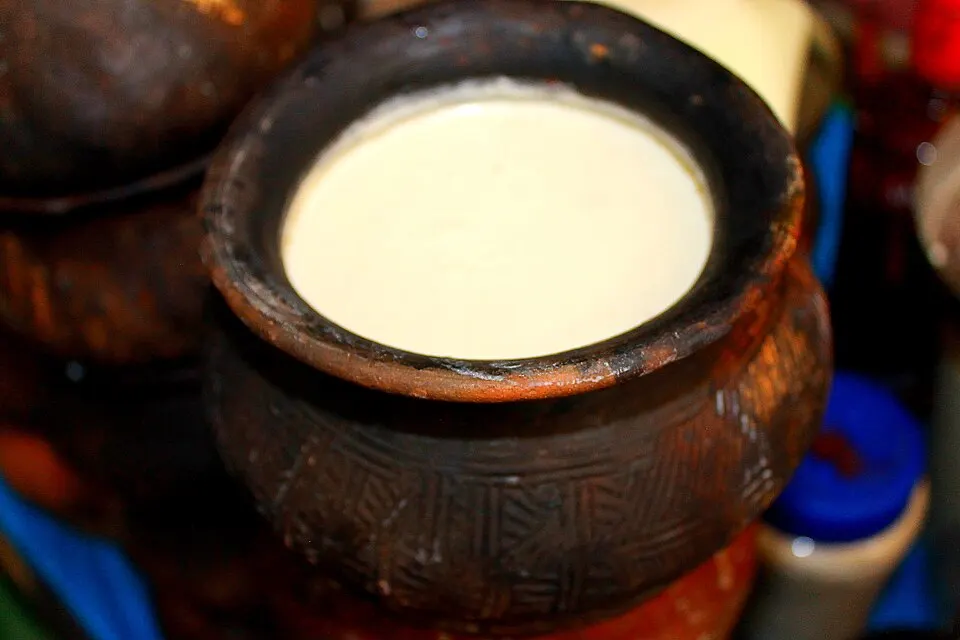
Photo: Goumisao, CC BY-SA 4.0, via Wikimedia Commons - Yeast
- Lactobacillus bacteria
- Penicillium mould
- Rhizobium bacteria
Answer: Lactobacillus bacteria. Lactobacillus multiplies in milk and sets it into curd. Yeast is used to make bread and cakes rise, and Rhizobium fixes nitrogen in the roots of pulse crops.
Which of these is NOT a fossil fuel?
- Wood
- Coal
- Petroleum
- Natural gas
Answer: Wood. Coal, petroleum and natural gas formed from the remains of living things buried for millions of years. Wood comes from trees growing today, so it is not a fossil fuel.
Which metal is a liquid at room temperature?
- Copper
- Sodium
- Aluminium
- Mercury
Answer: Mercury. Mercury is the only metal that is liquid at normal room temperature, which is why it was used in old thermometers. Sodium is a soft solid that can be cut with a knife.
Which star seems to stay in almost the same place in the northern sky and helps travellers find north?
- Pole Star
- Sirius
- Alpha Centauri
- Betelgeuse
Answer: Pole Star. The Pole Star (Polaris) lies almost exactly above the Earth's axis, so it hardly appears to move. It can be located using the pointer stars of the Great Bear (Ursa Major).
Through which of these can sound NOT travel?
- Air
- Water
- Steel
- Vacuum
Answer: Vacuum. Sound needs a medium such as a solid, liquid or gas to travel. In a vacuum there are no particles to vibrate, so sound cannot pass through it.
The Statue of Liberty in New York was a gift to the United States from which country?
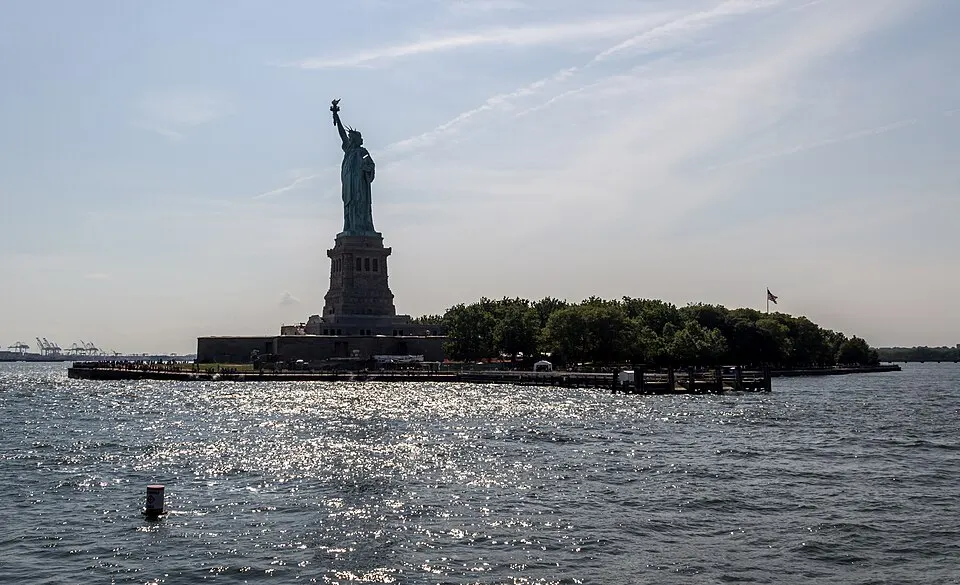
Photo: Dietmar Rabich, CC BY-SA 4.0, via Wikimedia Commons - United Kingdom
- France
- Spain
- Italy
Answer: France. The people of France gave the statue to mark friendship between the two nations, and it was dedicated in 1886. Its sculptor was Frederic Auguste Bartholdi.
Which instrument is used to measure atmospheric pressure?
- Hygrometer
- Thermometer
- Barometer
- Anemometer
Answer: Barometer. A barometer measures air pressure, which helps forecast the weather. A hygrometer measures humidity and an anemometer measures wind speed.
The Gir forest region of Gujarat is the only place in the world where which animal still lives in the wild?
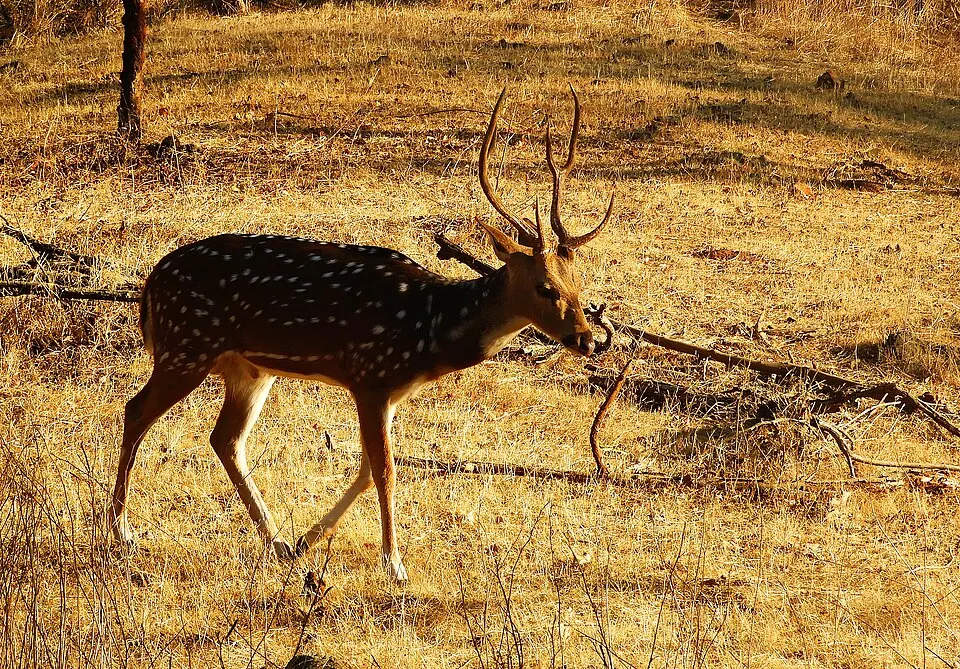
Photo: Sumita Roy Dutta, CC BY-SA 4.0, via Wikimedia Commons - Snow leopard
- Bengal tiger
- One-horned rhinoceros
- Asiatic lion
Answer: Asiatic lion. Wild Asiatic lions survive only in the Gir landscape of Gujarat, centred on Gir National Park. One-horned rhinos are famous in Kaziranga, Assam.
Who was the chairman of the Drafting Committee of the Indian Constitution?
- Dr Rajendra Prasad
- Dr B.R. Ambedkar
- Jawaharlal Nehru
- Sardar Vallabhbhai Patel
Answer: Dr B.R. Ambedkar. Dr Ambedkar chaired the Drafting Committee, so he is called the chief architect of the Constitution. Dr Rajendra Prasad was President of the Constituent Assembly.
The Revolt of 1857 began on 10 May 1857 when sepoys rose up at which cantonment?
- Lucknow
- Kanpur
- Meerut
- Jhansi
Answer: Meerut. Sepoys at Meerut rebelled and marched to Delhi, where they declared Bahadur Shah Zafar their leader. Kanpur, Lucknow and Jhansi became centres of the revolt soon after.
Which of these diseases is caused by a virus?
- Cholera
- Typhoid
- Polio
- Tuberculosis
Answer: Polio. Polio is caused by the poliovirus and is prevented by oral polio drops. Typhoid, cholera and tuberculosis are all caused by bacteria.
The Parliament of India consists of the President, the Lok Sabha and the ______.
- Rajya Sabha
- Vidhan Sabha
- Supreme Court
- Council of Ministers
Answer: Rajya Sabha. The Rajya Sabha is the Council of States, the upper house. A Vidhan Sabha is a state legislative assembly, not part of Parliament.
Which fibre, made from wood pulp, is often called "artificial silk"?
- Polyester
- Nylon
- Rayon
- Acrylic
Answer: Rayon. Rayon is made by chemically treating wood pulp and looks like silk but costs less. Nylon was the first fully synthetic fibre, made from coal, water and air.
Which zone of a candle flame is the hottest?
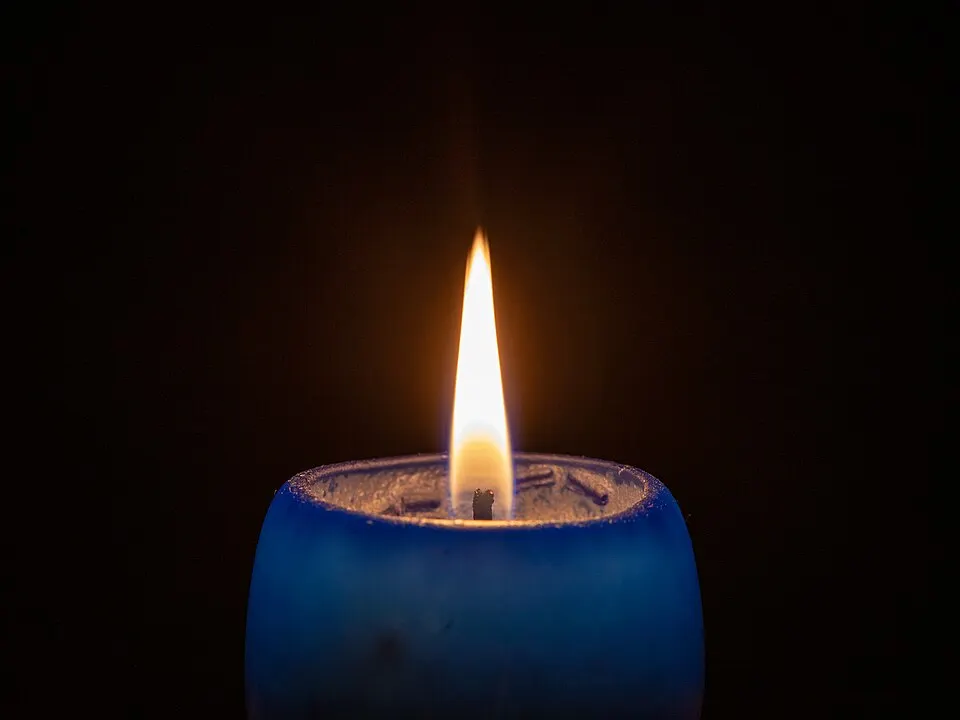
Photo: Dietmar Rabich, CC BY-SA 4.0, via Wikimedia Commons - The outermost zone
- The innermost dark zone
- The middle yellow zone
- All zones are equally hot
Answer: The outermost zone. The outer blue zone burns the fuel completely because it gets the most air, so goldsmiths use it to melt gold. The dark inner zone holds unburnt wax vapour.
Who founded the Brahmo Sabha in 1828, later known as the Brahmo Samaj?
- Swami Dayanand Saraswati
- Raja Ram Mohan Roy
- Jyotirao Phule
- Swami Vivekananda
Answer: Raja Ram Mohan Roy. Raja Ram Mohan Roy campaigned against sati and for women's education. Swami Dayanand Saraswati founded the Arya Samaj in 1875.
Frequently asked questions
Where can I find GK for Class 8 questions with answers?
Right here. Play the quiz for an instant score, then open the answer key on this page to see all 15 GK questions for class 8 with answers and a short explanation for each. Our other class-wise GK pages give more practice.
How many questions are in this GK for Class 8 quiz?
There are 15 multiple-choice questions with four options each, arranged from easy to hard. Most class 8 students finish in about five to seven minutes.
Can I play the GK for Class 8 quiz online for free without signing up?
Yes. The quiz is free, needs no login or sign-up, and works on phones, tablets and computers. You can replay it as often as you like and share your score with classmates.
Is this class 8 general knowledge quiz linked to school lessons?
Many questions draw on topics taught in middle-school science and social science, such as microorganisms, fossil fuels, combustion, sound, Parliament and the Revolt of 1857. A few world GK questions are added for variety, so it suits both revision and quiz practice.