

GK Questions for Class 10 with Answers
This GK for Class 10 quiz has 15 questions picked to match the syllabus and age level, each with its answer. Play online, see your score instantly, and use the answer key for revision or the school assembly.
15 questionsMixed (easy → hard)~3 minNo timer
Updated:
If you liked this

Trending today
 Bollywood QuizBollywood
 India GK Question Answer Quiz (Indian GK)General Knowledge
 Cricket World Cup QuizSports
 सामान्य ज्ञान प्रश्न (GK in Hindi Questions)Hindi
 Guess the FlagGeography
 Current Affairs Quiz (October 2026)Current Affairs
 Friends TV Series QuizMovies & TV
 KBC क्विज़ (KBC Hindi Quiz)Hindi
 F1 Quiz (Formula 1)Sports
 Naruto QuizAnime & Games
About this GK for Class 10 quiz
These GK questions for 10th class blend history, geography, civics, economics and science with a few world facts, pitched at students aged 15 to 16 who are preparing for board exams, olympiads and quiz contests. Many questions link to Class 10 social science chapters such as Nationalism in India, the rise of nationalism in Europe, resources, power sharing, federalism and money and credit.
The 15 questions are ordered from easy to hard. They open with familiar facts such as India's first Nobel laureate and the ozone layer, then move to the Salt March, Hind Swaraj and the WTO, and end with tougher ones on the Hirakud Dam and the painter of Bharat Mata. Each question carries a short explanation, so these GK questions and answers for class 10 help you remember the reason behind every answer.
Use the quiz as a ten-minute warm-up before a social science revision session, or project it in class for a team round. Students in classes 10 to 12 can also use it to brush up GK for school quizzes and scholarship tests. Replay it after a few days to check what you remember.
Fun fact: the Challenger Deep in the Mariana Trench is so deep that Mount Everest, placed on its floor, would still be about 2 km under water.
GK for Class 10 questions with answers
Show answers
Who was the first Indian to win a Nobel Prize?
- Amartya Sen
- C.V. Raman
- Mother Teresa
- Rabindranath Tagore
Answer: Rabindranath Tagore. Tagore won the Nobel Prize in Literature in 1913 for Gitanjali. C.V. Raman won the Physics prize in 1930 for the Raman effect.
The ozone layer in the atmosphere protects living things from which harmful radiation?
- Microwaves
- Infrared rays
- Radio waves
- Ultraviolet rays
Answer: Ultraviolet rays. Ozone in the stratosphere absorbs most of the Sun's ultraviolet rays, which can cause skin cancer. Chemicals called CFCs have damaged this layer.
The Jallianwala Bagh massacre of 13 April 1919 took place in which city?
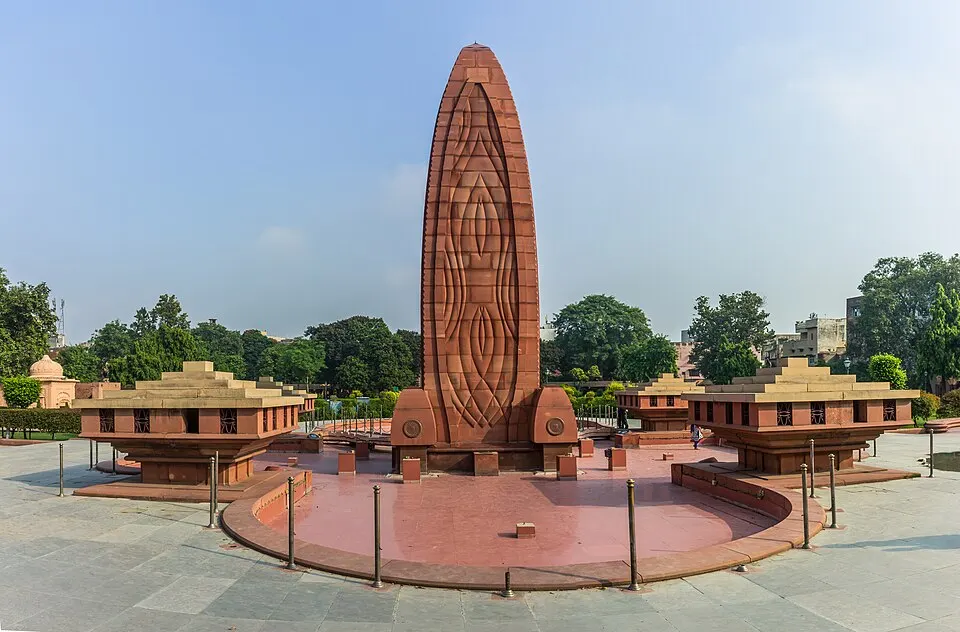
Photo: Bijay chaurasia, CC BY-SA 4.0, via Wikimedia Commons - Delhi
- Lahore
- Amritsar
- Lucknow
Answer: Amritsar. General Dyer ordered troops to fire on a peaceful crowd gathered in the enclosed Jallianwala Bagh in Amritsar. Tagore gave up his knighthood in protest.
Which animal is the national aquatic animal of India?
- Ganges river dolphin
- Olive ridley turtle
- Gharial
- Dugong
Answer: Ganges river dolphin. The Ganges river dolphin lives in the Ganga-Brahmaputra river systems and is almost blind, finding its way by echolocation. The gharial is a fish-eating crocodile.
Which type of soil, also called regur, is best suited for growing cotton?
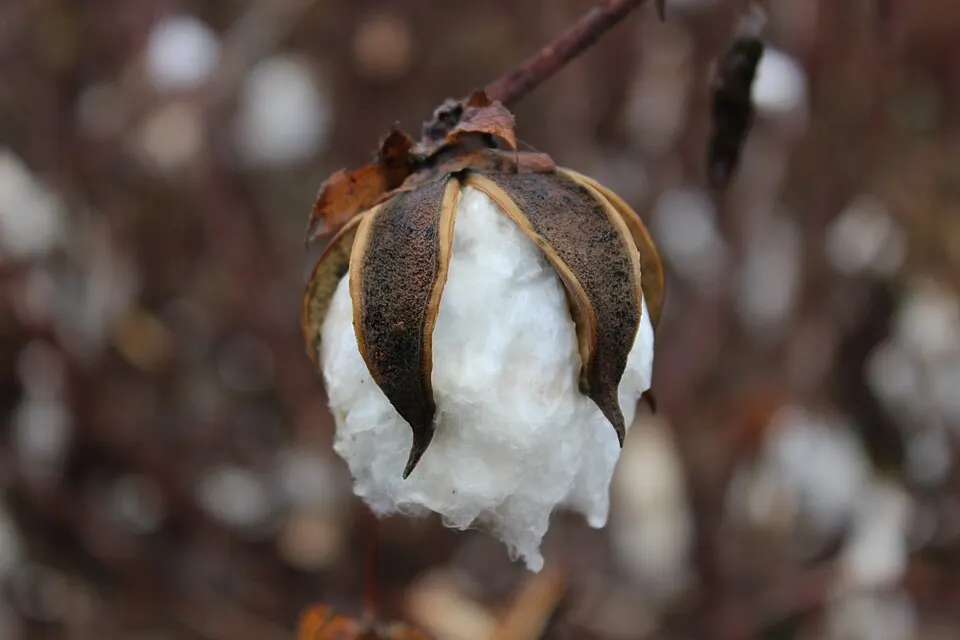
Photo: Michael Bass-Deschenes(Commons User Mike Bass-Deschênes), CC BY 2.0, via Wikimedia Commons - Laterite soil
- Alluvial soil
- Black soil
- Red soil
Answer: Black soil. Black soil holds moisture well and is rich in minerals such as calcium and magnesium, ideal for cotton. It is found mainly on the Deccan plateau.
From which ashram did Mahatma Gandhi begin the Salt March to Dandi in March 1930?
- Phoenix Settlement
- Sevagram Ashram
- Sabarmati Ashram
- Tolstoy Farm
Answer: Sabarmati Ashram. Gandhi set out from Sabarmati near Ahmedabad on 12 March 1930 and broke the salt law at Dandi on the Gujarat coast on 6 April by making salt from seawater.
Who wrote the book "Hind Swaraj" (1909)?
- Mahatma Gandhi
- Bal Gangadhar Tilak
- Jawaharlal Nehru
- Gopal Krishna Gokhale
Answer: Mahatma Gandhi. In Hind Swaraj, Gandhi argued that British rule survived only because Indians cooperated with it. The idea later shaped the Non-Cooperation Movement.
Where is the headquarters of the World Trade Organization (WTO)?
- Geneva
- New York
- Paris
- Vienna
Answer: Geneva. The WTO, which sets rules for international trade, is based in Geneva, Switzerland. The United Nations headquarters is in New York.
The deepest known point in the world's oceans lies in which trench?
- Java Trench
- Puerto Rico Trench
- Mariana Trench
- Tonga Trench
Answer: Mariana Trench. The Challenger Deep in the Mariana Trench, in the western Pacific Ocean, is about 11 km deep. Mount Everest would fit inside it with room to spare.
Which institution issues currency notes in India on behalf of the central government?
- Reserve Bank of India
- State Bank of India
- Securities and Exchange Board of India
- NITI Aayog
Answer: Reserve Bank of India. The RBI is India's central bank and issues currency notes (the one-rupee note is issued by the Finance Ministry). It also supervises how banks lend.
Under the Indian Constitution, "police" and "agriculture" are subjects in which list?
- Residuary subjects
- Union List
- Concurrent List
- State List
Answer: State List. State governments make laws on State List subjects such as police, trade within the state and agriculture. Defence and banking are on the Union List.
Which country, studied in Class 10 as an example of power sharing, has Dutch-, French- and German-speaking communities?
- Switzerland
- Belgium
- Sri Lanka
- Netherlands
Answer: Belgium. Belgium shared power between its language communities, including a special government for Brussels. Sri Lanka is the contrasting example of majoritarianism.
Who is called the architect of the unification of Germany in 1871?
Photo: Yair Haklai, CC BY-SA 4.0, via Wikimedia Commons - Giuseppe Garibaldi
- Otto von Bismarck
- Giuseppe Mazzini
- Count Cavour
Answer: Otto von Bismarck. Bismarck, chief minister of Prussia, united Germany after a series of wars, and Kaiser William I was proclaimed emperor in 1871. Garibaldi, Mazzini and Cavour led Italian unification.
The Hirakud Dam, one of the longest earthen dams in the world, is built on which river?
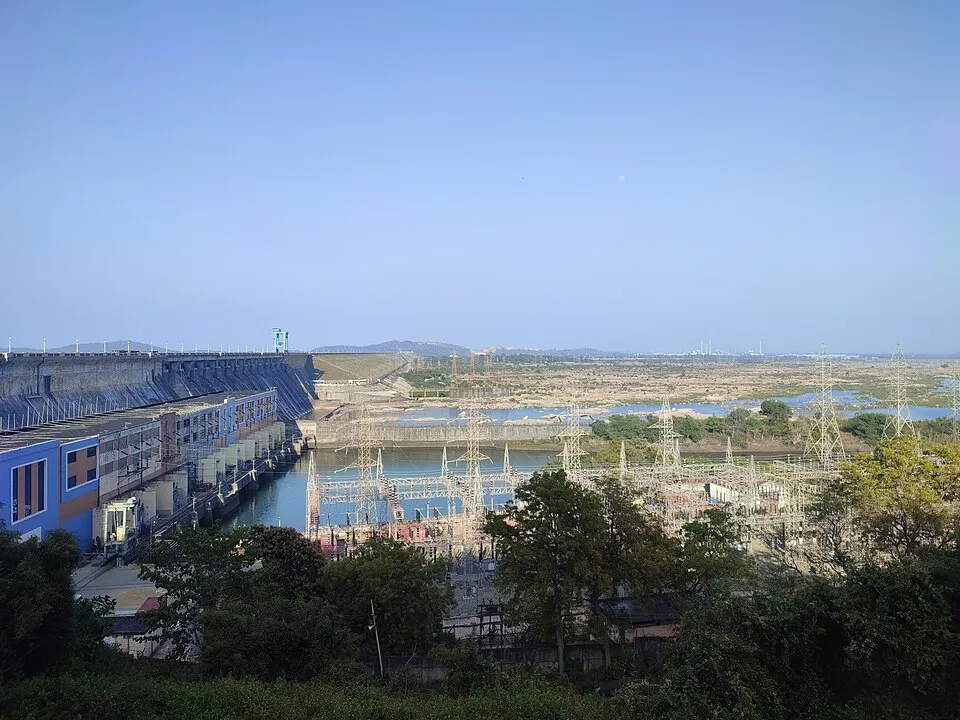
Photo: Ghanashyam Nayak, CC BY-SA 4.0, via Wikimedia Commons - Godavari
- Mahanadi
- Krishna
- Narmada
Answer: Mahanadi. Hirakud Dam stands on the Mahanadi near Sambalpur in Odisha and helps control floods and produce electricity. The Sardar Sarovar Dam is on the Narmada.
Who painted the famous image of "Bharat Mata" during the Swadeshi movement?
- Amrita Sher-Gil
- Raja Ravi Varma
- Nandalal Bose
- Abanindranath Tagore
Answer: Abanindranath Tagore. Abanindranath Tagore painted Bharat Mata as a calm figure holding food, clothing and learning. The image helped build a sense of shared national identity.
Frequently asked questions
Where can I find GK for Class 10 questions with answers?
On this page. Play the quiz for an instant score, then open the answer key to see all 15 GK questions for class 10 with answers and a short explanation for each. More class-wise GK quizzes are in our School GK section.
How many questions are in this GK for Class 10 quiz?
There are 15 multiple-choice questions with four options each, from easy to hard. It takes most students five to eight minutes to finish.
Can I play the GK for Class 10 quiz online for free without signing up?
Yes. The quiz is free, has no login or sign-up, and runs on phones, tablets and computers. You can replay it any time and share your score with friends.
Do these class 10 GK questions help with board exam social science?
Several questions come straight from Class 10 social science themes, such as the Salt March, Hind Swaraj, Belgium's power sharing, the State List and the RBI. They are a quick way to revise facts, but read the full textbook chapters for long answers.