
US History Quiz
15 questions, one score, zero sign-ups. This US History Quiz mixes easy and tricky questions, and every answer comes with a quick explanation.
15 questionsMixed (easy → hard)~3 minNo timer
Updated:
If you liked this
Trending today
 Bollywood QuizBollywood
 India GK Question Answer Quiz (Indian GK)General Knowledge
 Cricket World Cup QuizSports
 सामान्य ज्ञान प्रश्न (GK in Hindi Questions)Hindi
 Guess the FlagGeography
 Current Affairs Quiz (October 2026)Current Affairs
 Friends TV Series QuizMovies & TV
 KBC क्विज़ (KBC Hindi Quiz)Hindi
 F1 Quiz (Formula 1)Sports
 Naruto QuizAnime & Games
About this US History quiz
This US history quiz runs through the big moments that shaped the United States, from the first permanent English settlement at Jamestown to the Watergate scandal. In 15 questions you will meet the Declaration of Independence, the Louisiana Purchase, the Civil War, the transcontinental railroad, landmark amendments and a famous Supreme Court ruling.
The questions mix easy openers with harder US history trivia. Most people know when the Declaration was adopted, but fewer can name the first state to ratify the Constitution or the first capital under it. If you want US history quiz questions that are hard, those are the ones to watch. Each answer comes with a short explanation, so you learn the story behind every date and name.
It suits high school and college students reviewing American history, people preparing for a citizenship or civics test, history fans outside the US who want to check their knowledge, and quiz teams building a trivia round. Play once, read the explanations in the answer key, then try again or challenge a friend with your score.
A fun fact: New York City, not Washington, D.C., was the nation's first capital under the Constitution. Washington, D.C. only became the seat of government in 1800, and John Adams was the first President to live in the White House.
US History questions with answers
Show answers
In which year was the Declaration of Independence adopted?
- 1776
- 1783
- 1787
- 1791
Answer: 1776. The Continental Congress adopted it on 4 July 1776, now Independence Day. The war with Britain ended by treaty in 1783, and the Constitution was written in 1787.
Who wrote the first draft of the Declaration of Independence?
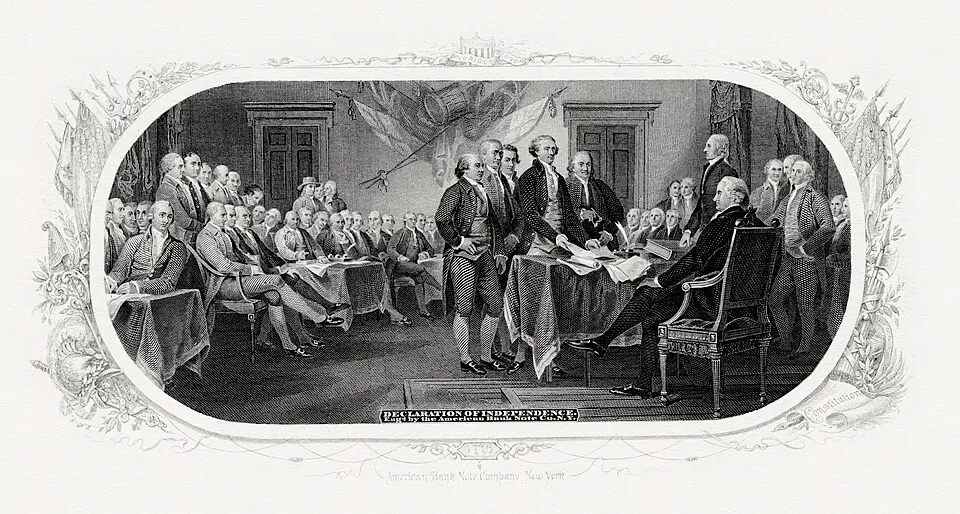
Photo: Frederick Girsch at the American Bank Note Company, for the Bureau of Engraving, Public domain, via Wikimedia Commons - Benjamin Franklin
- Thomas Jefferson
- John Adams
- James Madison
Answer: Thomas Jefferson. Jefferson drafted it for a committee of five that included Franklin and Adams, who suggested edits. Madison is known as the 'Father of the Constitution'.
From which country did the US buy the Louisiana Territory in 1803?
- Spain
- Britain
- France
- Mexico
Answer: France. Napoleon's France sold it for about 15 million dollars, roughly doubling the size of the US. President Jefferson then sent Lewis and Clark to explore the new land.
The US bought Alaska in 1867 from which country?
- Canada
- Britain
- Denmark
- Russia
Answer: Russia. Secretary of State William Seward paid Russia 7.2 million dollars. Critics mocked it as 'Seward's Folly', but gold and oil later proved its value.
Which of these was NOT one of the original Thirteen Colonies?
- Georgia
- New Hampshire
- Vermont
- Rhode Island
Answer: Vermont. Vermont joined the Union in 1791 as the 14th state. Georgia, New Hampshire and Rhode Island were all among the thirteen colonies that declared independence.
What was the first permanent English settlement in North America, founded in 1607?
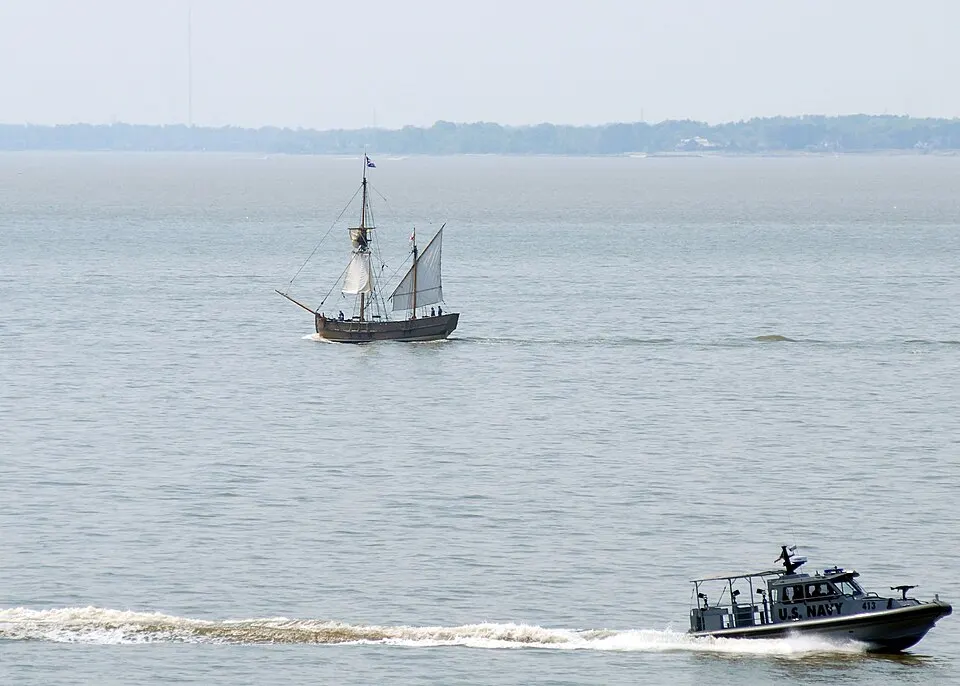
Photo: U.S. Navy photo by Mass Communication Specialist 3rd Class Myriam M. Padilla, Public domain, via Wikimedia Commons - Plymouth
- Jamestown
- Roanoke
- Boston
Answer: Jamestown. Jamestown, Virginia, survived despite famine and disease. Roanoke, settled in the 1580s, became the 'Lost Colony', and the Pilgrims reached Plymouth in 1620.
The Boston Tea Party of 1773 was a protest against which British law?
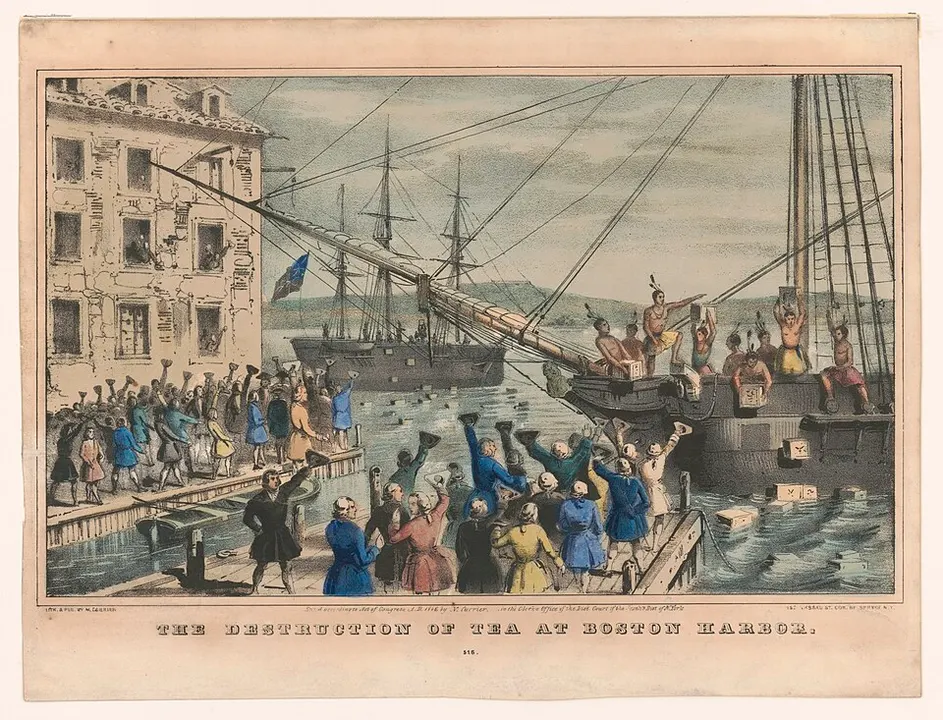
Photo: N. Currier (Firm), Public domain, via Wikimedia Commons - The Stamp Act
- The Sugar Act
- The Quartering Act
- The Tea Act
Answer: The Tea Act. Colonists dumped 342 chests of East India Company tea into Boston Harbor, angry at taxation without representation. Britain hit back with harsh laws the colonists called the Intolerable Acts.
Which state was the first to ratify the US Constitution, in December 1787?
- Delaware
- Pennsylvania
- Virginia
- Massachusetts
Answer: Delaware. Delaware ratified on 7 December 1787, which is why it is nicknamed 'The First State'. Pennsylvania followed five days later.
Which city was the first capital of the US under the Constitution?
- Philadelphia
- Boston
- New York City
- Baltimore
Answer: New York City. George Washington was sworn in at Federal Hall in New York in 1789. The capital moved to Philadelphia in 1790 and to Washington, D.C. in 1800.
Which amendment to the Constitution abolished slavery in the United States?
- 13th
- 14th
- 15th
- 19th
Answer: 13th. The 13th Amendment was ratified in December 1865, after the Civil War. The 14th guaranteed citizenship and equal protection, and the 15th banned denying the vote on grounds of race.
During which war did Abraham Lincoln deliver the Gettysburg Address?
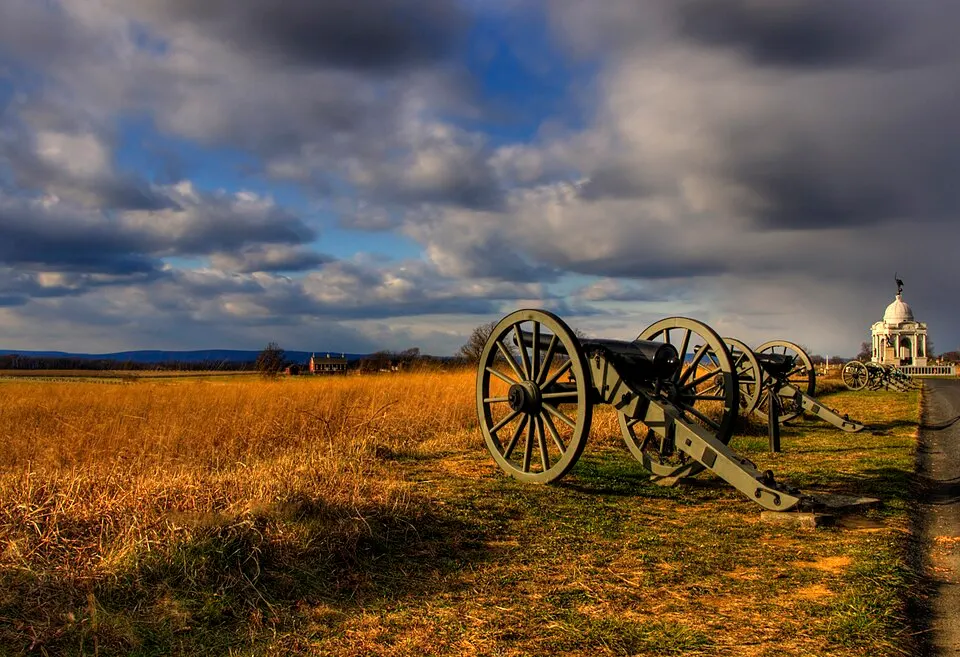
Photo: Steven C. Berger, CC BY-SA 3.0, via Wikimedia Commons - The War of 1812
- The Civil War
- The Mexican-American War
- The Spanish-American War
Answer: The Civil War. Lincoln spoke in November 1863 at a cemetery for soldiers killed at Gettysburg, the bloodiest battle of the Civil War. The speech is only about 270 words long.
Where was the 'golden spike' driven to complete the first transcontinental railroad in 1869?
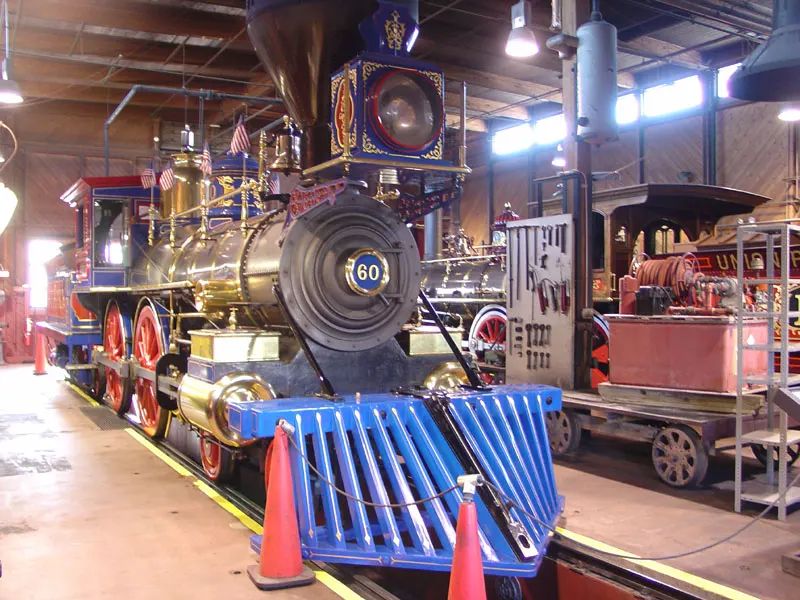
Photo: United States Geological Survey, Public domain, via Wikimedia Commons - Omaha, Nebraska
- Promontory Summit, Utah
- Sacramento, California
- Denver, Colorado
Answer: Promontory Summit, Utah. The Union Pacific and Central Pacific lines met at Promontory Summit on 10 May 1869. A coast-to-coast journey that took months by wagon now took about a week.
In 1920, the 19th Amendment gave American women which right?
- To own property
- To serve in Congress
- To vote
- To attend university
Answer: To vote. The 19th Amendment barred states from denying the vote on account of sex. Jeannette Rankin had already been elected to Congress in 1916, before women could vote nationwide.
What did the Supreme Court rule in Brown v. Board of Education (1954)?
- Segregated public schools are unconstitutional
- Women may serve on juries
- Arrested people must be read their rights
- States must recognise each other's laws
Answer: Segregated public schools are unconstitutional. The court unanimously ruled that 'separate but equal' schools violate the 14th Amendment, rejecting the doctrine of Plessy v. Ferguson (1896) in public education. It became a turning point for the civil rights movement.
Which President resigned in 1974 because of the Watergate scandal?
- Lyndon B. Johnson
- Gerald Ford
- Jimmy Carter
- Richard Nixon
Answer: Richard Nixon. Richard Nixon resigned on 9 August 1974, the only US President ever to do so. His Vice President, Gerald Ford, took over and later pardoned him.
Frequently asked questions
Where can I find US history questions with answers?
This page has 15 US history quiz questions and answers, each with a short explanation. Play the quiz, then open the answer key below it to review every question.
What are some hard US history questions?
Try these from the quiz: which state ratified the Constitution first (Delaware), which city was the first capital under the Constitution (New York City), and where the golden spike completed the transcontinental railroad (Promontory Summit, Utah).
How many questions are in this US history quiz?
There are 15 questions, from colonial times to the 1970s. Most people finish in about four minutes.
Can I play the US history quiz online for free without signing up?
Yes. The quiz is free with no login or account needed. You see your score instantly and can share your result with friends.