
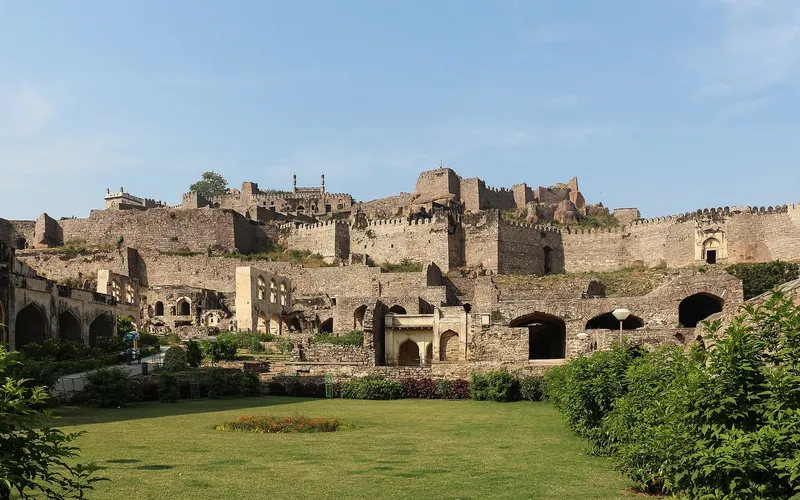
Indian History Quiz
This Indian History Quiz has 10 questions, from easy warm-ups to a few real stumpers, each with its answer. Play free, see your score instantly, and share it with friends.
10 questionsMixed (easy → hard)~2 minNo timer
Updated:
If you liked this
Trending today
 Bollywood QuizBollywood
 India GK Question Answer Quiz (Indian GK)General Knowledge
 Cricket World Cup QuizSports
 सामान्य ज्ञान प्रश्न (GK in Hindi Questions)Hindi
 Guess the FlagGeography
 Current Affairs Quiz (October 2026)Current Affairs
 Friends TV Series QuizMovies & TV
 KBC क्विज़ (KBC Hindi Quiz)Hindi
 F1 Quiz (Formula 1)Sports
 Naruto QuizAnime & Games
About this Indian History quiz
This Indian History Quiz has 10 questions with answers, from easy warm-ups to a few real stumpers. It covers Mewar and the Mughal age, wars in the south, early printing in Calcutta, frontier battles under the Raj, the revolutionaries of the 1920s and the last days of British rule. Each question tells a short story and asks you to name the person, place or event behind it.
These Indian history questions and answers work as a quick quiz for school and college students, a revision round of GK questions on Indian history for SSC, banking and state PSC exams, and a fun round for family quiz nights. Every Indian history MCQ comes with a short explanation that adds one more fact, so you learn something even when you miss. Play once for a score, then open the answer key below to revise.
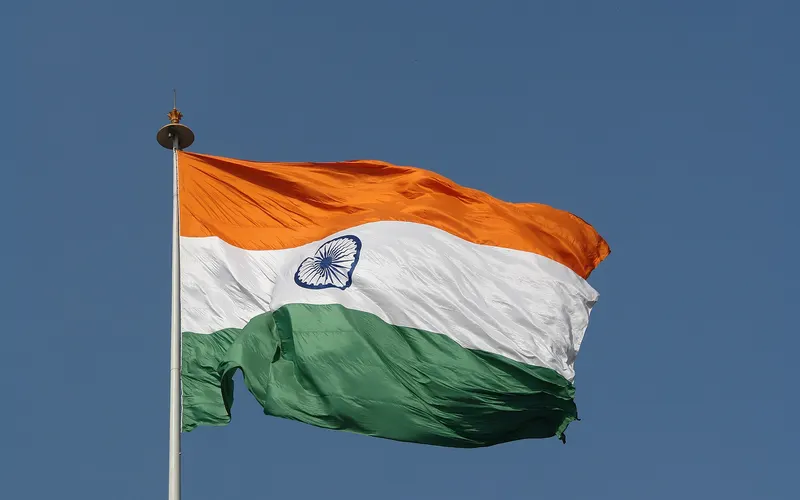
Did you know? India's State Emblem, adopted on 26 January 1950, is taken from the Lion Capital that Emperor Ashoka set up at Sarnath, near Varanasi, more than 2,200 years ago.
Indian History questions with answers
Show answers
In a 1944 broadcast on Azad Hind Radio, which leader addressed Mahatma Gandhi as the 'Father of our Nation', a title India still uses for him?
- Jawaharlal Nehru
- Subhas Chandra Bose
- Sardar Vallabhbhai Patel
- Rabindranath Tagore
Answer: Subhas Chandra Bose. Netaji Subhas Chandra Bose, then leading the Indian National Army, used the words on Azad Hind Radio in mid-1944, asking for Gandhi's blessings for the INA's campaign. The government never formally conferred the title; it stuck through use.
In Mewar's ballads, which horse carried Maharana Pratap out of the Battle of Haldighati in 1576 and died soon after?
- Chetak
- Kanthaka
- Bucephalus
- Uchchaihshravas
Answer: Chetak. Chetak is remembered at the Chetak Smarak near Haldighati, said to mark where he fell. Kanthaka was the Buddha's horse, Bucephalus was Alexander's, and Uchchaihshravas is the seven-headed horse of Hindu myth.
On 28 February 1948, the 1st Battalion of the Somerset Light Infantry, the last British troops in India, marched out through which monument?
- India Gate
- Red Fort
- Fort William
- Gateway of India
Answer: Gateway of India. The arch on Bombay's waterfront had been built to mark King George V's arrival in 1911. So the last British soldiers left through the very gate raised to welcome a British king.
On 8 April 1929, two young revolutionaries threw low-power bombs onto empty benches of the Central Legislative Assembly, with leaflets saying it takes a loud voice to make the deaf hear. One was Batukeshwar Dutt. Who was the other?
- Chandrashekhar Azad
- Sukhdev Thapar
- Bhagat Singh
- Ram Prasad Bismil
Answer: Bhagat Singh. Bhagat Singh and Dutt shouted 'Inquilab Zindabad' and waited to be arrested, so that their trial would spread their message. A few members were hurt, but no one was killed.
Socialist Yusuf Meherally greeted the Simon Commission at Bombay's docks with 'Simon Go Back'. In July 1942 he is credited with offering Gandhi a two-word slogan for a new movement. What was it?
- Purna Swaraj
- Quit India
- Inquilab Zindabad
- Jai Hind
Answer: Quit India. Gandhi took up the slogan, and the Congress launched the Quit India movement in Bombay on 8 August 1942.
Iron-cased rockets captured in South India in the 1790s were studied in England and led to the Congreve rocket, whose 'red glare' made it into the US national anthem. Whose army had fired them?
- Tipu Sultan's
- Maharaja Ranjit Singh's
- The Marathas'
- Siraj-ud-Daulah's
Answer: Tipu Sultan's. Hyder Ali and his son Tipu Sultan of Mysore used rocket troops against the East India Company. After Tipu died at Srirangapatna in 1799, rockets were shipped to Britain, and William Congreve built his own version.
In April 1819, a British cavalry officer out hunting tigers was led, the story goes, by a local shepherd boy to a cave entrance, and later scratched his name and the year inside. Which site had he stumbled on?
- Ellora Caves
- Elephanta Caves
- Ajanta Caves
- Bhimbetka rock shelters
Answer: Ajanta Caves. Captain John Smith's graffiti can still be seen in Cave 10 at Ajanta, whose Buddhist murals are among the finest ancient paintings in India. Bhimbetka's rock art was found much later, in 1957.
The 2019 film Kesari, with Akshay Kumar as Havildar Ishar Singh, retells how 21 soldiers of the 36th Sikhs held a signalling post against thousands of tribesmen in 1897. Name the battle.
- Battle of Chillianwala
- Battle of Rezang La
- Battle of Longewala
- Battle of Saragarhi
Answer: Battle of Saragarhi. Saragarhi, in today's Khyber Pakhtunkhwa in Pakistan, relayed signals between Fort Lockhart and Fort Gulistan, which could not see each other. The Sikh Regiment marks 12 September as Saragarhi Day.
On 9 August 1925, revolutionaries of the Hindustan Republican Association stopped a train near Lucknow and took government money to buy arms. Ram Prasad Bismil and Ashfaqulla Khan were later hanged for it. What is the event called today?
- Kakori Train Action
- Chauri Chaura incident
- Chittagong armoury raid
- Alipore bomb case
Answer: Kakori Train Action. Uttar Pradesh renamed the 'Kakori Kand' the 'Kakori Train Action' in 2021. Bismil and Ashfaqulla, a Hindu and a Muslim who were close friends, are remembered together as a symbol of unity.
India's first printed newspaper was started in Calcutta in 1780 by an Irishman. It attacked Governor-General Warren Hastings, and its press was seized within two years. What was it called?
- Samachar Darpan
- Hicky's Bengal Gazette
- The Bombay Courier
- Amrita Bazar Patrika
Answer: Hicky's Bengal Gazette. James Augustus Hicky ran his weekly from January 1780 until a court order had his types and press seized in March 1782. He was jailed for libel and kept the paper going from prison for a while.
Frequently asked questions
Where can I find Indian History questions with answers?
Right on this page. Play the quiz to see each answer and its explanation as you go, or scroll to the answer key below the quiz to read all 10 Indian history questions with answers.
Is this Indian History quiz useful for competitive exams?
Yes, as a quick check of general awareness. The questions touch modern Indian history, the freedom struggle and heritage, which SSC, banking and state PSC papers often ask about. For chapter-wise exam practice, try the history topics in our exam section.
How many questions are in this Indian History quiz?
There are 10 multiple-choice questions with four options each. They start easy and get harder, and most people finish in about three minutes.
Can I play the Indian History quiz online for free without signing up?
Yes. The quiz is free, needs no login and shows your score instantly. You can share your result with friends or classmates from the results screen.