
Politics Quiz
Think you know your stuff? This Politics Quiz has 15 questions with answers and short explanations. No login – just play, score and compare with friends.
15 questionsMixed (easy → hard)~3 minNo timer
Updated:
If you liked this
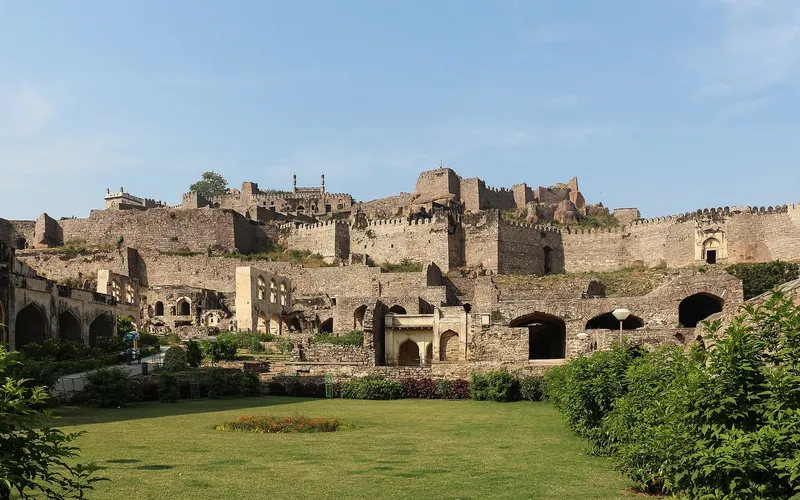
Trending today
 Bollywood QuizBollywood
 India GK Question Answer Quiz (Indian GK)General Knowledge
 Cricket World Cup QuizSports
 सामान्य ज्ञान प्रश्न (GK in Hindi Questions)Hindi
 Guess the FlagGeography
 Current Affairs Quiz (October 2026)Current Affairs
 Friends TV Series QuizMovies & TV
 KBC क्विज़ (KBC Hindi Quiz)Hindi
 F1 Quiz (Formula 1)Sports
 Naruto QuizAnime & Games
About this Politics quiz
This politics quiz tests how well you know the people, ideas and institutions that run the world, from the UN Security Council and the US Senate to India's Parliament and Japan's Diet. The 15 general knowledge questions on politics start easy and get harder, so you can play it as a quick warm-up or as a real test of your civics.
The questions cover four areas: how governments are built (branches of power, bicameral legislatures, written and unwritten constitutions), how leaders are chosen (from the Indian presidential election to the US two-term limit), political ideas and thinkers like Machiavelli, and landmark moments such as the first woman Prime Minister and the first national vote for women.
It suits students preparing for civics or competitive exams, quiz club members, and anyone who follows the news and wants to check the basics behind the headlines. Every answer comes with a short explanation, so even a wrong guess teaches you something. Play once on your own, then share your score and challenge friends or classmates to beat it.
A fact to take away: the word politics comes from the Greek 'polis', meaning city-state. To the ancient Greeks, taking part in the life of the city was what being a citizen meant, which is why Aristotle called humans 'political animals'.
Politics questions with answers
Show answers
How many members sit in the United States Senate?
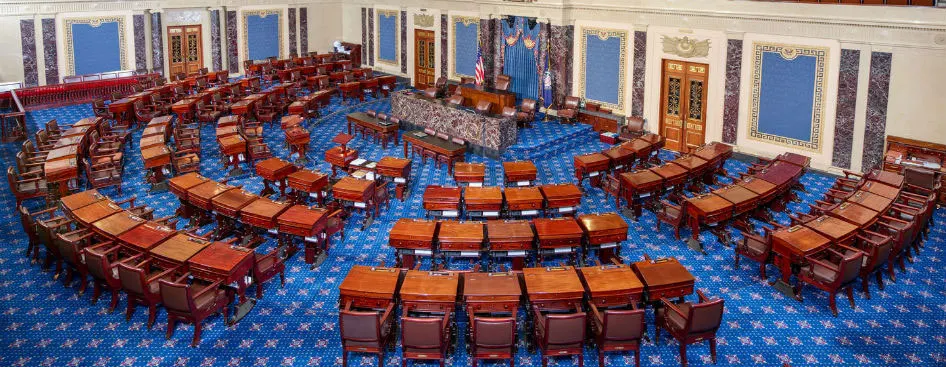
Photo: United States Senate, Public domain, via Wikimedia Commons - 50
- 100
- 435
- 538
Answer: 100. Each of the 50 states elects two senators, giving 100. The House of Representatives has 435 voting members, and 538 is the number of Electoral College votes.
How many permanent members does the UN Security Council have?
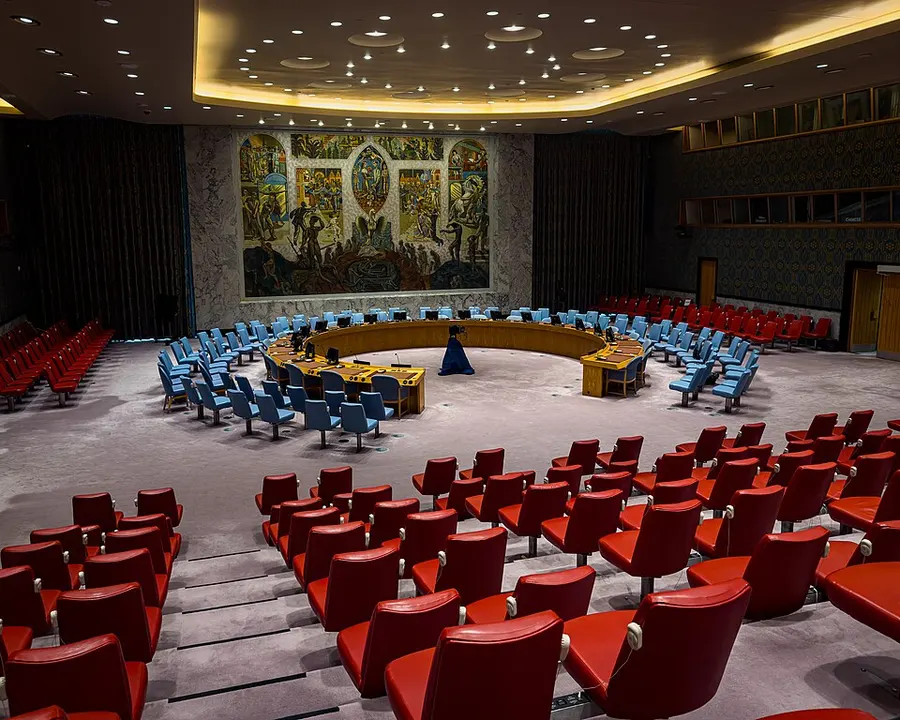
Photo: Jdforrester, CC BY 4.0, via Wikimedia Commons - 5
- 7
- 10
- 15
Answer: 5. The five permanent members are China, France, Russia, the United Kingdom and the United States, each with a veto. The council has 15 members in all, 10 of them elected for two-year terms.
Who became the world's first woman Prime Minister, in 1960?
- Indira Gandhi
- Golda Meir
- Margaret Thatcher
- Sirimavo Bandaranaike
Answer: Sirimavo Bandaranaike. Sirimavo Bandaranaike became Prime Minister of Ceylon (now Sri Lanka) in 1960. Indira Gandhi followed in India in 1966 and Golda Meir in Israel in 1969.
The word 'democracy' comes from two Greek words that together mean what?
- Rule by the wise
- Rule by the people
- Rule by the wealthy
- Rule by one
Answer: Rule by the people. 'Demos' means people and 'kratos' means power or rule. Rule by the wealthy is plutocracy, and rule by one person is monarchy or autocracy.
Which of these countries does NOT have a single written (codified) constitution?
- United States
- India
- France
- United Kingdom
Answer: United Kingdom. The UK's constitution is spread across Acts of Parliament, court rulings and conventions rather than one document. India's, by contrast, is one of the longest written constitutions in the world.
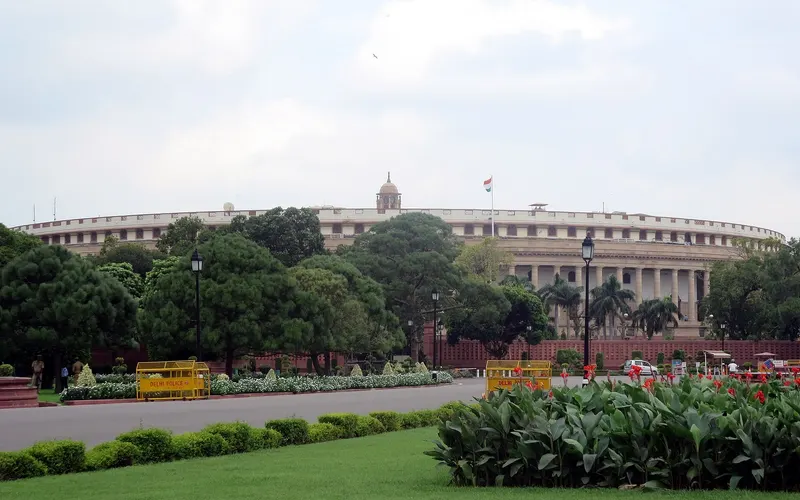
Who elects the President of India?
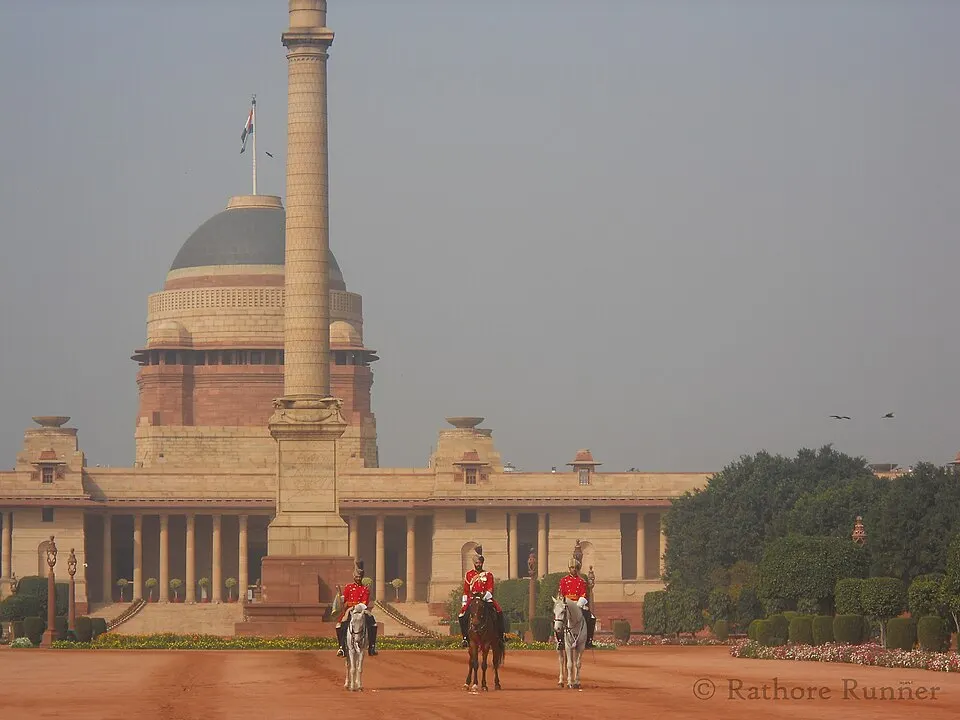
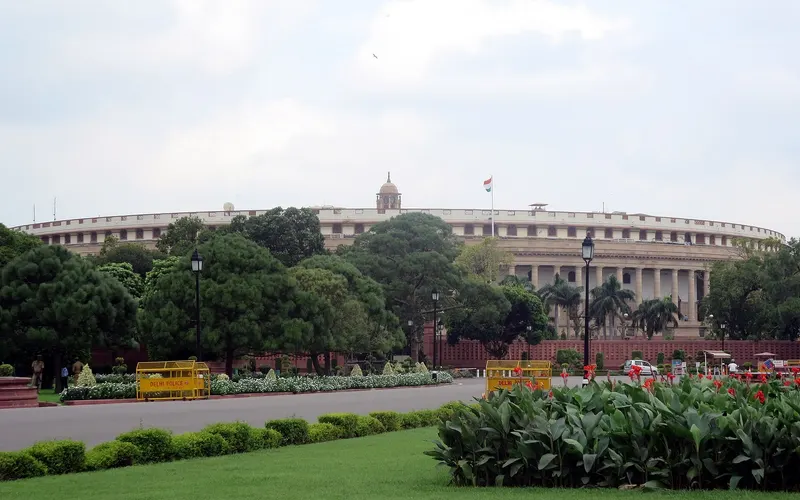
Photo: Mohit00767, CC BY-SA 4.0, via Wikimedia Commons - All citizens directly
- An electoral college of elected MPs and MLAs
- The Lok Sabha alone
- The Prime Minister and the Cabinet
Answer: An electoral college of elected MPs and MLAs. Under Article 54, the electoral college is made up of the elected members of both Houses of Parliament and of the state Legislative Assemblies (including Delhi and Puducherry). Nominated members do not vote.
Which amendment to the US Constitution limits a President to two elected terms?
- 14th
- 19th
- 22nd
- 25th
Answer: 22nd. The 22nd Amendment was ratified in 1951, after Franklin D. Roosevelt won four elections. The 19th gave women the vote and the 25th deals with presidential succession.
A system in which power rests with a small group of people is called what?
- Oligarchy
- Theocracy
- Monarchy
- Anarchy
Answer: Oligarchy. Oligarchy comes from the Greek 'oligoi', meaning few. A theocracy is rule by religious authority, and anarchy means the absence of government.
Which political thinker wrote 'The Prince', a famous guide to gaining and keeping power?
- Thomas Hobbes
- John Locke
- Niccolo Machiavelli
- Jean-Jacques Rousseau
Answer: Niccolo Machiavelli. Machiavelli wrote 'The Prince' in 1513, after the Medici forced him out of office in Florence; it was published in 1532. Hobbes wrote 'Leviathan', Locke the 'Two Treatises of Government' and Rousseau 'The Social Contract'.
Members of the European Parliament are directly elected once every how many years?
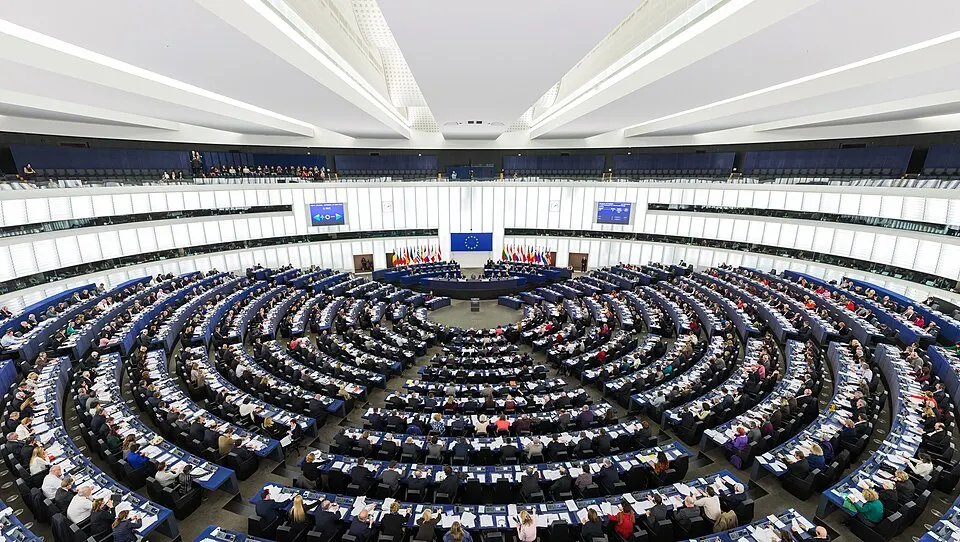
Photo: Diliff, CC BY-SA 3.0, via Wikimedia Commons - Three
- Four
- Five
- Six
Answer: Five. EU citizens have voted for MEPs every five years since the first direct elections in 1979. It is the only directly elected body of the European Union.
In a separation of powers, which of these is NOT one of the three branches of government?
- Legislature
- Executive
- Judiciary
- The press
Answer: The press. The legislature makes laws, the executive carries them out and the judiciary interprets them. The press is often called the 'fourth estate', an informal watchdog, not a branch of government.
In 1893, which country became the first self-governing nation to give women the vote in national elections?
- New Zealand
- Australia
- United Kingdom
- United States
Answer: New Zealand. New Zealand's Electoral Act of 1893 gave women the right to vote. The UK gave all adult women equal voting rights only in 1928, and the US in 1920.
What does a 'bicameral' legislature have?
- Two houses
- Two parties
- Two leaders
- Two capitals
Answer: Two houses. Bicameral means two chambers, like India's Lok Sabha and Rajya Sabha or the US House and Senate. A legislature with a single chamber is unicameral.
Which house of India's Parliament can never be dissolved?
- Lok Sabha
- Rajya Sabha
- Both can be dissolved
- Vidhan Sabha
Answer: Rajya Sabha. The Rajya Sabha is a permanent body: about one-third of its members retire every two years. The Lok Sabha can be dissolved by the President before its five-year term ends.
The 'Diet' is the name of the national legislature of which country?
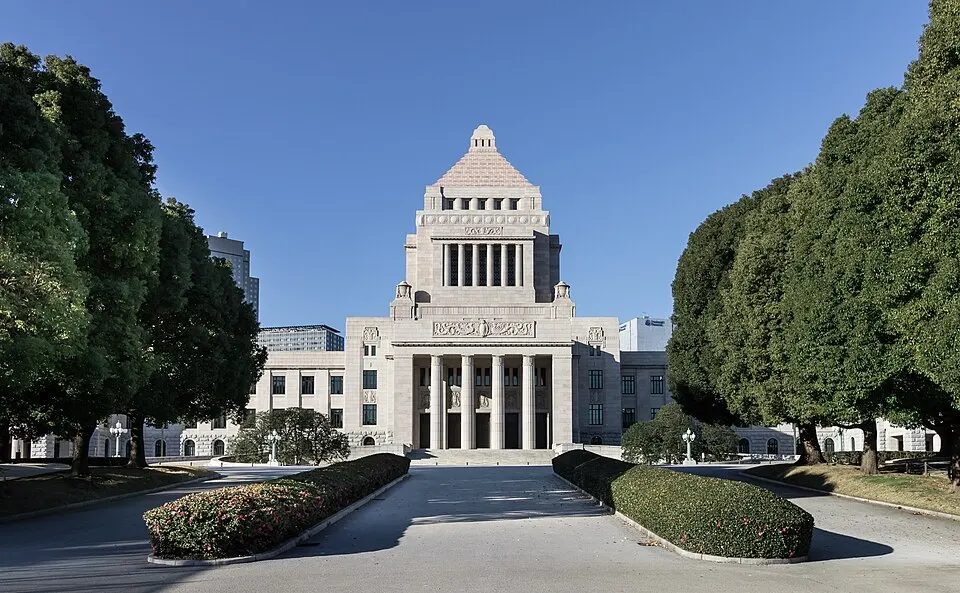
Photo: Kakidai, CC BY-SA 4.0, via Wikimedia Commons - Germany
- Israel
- Russia
- Japan
Answer: Japan. Japan's National Diet has two houses, the House of Representatives and the House of Councillors. Germany has the Bundestag, Israel the Knesset and Russia the Federal Assembly.
Frequently asked questions
Where can I find politics questions with answers?
Right here. This page has 15 politics quiz questions, each with the correct answer and a short explanation. Play the quiz first, then open the answer key below it to review every question.
How many questions are in this politics quiz?
There are 15 questions, ranging from easy basics like the size of the US Senate to harder ones on constitutional amendments and foreign legislatures. Most people finish in about four minutes.
Can I play the politics quiz online for free without signing up?
Yes. The quiz is free and needs no login or account. You see your score instantly at the end and can share it with friends.
Are these GK questions on politics useful for exams?
They cover topics that often appear in general knowledge papers, such as how India's President is elected, the Rajya Sabha and the UN Security Council. Use them for revision, but follow your exam's official syllabus for full coverage.