
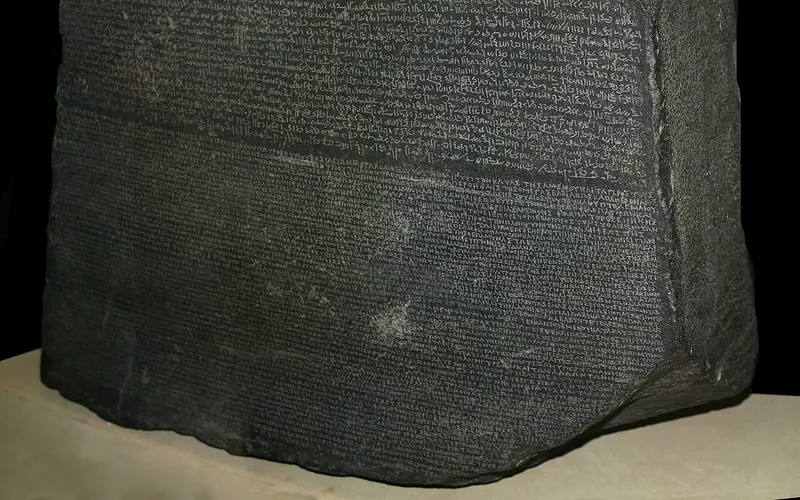
Guess the Language: Languages of the World Quiz
Guess the language from a greeting or a word: this Languages of the World Quiz has 15 questions with answers and short explanations. No login needed.
15 questionsMixed (easy → hard)~3 minNo timer
Updated:
If you liked this





Trending today
 Bollywood QuizBollywood
 India GK Question Answer Quiz (Indian GK)General Knowledge
 Cricket World Cup QuizSports
 सामान्य ज्ञान प्रश्न (GK in Hindi Questions)Hindi
 Guess the FlagGeography
 Current Affairs Quiz (October 2026)Current Affairs
 Friends TV Series QuizMovies & TV
 KBC क्विज़ (KBC Hindi Quiz)Hindi
 F1 Quiz (Formula 1)Sports
 Naruto QuizAnime & Games
About this Languages of the World quiz
This guess the language quiz takes you on a quick trip around the globe in 15 questions. Most rounds show a real everyday phrase, such as a greeting or a thank-you, and ask you to name the language it comes from. The rest test what you know about world languages: which one has the most native speakers, which scripts run right to left, which country has more than 800 languages, and which European language has no known relatives at all.
The questions start easy with Spanish, German and Japanese, then move to trickier picks like Tamil, Swahili, Maori and the Scandinavian languages, where phrases can look almost alike. Every answer comes with a short explanation, so you pick up a new word or fact even when you guess wrong. It suits travellers, language learners, students and anyone who enjoys a geography challenge.
Play it solo as a guess the language game, or read the phrases aloud with friends and family and see who gets the most right. When you finish, share your score and challenge others to beat it.
Fun fact: Hangul, the Korean alphabet, is one of the few writing systems whose creator and date are known. King Sejong promulgated it in 1446, and South Korea still celebrates Hangul Day every October.
Languages of the World questions with answers
Show answers
Guess the language: "Hola, ¿cómo estás?"
- Spanish
- Portuguese
- Italian
- Catalan
Answer: Spanish. It means "Hi, how are you?" in Spanish, which opens every question with an upside-down question mark.
Guess the language: "Danke schön"
- Dutch
- German
- Swedish
- Danish
Answer: German. "Danke schön" is German for "thank you very much". German is an official language of Germany, Austria and Switzerland.
Guess the language: "Arigatou gozaimasu"
- Korean
- Chinese
- Japanese
- Vietnamese
Answer: Japanese. It is a polite "thank you" in Japanese, a language written with three scripts: hiragana, katakana and kanji.
Which language has the most native speakers in the world?
- English
- Hindi
- Spanish
- Mandarin Chinese
Answer: Mandarin Chinese. Mandarin Chinese has the most first-language speakers. English only takes the lead when second-language speakers are counted too.
Which of these languages is written from right to left?
- Arabic
- Hindi
- Korean
- Thai
Answer: Arabic. Arabic script runs right to left, as does Hebrew. Hindi, Korean and Thai are all written left to right.
Guess the language: "Obrigado"
- Spanish
- Portuguese
- Italian
- Romanian
Answer: Portuguese. "Obrigado" means "thank you" in Portuguese (a woman says "obrigada"). Brazil has more Portuguese speakers than any other country.
Guess the language: "Привет" (privet)
- Greek
- Armenian
- Russian
- Hebrew
Answer: Russian. "Privet" is a casual "hi" in Russian, written in the Cyrillic alphabet. Russian is the most widely spoken Slavic language.
Guess the language: "Vanakkam"
- Telugu
- Kannada
- Malayalam
- Tamil
Answer: Tamil. "Vanakkam" is the Tamil greeting. In 2004 Tamil became the first language India declared a classical language.
Guess the language: "Asante sana"
Photo: Charles J. Sharp, CC BY-SA 4.0, via Wikimedia Commons - Swahili
- Zulu
- Amharic
- Yoruba
Answer: Swahili. "Asante sana" is "thank you very much" in Swahili, a language widely spoken across East Africa, including Kenya and Tanzania.
The United Nations has six official languages. Which of these is NOT one of them?

Photo: Superbass, CC BY-SA 4.0, via Wikimedia Commons - Arabic
- German
- Russian
- Spanish
Answer: German. The six are Arabic, Chinese, English, French, Russian and Spanish. German is not on the list.
The Hangul alphabet, promulgated by King Sejong in 1446, was made for which language?
- Japanese
- Mongolian
- Korean
- Vietnamese
Answer: Korean. Hangul was designed so ordinary people could easily read and write Korean. South Korea celebrates it every year on Hangul Day, 9 October.
Guess the language: "Kia ora"
- Hawaiian
- Samoan
- Tongan
- Maori
Answer: Maori. "Kia ora" is a Maori greeting heard all over New Zealand, where Maori is an official language.
Which country is home to the most living languages, more than 800 of them?
- Papua New Guinea
- India
- Nigeria
- Indonesia
Answer: Papua New Guinea. Papua New Guinea has over 800 languages, more than any other country, partly because rugged mountains and valleys kept communities apart.
Guess the language: "Tack så mycket"
- Danish
- Swedish
- Norwegian
- Icelandic
Answer: Swedish. It is "thank you very much" in Swedish. A Dane would say "tusind tak" and a Norwegian "tusen takk".
Which language, spoken in parts of Spain and France, has no proven link to any other living language?

Photo: Jules Verne Times Two, CC BY-SA 4.0, via Wikimedia Commons - Catalan
- Breton
- Basque
- Galician
Answer: Basque. Basque is a language isolate. It was spoken in the region before Indo-European languages arrived and has no known living relatives.
Frequently asked questions
How many questions are in this Languages of the World quiz?
There are 15 multiple-choice questions, each with four options and a short explanation. It takes about four minutes, and the difficulty climbs from familiar languages to harder ones near the end.
Can I play the Languages of the World quiz online for free without signing up?
Yes. The quiz is completely free and needs no login or account. Just press Start, answer the questions, see your score instantly and share it with friends if you like.
How does this guess the language quiz work?
Most questions show a common phrase, like a greeting or a thank-you, and you pick the language it belongs to. A few questions test general facts about world languages, such as the official UN languages and which scripts run right to left.
Is this guess the language game good for language learners?
Yes. Each answer explains what the phrase means and adds a fact about the language, so you learn simple words in several languages. It is also a light way to practise telling similar languages apart, like Swedish and Danish or Spanish and Portuguese.