
![A sphinx (Ancient Greek: Σφίγξ [spʰíŋks], Boeotian: Φίξ [pʰíːks], plural sphinges) is a mythical creature with the head of a human and the b](https://mrdczsezmbkizecosrwe.supabase.co/storage/v1/object/public/play/covers/hardest-trivia-800.webp)
Hardest Trivia Questions
Hardest trivia questions: 15 of the toughest we could find, each with its answer and a quick explanation. No sign-up, instant score.
15 questionsMedium–Hard~3 minNo timer
Updated:
If you liked this


Trending today
 Bollywood QuizBollywood
 India GK Question Answer Quiz (Indian GK)General Knowledge
 Cricket World Cup QuizSports
 सामान्य ज्ञान प्रश्न (GK in Hindi Questions)Hindi
 Guess the FlagGeography
 Current Affairs Quiz (October 2026)Current Affairs
 Friends TV Series QuizMovies & TV
 KBC क्विज़ (KBC Hindi Quiz)Hindi
 F1 Quiz (Formula 1)Sports
 Naruto QuizAnime & Games
All General Knowledge quizzes →
Playing with someone else? There's a version for kids, students, teens or grandparents.
About this Hardest Trivia quiz
These hardest trivia questions are built to separate casual quizzers from serious ones. The 15 questions jump across science, space, geography, history, language and the human body, and many are designed around a tempting wrong answer: the country you assume has the most pyramids, the capital you think is right, the Nobel laureate who almost fits.
The level is medium to hard. A few questions can be cracked with logic, such as the Roman numeral sum, while others reward pure general reading. If you came looking for the hardest GK questions with an Indian angle, look out for the ones on state borders and the year 1947. Each answer has a short explanation, which turns every miss into something you will remember.
Play it alone and see whether you can break 10 out of 15, then send it to the friend who always wins quiz night. It also works as a tie-breaker round for school or office quizzes. Once you finish, the full list of hardest quiz questions with answers sits in the answer key below, so you can check the reasoning behind each one.
One fact to keep: Marie Curie remains the only person to win Nobel Prizes in two different sciences, Physics in 1903 and Chemistry in 1911.
Hardest Trivia questions with answers
Show answers
In which present-day country is the historic desert city of Timbuktu?
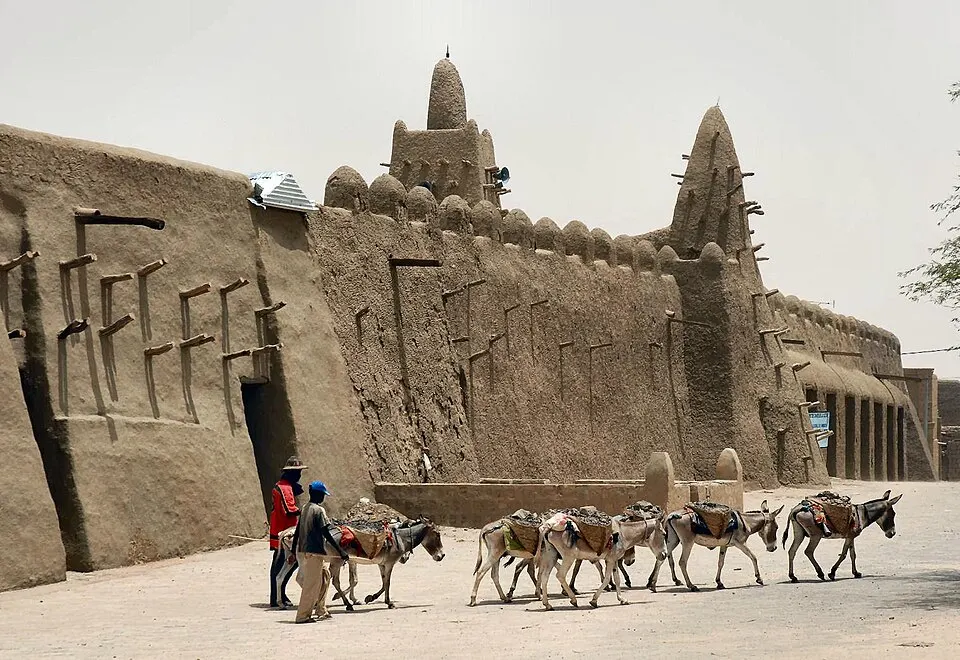
Photo: Emilio Labrador Santiago de Chile, CC BY 2.0, via Wikimedia Commons - Niger
- Mali
- Chad
- Senegal
Answer: Mali. Timbuktu, near the Niger river in Mali, was a great centre of Islamic learning in the 1400s and 1500s. Its old mosques are a UNESCO World Heritage Site.
Which country has the longest coastline in the world?
- Russia
- Australia
- Canada
- Indonesia
Answer: Canada. Canada's coastline runs to roughly 200,000 kilometres, thanks to its thousands of Arctic islands. That is far more than Russia or Indonesia.
Which planet spins on its side, with its axis tilted by about 98 degrees?
- Saturn
- Neptune
- Jupiter
- Uranus
Answer: Uranus. Uranus rolls around the Sun on its side, probably after a giant collision long ago. As a result, each pole gets about 42 years of daylight followed by 42 years of darkness.
Which African country has more ancient pyramids than Egypt?
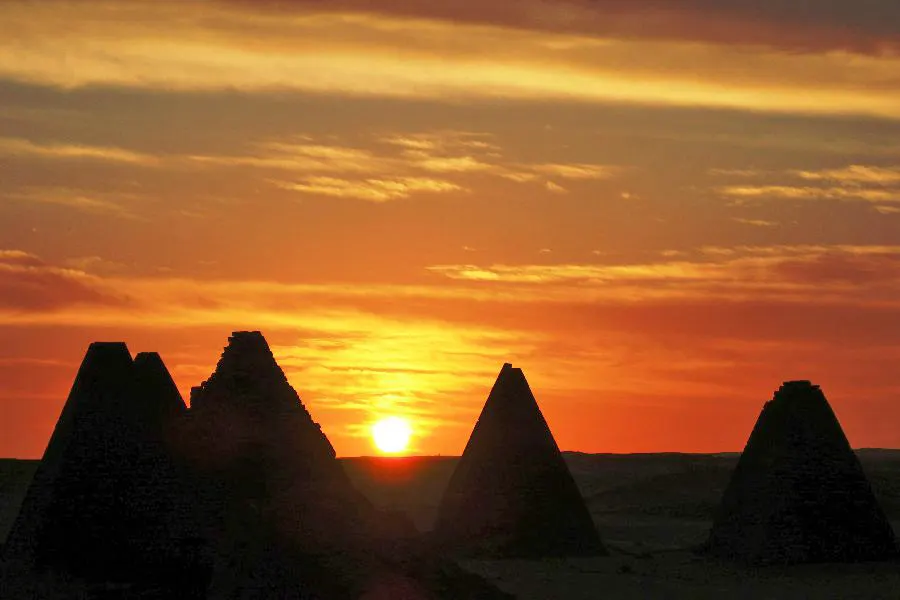
Photo: Виктор Пинчук, CC BY-SA 4.0, via Wikimedia Commons - Sudan
- Ethiopia
- Libya
- Algeria
Answer: Sudan. Sudan has around 200 or more pyramids, built by the kings of Kush at sites such as Meroe. Egypt has fewer, though its pyramids are larger and more famous.
What is the capital of New Zealand?
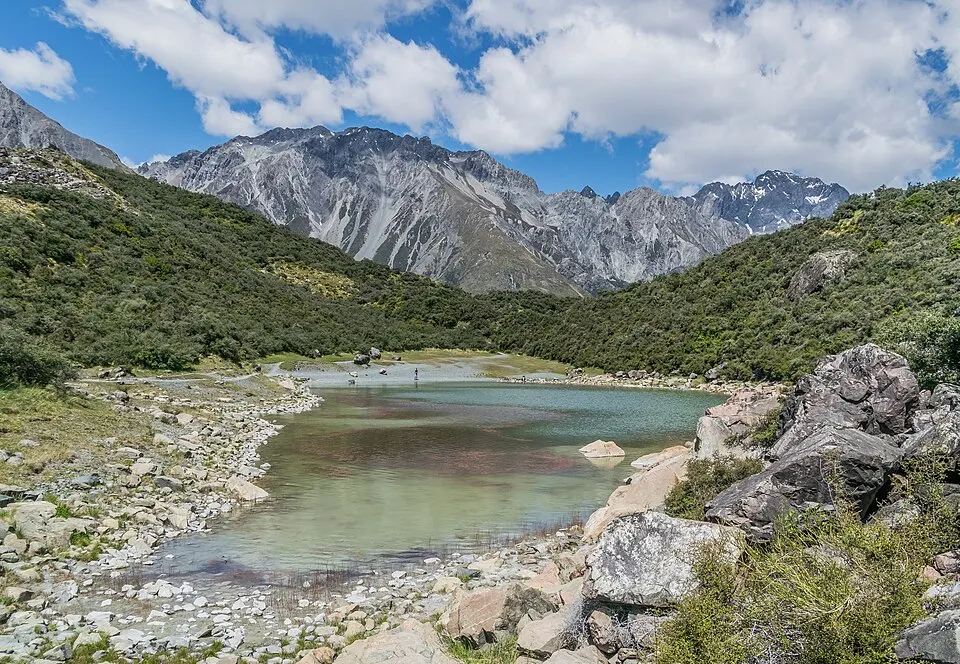
Photo: Krzysztof Golik, CC BY-SA 4.0, via Wikimedia Commons - Auckland
- Christchurch
- Wellington
- Queenstown
Answer: Wellington. Wellington is the capital, though Auckland is the largest city. Wellington is often called the world's southernmost capital of a sovereign nation.
The shortest war on record, lasting under an hour in 1896, was fought between Britain and which state?
- Zanzibar
- Oman
- Ethiopia
- Transvaal
Answer: Zanzibar. The Anglo-Zanzibar War of 27 August 1896 lasted roughly 40 minutes before the sultan's forces surrendered to a British naval bombardment.
Who was the first person to win Nobel Prizes in two different sciences?
- Linus Pauling
- Marie Curie
- Frederick Sanger
- John Bardeen
Answer: Marie Curie. Marie Curie won Physics in 1903 and Chemistry in 1911. Pauling won Chemistry and Peace, while Sanger (Chemistry) and Bardeen (Physics) each won twice in the same field.
Apart from mercury, which is the only element that is liquid at a normal room temperature of about 25 degrees Celsius?
- Bromine
- Chlorine
- Iodine
- Gallium
Answer: Bromine. Bromine is a red-brown liquid non-metal. Gallium melts at about 30 degrees Celsius, so it can melt in your hand but stays solid in a normal room.
How many items make up a 'baker's dozen'?
- 12
- 13
- 14
- 24
Answer: 13. A baker's dozen is 13. The usual story is that medieval bakers added an extra loaf so they could not be accused of selling short weight.
Which year is written in Roman numerals as MCMXLVII?
- 1497
- 1957
- 1967
- 1947
Answer: 1947. M is 1000, CM is 900, XL is 40 and VII is 7, which adds up to 1947, the year of India's independence.
Which Indian state shares its borders with the largest number of other states?
- Assam
- Madhya Pradesh
- Maharashtra
- Uttar Pradesh
Answer: Uttar Pradesh. Uttar Pradesh touches eight states as well as the National Capital Territory of Delhi. Assam and Chhattisgarh come next, with seven each.
Which blood group is known as the universal donor for red blood cells?
- AB positive
- A negative
- O negative
- B positive
Answer: O negative. O negative red cells carry no A, B or RhD antigens, so almost anyone can receive them in an emergency. AB positive people are universal recipients.
What is the hardest substance in the human body?
- Tooth enamel
- Thigh bone
- Fingernail keratin
- Cartilage
Answer: Tooth enamel. Enamel, the outer layer of teeth, is mostly mineral crystals and is harder than bone. Unlike bone, it cannot repair itself once damaged.
Counting its overseas territories, which country spans the most time zones?
- Russia
- United States
- France
- United Kingdom
Answer: France. France covers 12 time zones thanks to territories from the Caribbean to the Pacific. Russia, the largest country, has 11.
The ancient rock-cut city of Petra is in which present-day country?
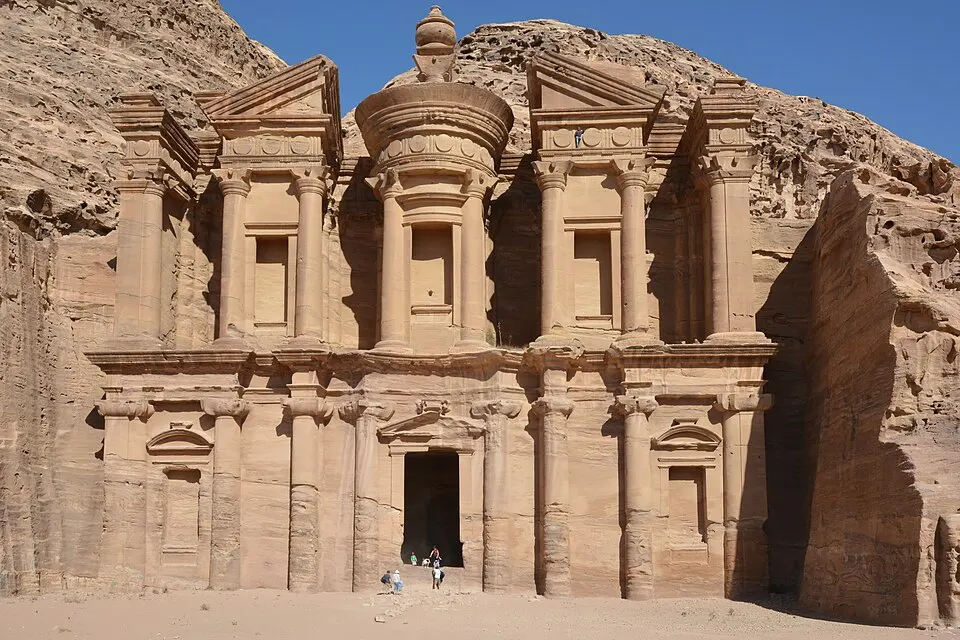
Photo: Azurfrog, CC BY-SA 3.0, via Wikimedia Commons - Egypt
- Jordan
- Syria
- Lebanon
Answer: Jordan. Petra in southern Jordan was the capital of the Nabataeans, who carved its buildings into rose-red sandstone cliffs. It is a UNESCO World Heritage Site.
Frequently asked questions
Where can I find Hardest questions with answers?
On this page. Play the 15 hardest trivia questions for an instant score, then open the answer key to see every correct answer with a short explanation of why it is right.
What are some hard Hardest questions?
Try these: which African country has more ancient pyramids than Egypt (Sudan), which country has the longest coastline (Canada) and who first won Nobel Prizes in two different sciences (Marie Curie). The quiz has more like them, each with a trap answer.
How many questions are in this Hardest quiz?
There are 15 multiple-choice questions with four options each. Most players take about six to eight minutes because the questions reward a moment's thought.
Can I play the Hardest quiz online for free without signing up?
Yes. It is completely free with no login or sign-up, and you see your score the moment you finish. Replay it as often as you like and share your result.