

General Knowledge Quiz for Students
This general knowledge quiz for students has 15 questions, from easy to tricky, and every answer comes with a quick explanation. No sign-up needed.
15 questionsMixed (easy → hard)~3 minNo timer
Updated:
If you liked this

Trending today
 Bollywood QuizBollywood
 India GK Question Answer Quiz (Indian GK)General Knowledge
 Cricket World Cup QuizSports
 सामान्य ज्ञान प्रश्न (GK in Hindi Questions)Hindi
 Guess the FlagGeography
 Current Affairs Quiz (October 2026)Current Affairs
 Friends TV Series QuizMovies & TV
 KBC क्विज़ (KBC Hindi Quiz)Hindi
 F1 Quiz (Formula 1)Sports
 Naruto QuizAnime & Games
All General Knowledge quizzes →
Playing with someone else? There's a version for kids, teens or grandparents.
About this General Knowledge for Students quiz
This quiz for students brings together the general knowledge that school and college learners are expected to know: science basics, the human body, Indian history and the Constitution, geography, maths and India's achievements in space. Most of the 15 questions link to topics taught in NCERT classes, so they double as quick revision.
The questions move from easy to tricky. The opening ones check ideas such as the powerhouse of the cell and how water travels through a plant, and later ones test details students often mix up, like the number of Fundamental Duties or what a light-year really measures. Every answer has a one- or two-line explanation that adds a related fact, which makes these GK questions for students useful for learning, not just scoring.
Teachers can project the quiz in class, run it as a warm-up before a quiz competition for students, or share the link as homework. Students preparing for olympiads, scholarship tests or entrance exams can play it as a short timed drill and note down anything they missed. Because this online quiz for students needs no sign-up, it is easy to share in a class group and compare scores.
A fact to remember: when Mangalyaan reached Mars orbit in September 2014, India became the first country to get there on its very first attempt.
General Knowledge for Students questions with answers
Show answers
Which plant tissue carries water and minerals from the roots up to the leaves?
- Phloem
- Stomata
- Xylem
- Cambium
Answer: Xylem. Xylem moves water upwards, while phloem carries food made in the leaves to other parts of the plant. Stomata are tiny pores on leaves.
How many Fundamental Duties are listed in the Indian Constitution today?
- 10
- 11
- 12
- 6
Answer: 11. Ten duties were added in 1976 and an eleventh, on providing education to children aged 6 to 14, was added in 2002. They are listed in Article 51A.
Which part of the cell is known as its 'powerhouse'?
- Mitochondria
- Nucleus
- Ribosome
- Chloroplast
Answer: Mitochondria. Mitochondria release energy from food through respiration and store it as ATP. The nucleus controls the cell, and ribosomes make proteins.
Who wrote the book 'The Discovery of India'?
- Mahatma Gandhi
- Jawaharlal Nehru
- Rabindranath Tagore
- Subhas Chandra Bose
Answer: Jawaharlal Nehru. Nehru wrote it while imprisoned in Ahmednagar Fort during the Quit India years, and it was published in 1946. Gandhi's autobiography is 'The Story of My Experiments with Truth'.
Which type of blood cell helps the body fight germs and infections?
- Red blood cells
- Platelets
- Epithelial cells
- White blood cells
Answer: White blood cells. White blood cells attack germs and form part of the immune system. Red blood cells carry oxygen and platelets help blood to clot.
India's Mars Orbiter Mission reached Mars orbit on its first attempt in 2014. What is its popular name?
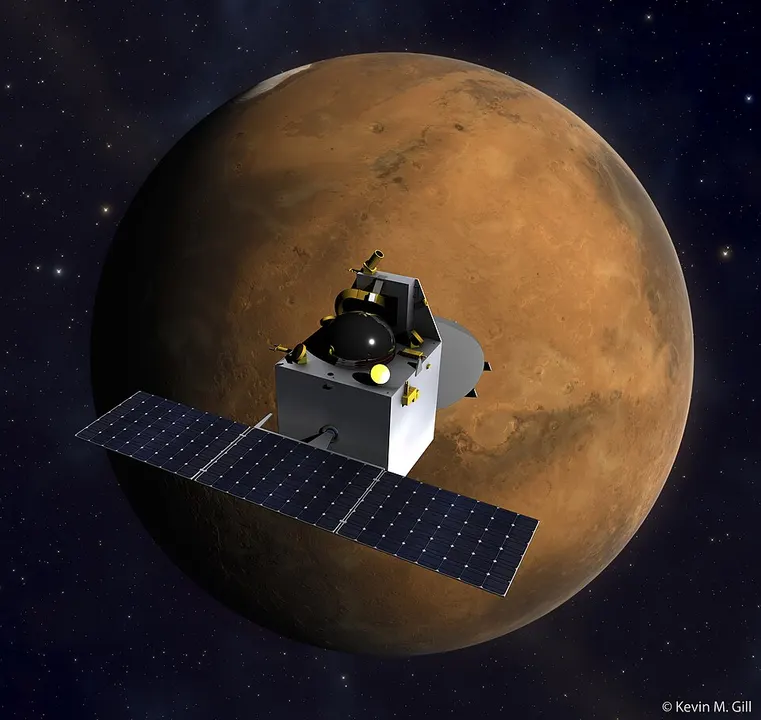
Photo: Kevin Gill from Nashua, NH, United States, CC BY-SA 2.0, via Wikimedia Commons - Mangalyaan
- Chandrayaan
- Aditya
- Gaganyaan
Answer: Mangalyaan. Mangalyaan made India the first country to reach Mars orbit on its first try. Chandrayaan missions go to the Moon and Aditya-L1 studies the Sun.
The chemical symbol Fe stands for which element?
- Fluorine
- Lead
- Iron
- Francium
Answer: Iron. Fe comes from 'ferrum', the Latin word for iron. Fluorine is F, lead is Pb and francium is Fr.
Which is the largest hot desert in the world?
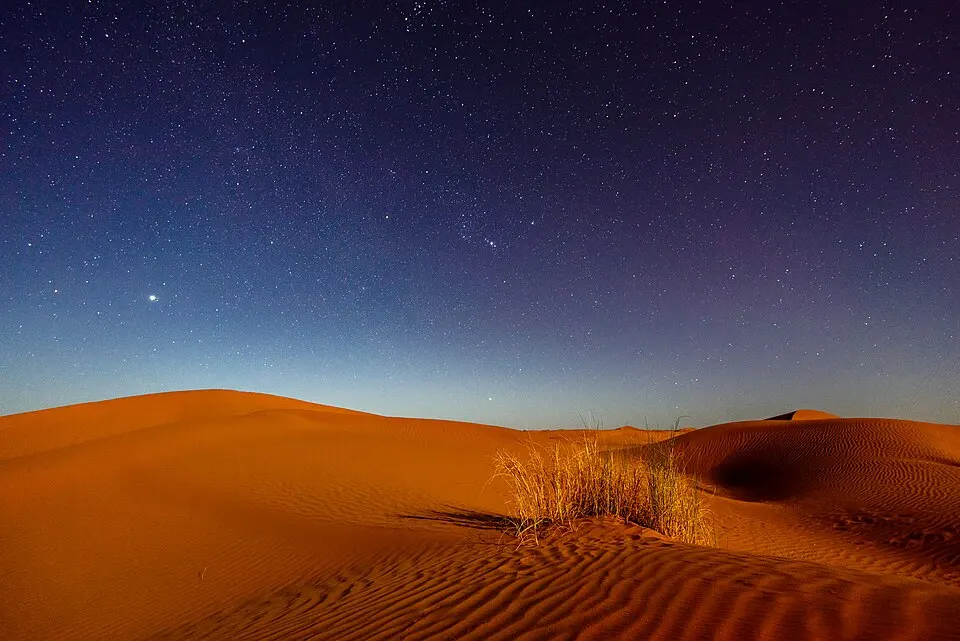
Photo: Sergey Pesterev, CC BY-SA 4.0, via Wikimedia Commons - Thar
- Gobi
- Kalahari
- Sahara
Answer: Sahara. The Sahara in North Africa is the largest hot desert. Counting cold deserts too, Antarctica is the largest desert of all.
What is the SI unit of force?
- Joule
- Newton
- Pascal
- Watt
Answer: Newton. Force is measured in newtons, after Isaac Newton. The joule measures energy, the pascal pressure and the watt power.
Which mountain range is traditionally seen as the boundary between Europe and Asia?
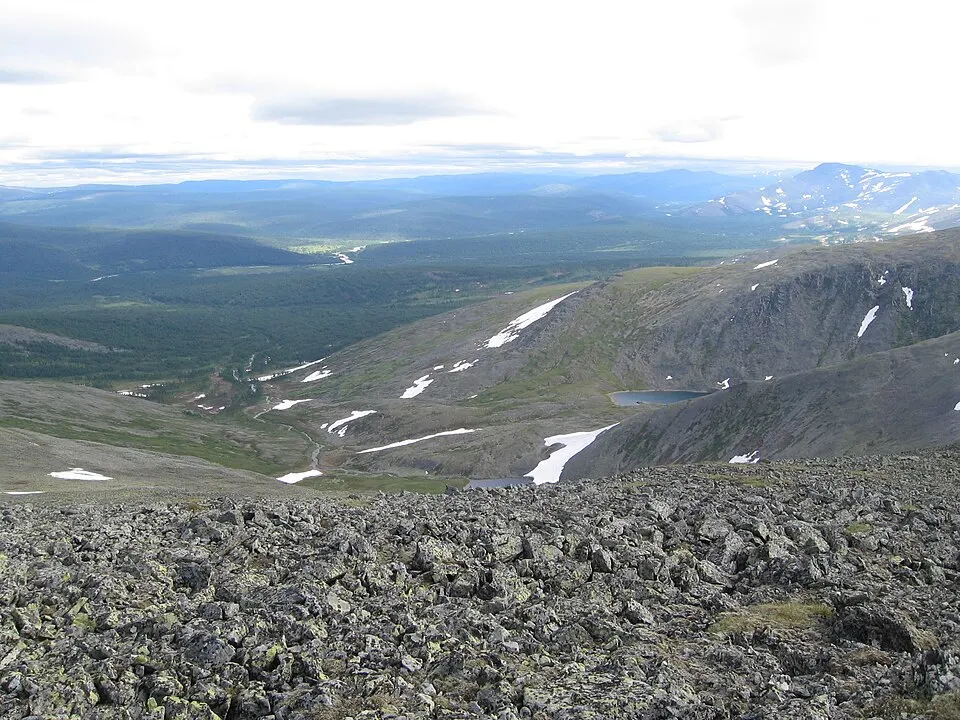
Photo: ugraland [1] from Moscow, Russia, CC BY 2.0, via Wikimedia Commons - Alps
- Andes
- Himalayas
- Ural Mountains
Answer: Ural Mountains. The Urals run north to south through Russia and mark the usual Europe–Asia divide. The Andes are in South America and the Alps in central Europe.
Which of these numbers is NOT a prime number?
- 2
- 17
- 21
- 29
Answer: 21. 21 equals 3 times 7, so it has factors other than 1 and itself. 2 is the only even prime number.
In which year was the Battle of Plassey fought?
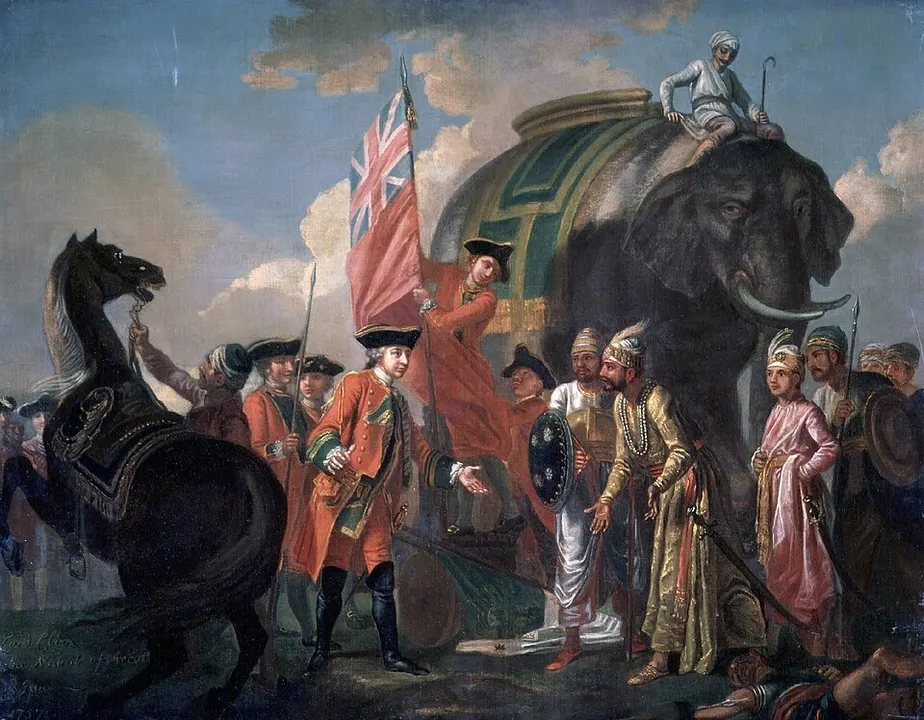
Photo: Francis Hayman, Public domain, via Wikimedia Commons - 1757
- 1764
- 1857
- 1526
Answer: 1757. At Plassey in 1757, Robert Clive's East India Company forces defeated Siraj-ud-Daulah, the Nawab of Bengal. The Battle of Buxar followed in 1764.
Who is popularly known as the 'Missile Man of India'?
- Vikram Sarabhai
- A. P. J. Abdul Kalam
- Homi J. Bhabha
- Satish Dhawan
Answer: A. P. J. Abdul Kalam. Dr Kalam led India's missile programme, including Agni and Prithvi, and later served as the 11th President. Vikram Sarabhai is called the father of India's space programme.
A light-year is a unit used to measure what?
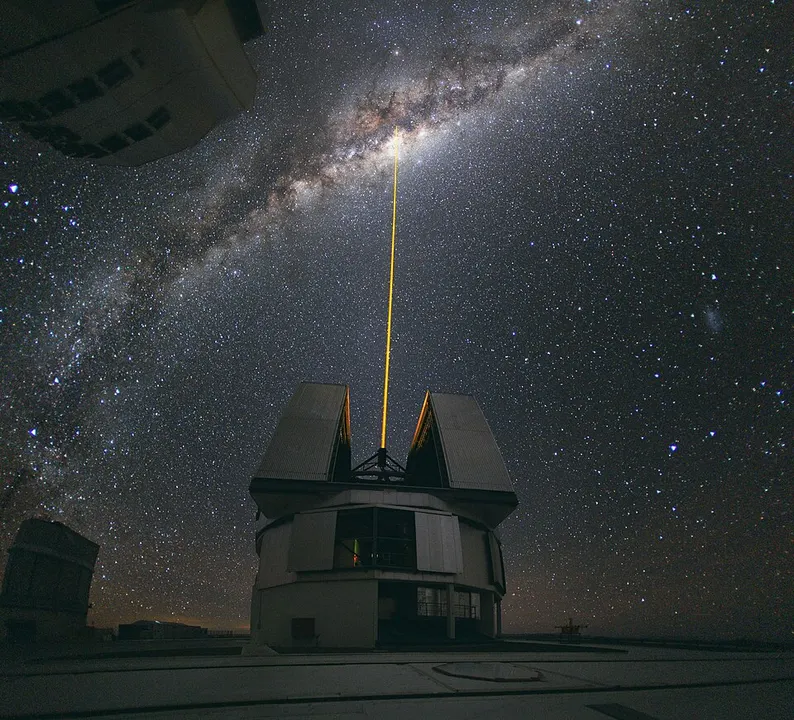
Photo: ESO/Yuri Beletsky (ybialets at eso.org), CC BY 4.0, via Wikimedia Commons - Time
- Speed
- Distance
- Brightness
Answer: Distance. A light-year is the distance light travels in one year, about 9.46 trillion kilometres. Despite the name, it does not measure time.
Which organ filters waste from the blood to form urine?
- Kidney
- Liver
- Lungs
- Heart
Answer: Kidney. Each kidney contains about a million tiny filters called nephrons. Humans have two kidneys but can live healthily with one.
Frequently asked questions
Where can I find General Knowledge for Students questions with answers?
On this page. Play the quiz for an instant score, then open the answer key to see all 15 general knowledge questions for students with correct answers and short explanations. Our India, world and history GK pages offer more practice.
How many questions are in this General Knowledge for Students quiz?
The quiz has 15 multiple-choice questions with four options each. Most students finish in five to seven minutes, which makes it a good fit for the start of a class period.
Can I play the General Knowledge for Students quiz online for free without signing up?
Yes. It is free with no login or sign-up, and it works on phones, tablets and computers. Students can replay it to improve their score and share the result with classmates.