
Solid, Liquid, Gas & Beyond
This states of matter quiz for Classes 6 to 9 goes from ice and steam to the stranger states beyond. Fifteen questions on melting, boiling, evaporation and simple chemistry you can see in your own kitchen.
15 questionsMedium~3 minNo timer
Updated:
If you liked this

Trending today
 Bollywood QuizBollywood
 India GK Question Answer Quiz (Indian GK)General Knowledge
 Cricket World Cup QuizSports
 सामान्य ज्ञान प्रश्न (GK in Hindi Questions)Hindi
 Guess the FlagGeography
 Current Affairs Quiz (October 2026)Current Affairs
 Friends TV Series QuizMovies & TV
 KBC क्विज़ (KBC Hindi Quiz)Hindi
 F1 Quiz (Formula 1)Sports
 Naruto QuizAnime & Games
About this States of Matter quiz
This states of matter quiz is a 15-question science round for Classes 6 to 9. It covers solids, liquids and gases, the changes between them such as melting, boiling, condensation, evaporation and sublimation, and goes beyond the big three to two rarer states. A few questions also touch on mixtures, chemical changes and natural indicators.
Most questions begin with something you can see at home: a sweating glass, a clay matka, an agarbatti, a bottle in the freezer or a cylinder of CNG. That makes it easy to reason towards the answer even if you have forgotten the textbook term. The topics follow NCERT chapters such as Matter in Our Surroundings and Acids, Bases and Salts, and each answer has a short explanation, so the quiz works well as a lesson starter or quick revision before a test.
Everything around you is matter, and its state depends on how tightly its particles are packed and how fast they move. Heat them up and they move faster and spread out; cool them and they slow down and pack together. Play once, read the notes, then come back and beat your score.
States of Matter questions with answers
Show answers
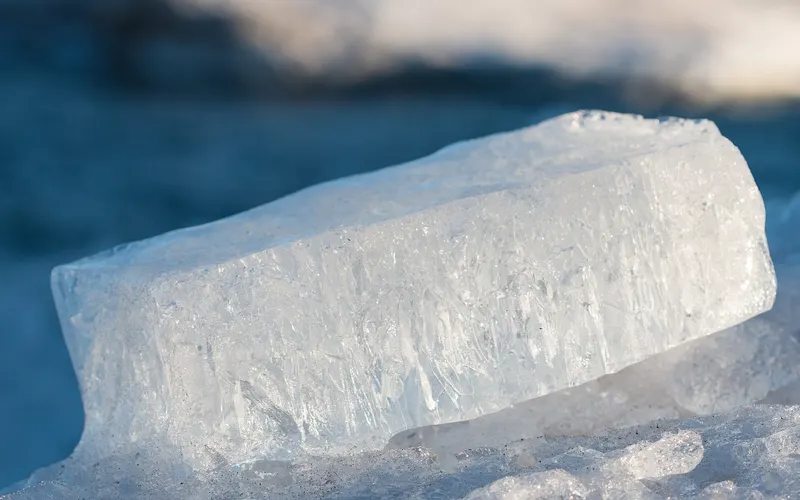
Fill a glass bottle to the brim with water, seal it and leave it in the freezer, and it may crack. Why?
- Ice is heavier than water
- Water expands as it freezes
- The glass shrinks in the cold
- The air inside turns solid
Answer: Water expands as it freezes. Water grows by about 9% in volume as it turns to ice, because ice's crystals are more open. That push can split glass, pipes and even rocks.
Take a cold glass out of the fridge and it starts to 'sweat'. What is really happening?
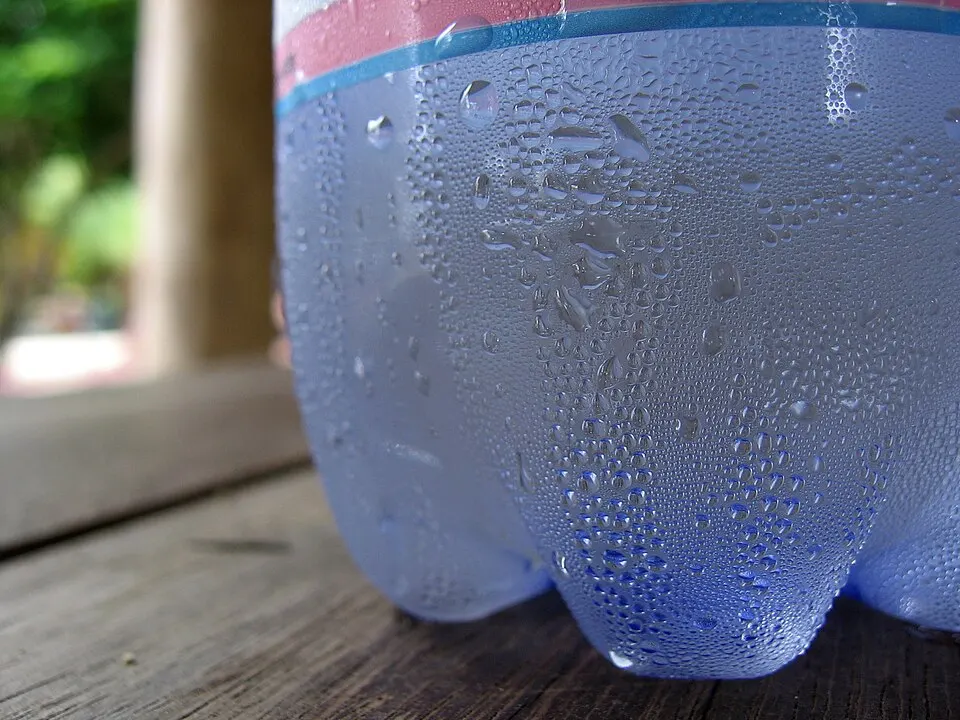
Photo: CC BY-SA 3.0, via Wikimedia Commons - Melting
- Condensation
- Evaporation
- Sublimation
Answer: Condensation. Water vapour in the air cools on the glass and turns into droplets. That's condensation.
Why does water boil below 100 °C high up on a mountain?
- The sunlight is stronger
- The air is colder
- The air pressure is lower
- The water is purer
Answer: The air pressure is lower. With less air pressing down, water molecules escape as vapour at a lower temperature.
Dry ice is frozen carbon dioxide. Why is it called 'dry'?
- It is coated in powder
- It soaks up water
- It has no smell
- It never melts into a liquid
Answer: It never melts into a liquid. At normal air pressure carbon dioxide can't exist as a liquid, so dry ice turns straight into gas at about −78.5 °C and leaves no puddle.
This silvery metal sits solid on a shelf but melts in your palm, at just under 30 °C. Which metal is it?
- Mercury
- Sodium
- Gallium
- Aluminium
Answer: Gallium. Gallium melts at 29.76 °C, below body temperature. Mercury, used in old thermometers, is already a liquid at room temperature.
Stars like the Sun are made mostly of which state of matter?
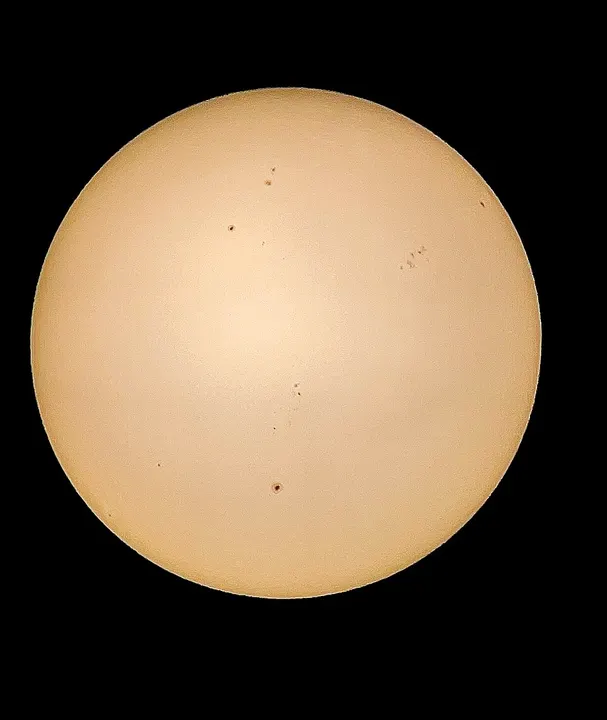
Photo: Juliebern, CC0, via Wikimedia Commons - Plasma
- Liquid
- Gas
- Solid
Answer: Plasma. Plasma is gas so hot that its atoms lose electrons. It is the most common state of visible matter in the universe.
Which of these is a chemical change?
- Melting butter
- Burning paper
- Tearing paper
- Dissolving sugar in water
Answer: Burning paper. Burning makes new substances like ash and gases; it can't be undone.
Which of these is a mixture, not a compound?
- Air
- Carbon dioxide
- Table salt
- Water
Answer: Air. Air is a mixture of gases like nitrogen and oxygen that are not chemically joined.
Soak china rose (gudhal) petals in warm water to make a home-made indicator. What colour does it turn in lemon juice?
- Green
- Blue
- Yellow
- Dark pink
Answer: Dark pink. China rose indicator turns acids dark pink (magenta) and bases green. Lemon juice is acidic.
Which gas makes up most of the air we breathe?
- Nitrogen
- Oxygen
- Argon
- Carbon dioxide
Answer: Nitrogen. Air is about 78% nitrogen and only about 21% oxygen.
In summer, water in a clay matka stays cooler than water in a steel bottle. What cools it?
- Clay blocks the sunlight
- Water seeps out and evaporates
- Cold air is trapped in the clay
- Minerals in the clay chill it
Answer: Water seeps out and evaporates. Tiny pores let a little water reach the outside, where it evaporates. Evaporation takes heat from the water inside.
Light an agarbatti in one corner and soon the whole room smells of it. What is this spreading of particles on their own called?
- Freezing
- Sublimation
- Diffusion
- Condensation
Answer: Diffusion. Particles of the scented smoke keep moving and mix with the air. Diffusion is faster when particles are hot.
Many buses and autos run on CNG, squeezed into strong cylinders. What does the C stand for?
- Cooled
- Carbon
- Clean
- Compressed
Answer: Compressed. Compressed natural gas, mostly methane. Gases can be squeezed a lot because their particles are far apart.
In 1995, atoms cooled to a whisker above absolute zero formed a fifth state of matter, predicted 70 years earlier by a German-born physicist and an Indian one. Name it.
- Liquid crystal
- Supercritical fluid
- Plasma
- Bose-Einstein condensate
Answer: Bose-Einstein condensate. It is named after Satyendra Nath Bose and Albert Einstein. The team that first made it won the 2001 Nobel Prize in Physics.
Stir a spoonful of sugar into a glass of water and the water level hardly rises. Where did the sugar go?
- Into gaps between water particles
- It turned into a gas
- It sank to the bottom as water
- It floated off as steam
Answer: Into gaps between water particles. Particles of matter have spaces between them. The dissolved sugar particles slip into the spaces between water particles.
Frequently asked questions
What are the states of matter?
The three everyday states are solid, liquid and gas. Scientists also count more unusual states that need extreme heat or extreme cold, and this quiz has a question on each.
What is sublimation?
Sublimation is a change straight from solid to gas without becoming a liquid first. Camphor and naphthalene balls both sublime at room temperature, which is why they slowly shrink in a cupboard.
What is the difference between evaporation and boiling?
Evaporation happens only at the surface of a liquid and at any temperature. Boiling happens throughout the liquid at one fixed temperature, its boiling point, which for water is 100 °C at sea level.