
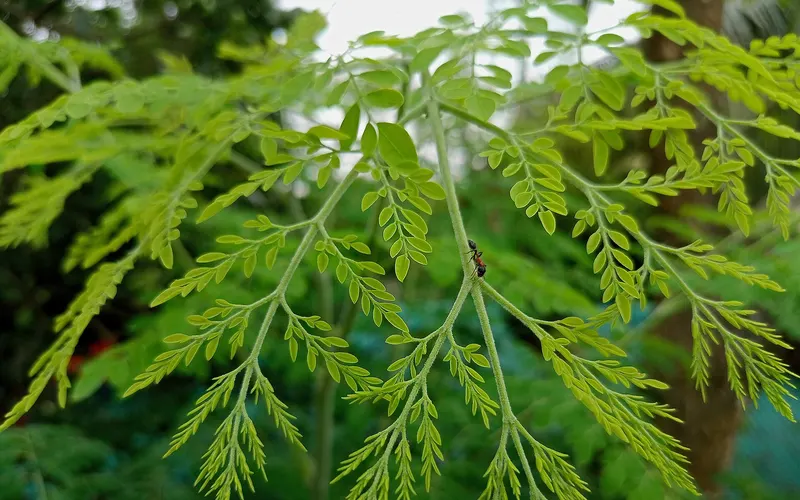
Green Machines: Plants & Photosynthesis
This photosynthesis quiz for Classes 5 to 8 explores how plants turn sunlight, air and water into food. Fifteen questions on leaves, pigments, pipes and some very unusual plants.
15 questionsMedium~3 minNo timer
Updated:
If you liked this


Trending today
 Bollywood QuizBollywood
 India GK Question Answer Quiz (Indian GK)General Knowledge
 Cricket World Cup QuizSports
 सामान्य ज्ञान प्रश्न (GK in Hindi Questions)Hindi
 Guess the FlagGeography
 Current Affairs Quiz (October 2026)Current Affairs
 Friends TV Series QuizMovies & TV
 KBC क्विज़ (KBC Hindi Quiz)Hindi
 F1 Quiz (Formula 1)Sports
 Naruto QuizAnime & Games
About this Photosynthesis quiz
This photosynthesis quiz is a short science round for Classes 5 to 8 on how green plants make their own food. Its 15 questions cover chlorophyll and other leaf pigments, the gases plants take in and give out, the pipes that move water and food, and a few remarkable plants, from insect-eaters to record-breaking growers.
The questions follow NCERT topics such as nutrition in plants, transport in plants and life processes, and each answer comes with a one-line explanation. Questions start from things students have seen, a yellow autumn leaf, a cactus, a potato slice or a sunflower, so even younger players can work towards the answer. Teachers can use it as a lesson starter or a quick revision game, and families can play it together after a walk in the park.
Photosynthesis feeds almost every food chain on Earth and refreshes the oxygen in the air. In simple words, a leaf uses the energy of sunlight to join carbon dioxide and water into sugar, giving out oxygen. Play once, read the notes, then try again and beat your score.
Photosynthesis questions with answers
Show answers
When chlorophyll breaks down in autumn, yellow and orange pigments that hid in the leaf all summer show through. What are they called?
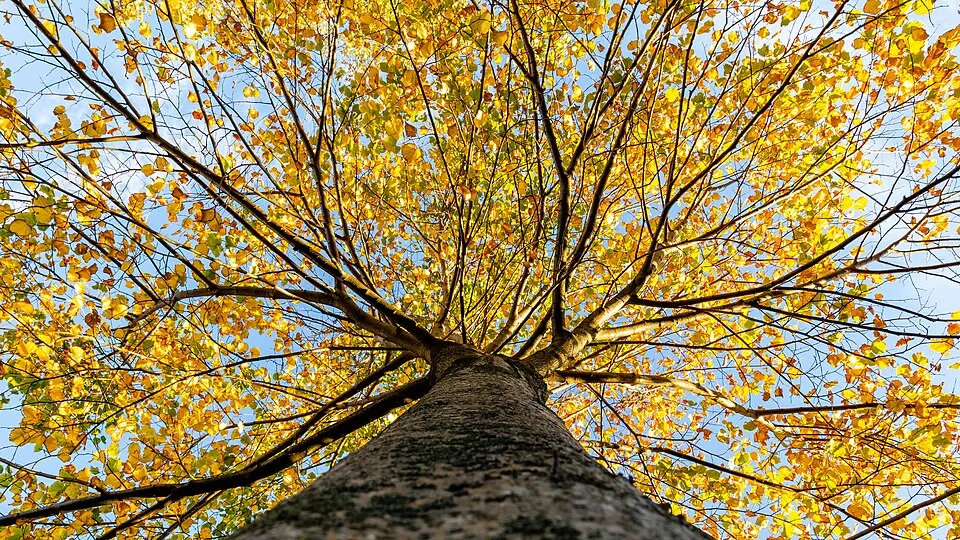
Photo: Michal Klajban, CC BY-SA 4.0, via Wikimedia Commons - Anthocyanins
- Carotenoids
- Melanins
- Haemoglobins
Answer: Carotenoids. Carotenoids, the same pigments that colour carrots, sit in the leaf all season masked by green. Autumn reds come mostly from anthocyanins.
In photosynthesis, a leaf builds carbon dioxide and water into which simple sugar?
- Lactose
- Maltose
- Glucose
- Galactose
Answer: Glucose. Leaves make glucose and give out oxygen. Much of the glucose is then stored as starch.
Each tiny pore on a leaf is opened and shut by a pair of cells, one on either side. What are they called?
- Root hair cells
- Guard cells
- Pollen cells
- Phloem cells
Answer: Guard cells. Guard cells swell with water to open the pore and go limp to close it. In most leaves they are bean-shaped.
A plant gives out oxygen while making its food. That oxygen is split out of which substance?
- Water
- Chlorophyll
- Glucose
- Carbon dioxide
Answer: Water. Light energy splits water molecules and their oxygen is released; the carbon dioxide is built into sugar.
Water climbs from a tall tree's roots to its top leaves mainly because water vapour escaping from the leaves draws more up, like sipping through a straw. What is this called?
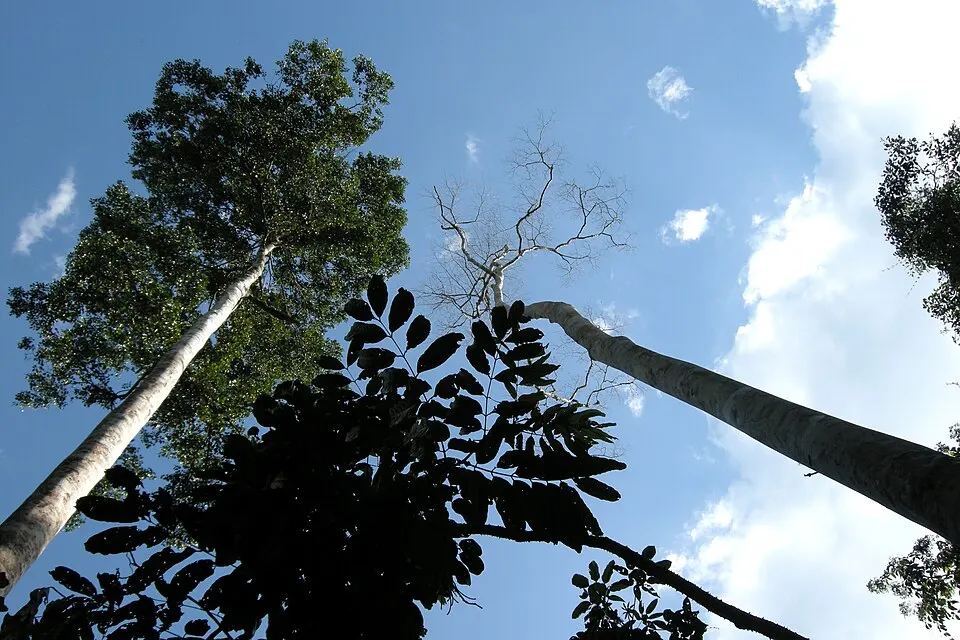
Photo: Vyacheslav Argenberg, CC BY 4.0, via Wikimedia Commons - Gravity
- Photosynthesis
- Transpiration pull
- Phototropism
Answer: Transpiration pull. As leaves lose water vapour, they pull a column of water up through the xylem from the roots.
A drop of iodine turns a potato slice blue-black. Which stored food is showing up?
- Vitamin C
- Protein
- Fat
- Starch
Answer: Starch. Iodine turns starch blue-black. It's the classic test to show a leaf has made starch.
Some garden plants have deep red or purple leaves, yet they still make their own food. How?
- They take food from the soil
- They catch insects
- Their chlorophyll is hidden by red pigment
- They borrow food from nearby plants
Answer: Their chlorophyll is hidden by red pigment. These leaves still contain chlorophyll; large amounts of red, brown or purple pigments simply mask the green.
The sharp spines on a cactus like this one are really which part of the plant, changed to save water?
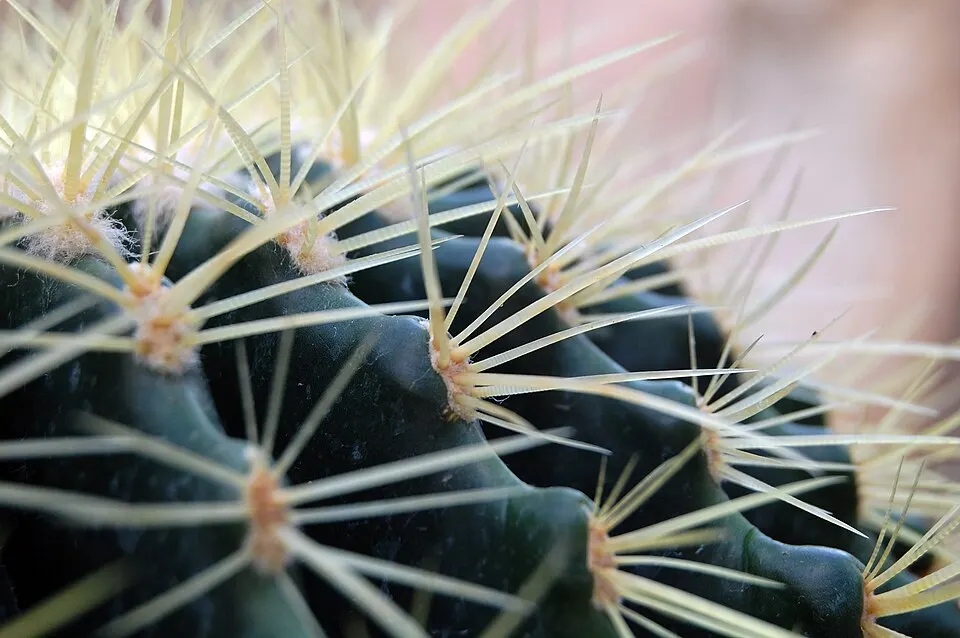
Photo: Whyfor, CC BY-SA 4.0, via Wikimedia Commons - Roots
- Flowers
- Seeds
- Leaves
Answer: Leaves. Thin spines lose far less water than broad leaves, and they keep thirsty animals away. The thick green stem does the photosynthesis.
Pitcher plants make their own food, yet still eat insects. What are they after?
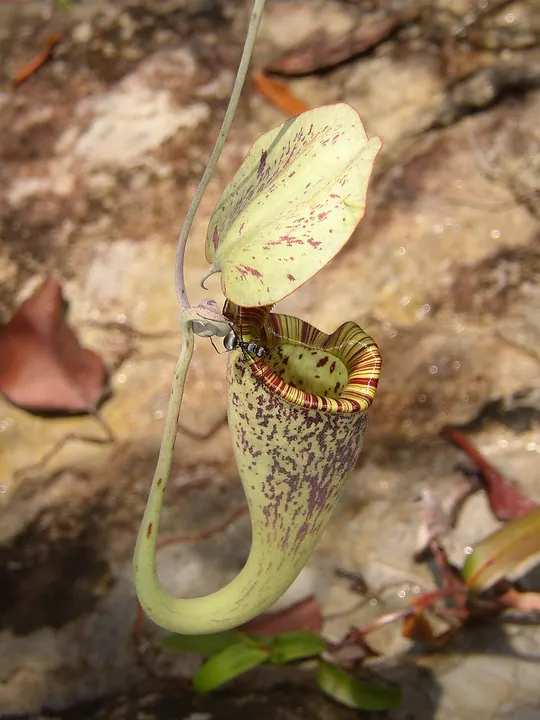
Photo: en:User:NepGrower, CC BY 2.5, via Wikimedia Commons - Sugar
- Water
- Oxygen
- Nitrogen
Answer: Nitrogen. They grow in poor soil and digest insects for nitrogen.
Chlorophyll soaks up red and blue light. So why do most leaves look green to us?
- They are full of water
- They absorb green light
- They reflect green light
- They contain iron
Answer: They reflect green light. Chlorophyll absorbs red and blue light and reflects green.
About half of the oxygen made on Earth comes from the ocean. Which tiny drifting living things make most of it?
- Phytoplankton
- Jellyfish
- Sea urchins
- Starfish
Answer: Phytoplankton. Phytoplankton, mostly microscopic algae and some bacteria, photosynthesise near the sunlit surface, just like plants on land.
Some kinds of this giant grass can shoot up about 91 cm in a single day, the fastest growth of any plant. Name it.
- Sugarcane
- Bamboo
- Banana
- Eucalyptus
Answer: Bamboo. Guinness World Records lists certain bamboo species as the fastest-growing plants, at up to 91 cm a day.
Before they bloom, young sunflower plants do something unusual every day. What?
- Turn east to west with the sun
- Close up at noon
- Drop a leaf every night
- Glow faintly after dark
Answer: Turn east to west with the sun. An inner clock swings the young head west through the day and back east at night. Once it blooms, the flower stays facing east.
Split photosynthesis into its two parts. What does the first part, photo, mean in ancient Greek?
- Leaf
- Green
- Light
- Food
Answer: Light. Greek phos (photos) means light, and synthesis means putting together. So photosynthesis is putting together with light.
This plant snaps its leaf shut on an insect, but only if the trigger hairs inside are touched twice within about 20 seconds. Name it.
- Venus flytrap
- Pitcher plant
- Sundew
- Bladderwort
Answer: Venus flytrap. The double touch stops the Venus flytrap wasting energy on raindrops or falling twigs.
Frequently asked questions
What is photosynthesis in simple words?
Photosynthesis is how green plants make their own food. Using the energy in sunlight, chlorophyll in their leaves turns carbon dioxide and water into sugar, and oxygen is given out.
What are the raw materials of photosynthesis?
Carbon dioxide from the air and water from the soil, with sunlight as the energy source and chlorophyll to capture it.
Do plants make food at night?
No. Photosynthesis stops once it gets dark. Plants keep respiring day and night, which is why they give out carbon dioxide at night.