
Inside the Amazing Human Body
This human body quiz for Classes 5 to 9 takes you from your tiniest bone to your funny bone. Fifteen questions on blood, bones, lungs and the odd things your body does every day.
15 questionsMedium~3 minNo timer
Updated:
If you liked this




Trending today
 Bollywood QuizBollywood
 India GK Question Answer Quiz (Indian GK)General Knowledge
 Cricket World Cup QuizSports
 सामान्य ज्ञान प्रश्न (GK in Hindi Questions)Hindi
 Guess the FlagGeography
 Current Affairs Quiz (October 2026)Current Affairs
 Friends TV Series QuizMovies & TV
 KBC क्विज़ (KBC Hindi Quiz)Hindi
 F1 Quiz (Formula 1)Sports
 Naruto QuizAnime & Games
About this Human Body quiz
This human body quiz is a quick biology tour for Classes 5 to 9. Its 15 questions visit the blood, bones, lungs, gut and senses, mixing textbook ideas with the strange things your body does every day, like hiccups, tingling elbows and a runny nose when you cry.
The questions follow what students meet in NCERT science, from blood cells and digestion to breathing and the skeleton, but each one starts from something familiar so that younger players can reason their way to an answer. Every answer comes with a short explanation that adds one more fact, so the quiz works as revision as well as a game. It makes a good warm-up before a science lesson, a starter for a school quiz club or a family challenge at home.
Your body is busy even when you sit still. Your heart keeps pumping, your lungs keep swapping gases, and your kidneys clean your blood without a break, all without you having to think about it. Play once, read the notes, then try again and see how much you remember.
Human Body questions with answers
Show answers
The man in this photo is giving blood. In India, what is the youngest age at which a healthy person can donate?
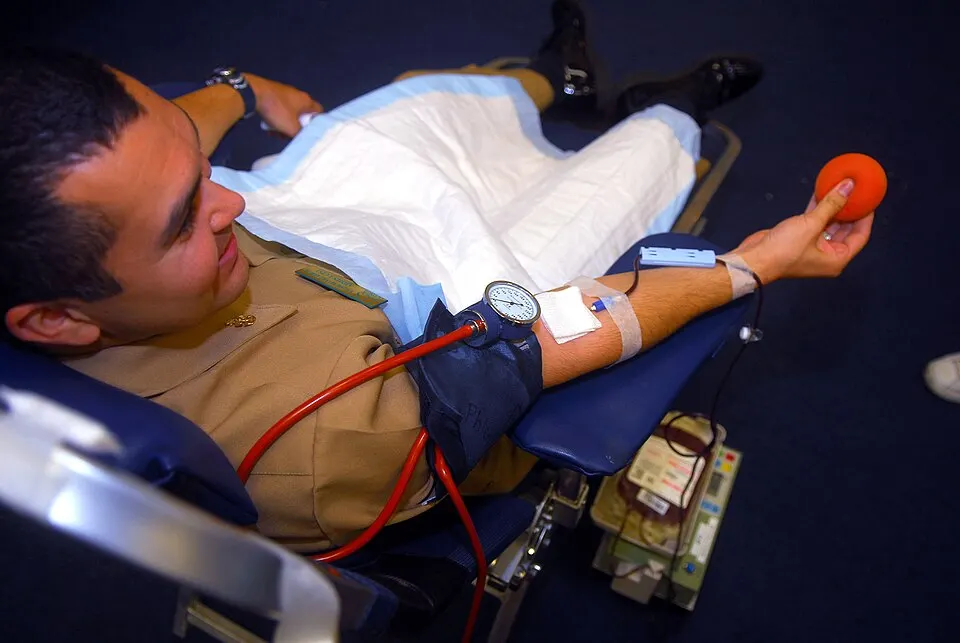
Photo: U.S. Navy photo by Mass Communication Specialist Seaman Kathleen Gorby, Public domain, via Wikimedia Commons - 16 years
- 18 years
- 21 years
- 25 years
Answer: 18 years. Indian blood banks accept donors aged 18 to 65 who weigh at least 45 kg and pass a quick health check.
The stapes, smaller than a grain of rice, is the tiniest bone you own. Where in your body is it?
- In the nose
- In the toe
- In the ear
- In the finger
Answer: In the ear. The stapes sits in the middle ear and passes sound inward. Stapes is Latin for stirrup, which is its shape.
Donate part of this organ and both pieces, yours and the patient's, grow back close to full size. Which organ?
- Brain
- Liver
- Heart
- Kidney
Answer: Liver. The liver can regenerate, which is why a living person can donate part of theirs.
Veins on your wrist look blue through the skin. What colour is the blood flowing inside them?
- Blue
- Purple
- Green
- Dark red
Answer: Dark red. Blood is always red. In veins it carries less oxygen, so it is a darker red; skin scatters light so the veins look bluish.
It is harder than bone, but once it chips your body can't repair it. What is it?
- Cartilage
- Kneecap
- Tooth enamel
- Nails
Answer: Tooth enamel. Tooth enamel is the hardest substance in the body, and it can't grow back, so brush well.
You cut your finger. Which tiny bits in your blood rush in to plug the leak?
- Red blood cells
- White blood cells
- Plasma
- Platelets
Answer: Platelets. Platelets stick together at the cut and help form a clot.
Playing out in the sun lets your skin make vitamin D. Your gut needs that vitamin to soak up which mineral from food?

Photo: Ktorrespr, CC BY-SA 4.0, via Wikimedia Commons - Calcium
- Iron
- Iodine
- Sodium
Answer: Calcium. Vitamin D helps your gut take in calcium and phosphate, which keep bones and teeth strong.
A newborn baby has around 300 bones, but an adult has only 206. What happens to the rest?
- They fall out like milk teeth
- They dissolve into the blood
- They turn into muscle
- Many of them fuse together
Answer: Many of them fuse together. Many of a baby's bones start as separate pieces, partly cartilage, and join up as the child grows. The skull is a good example.
On a chest X-ray like this one, the left lung is a little smaller than the right. Why?
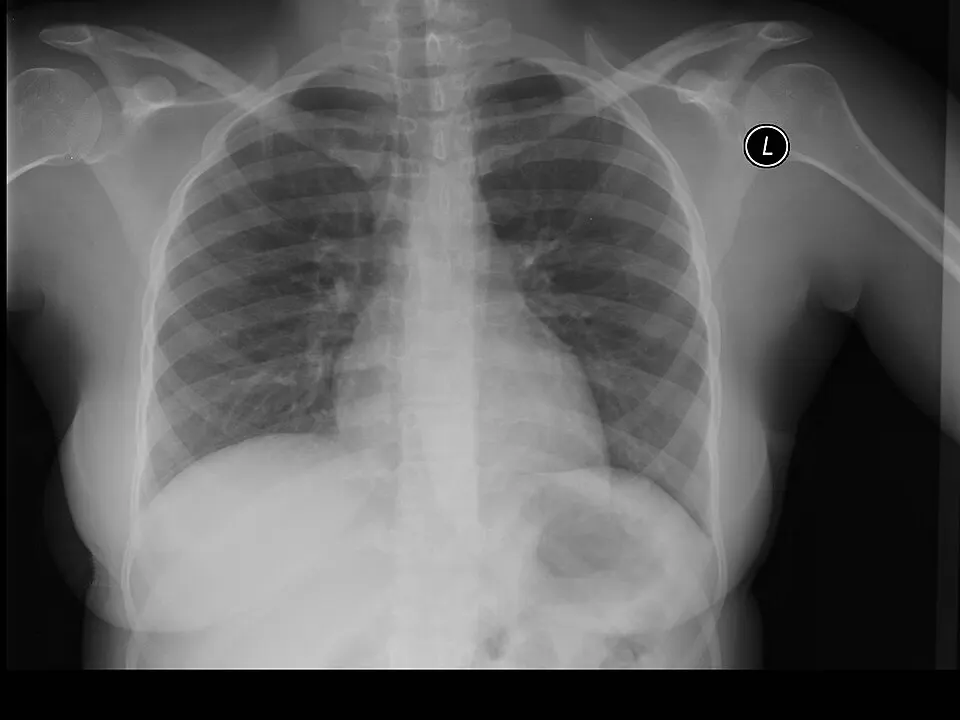
Photo: Yale Rosen from USA, CC BY-SA 2.0, via Wikimedia Commons - It makes room for the heart
- It has fewer ribs around it
- It only holds stale air
- It stops growing after birth
Answer: It makes room for the heart. The heart leans to the left, so the left lung has a notch for it and only two lobes. The right lung has three.
Your small intestine is several metres long, far longer than your large intestine. So why is it called 'small'?
- It digests less food
- It is narrower
- It weighs less
- It forms later in the womb
Answer: It is narrower. It is only about 2.5 cm wide, against about 7.5 cm for the large intestine. It is also where most food is digested and absorbed.
Knock your elbow on a table corner and a zing shoots down to your little finger. What is the 'funny bone' you just hit?
- A bone
- A muscle
- A nerve
- A blood vessel
Answer: A nerve. It is the ulnar nerve, which runs close to the skin at the elbow with little padding. It also serves the ring and little fingers, so they tingle.
Have a good cry and your nose starts running too. Why?
- Crying gives you a cold
- Tears drain into the nose
- The nose makes its own tears
- Sobbing pulls water from the throat
Answer: Tears drain into the nose. Tears drain through tiny holes at the inner corners of the eyes into a duct that empties into the nose. Crying sends far more down than usual.
Hic! A hiccup starts when one muscle below your lungs suddenly jerks and your vocal cords snap shut. Which muscle?
- Diaphragm
- Biceps
- Heart
- Tongue
Answer: Diaphragm. The diaphragm spasms, air rushes in, and the closing vocal cords make the 'hic'. Most bouts stop on their own in minutes.
Even identical twins have different ones. When do your fingerprints form?
- In your first year
- When you start school
- Around age 12
- Before you are born
Answer: Before you are born. The ridges form in the womb, starting around the tenth week of pregnancy, and the pattern then stays the same for life.
With a blocked nose, even your favourite food tastes dull. Why?
- Most flavour comes from smell
- Taste buds switch off
- Mucus coats the tongue
- The brain mutes taste when ill
Answer: Most flavour comes from smell. The tongue senses only basic tastes like sweet, salty, sour, bitter and umami. Smells travelling from the mouth up to the nose supply the rest of the flavour.
Frequently asked questions
How many bones are in the human body?
An adult usually has 206 bones. A newborn baby has many more, around 300, and a lot of them are still partly made of soft cartilage.
What is the largest organ of the human body?
The skin is the largest organ. It protects you from germs, helps control your temperature and lets you feel touch, heat and pain.
Which class is this human body quiz for?
It suits students in Classes 5 to 9 and is written to match NCERT science topics. Older students and adults can play it as a quick refresher.