
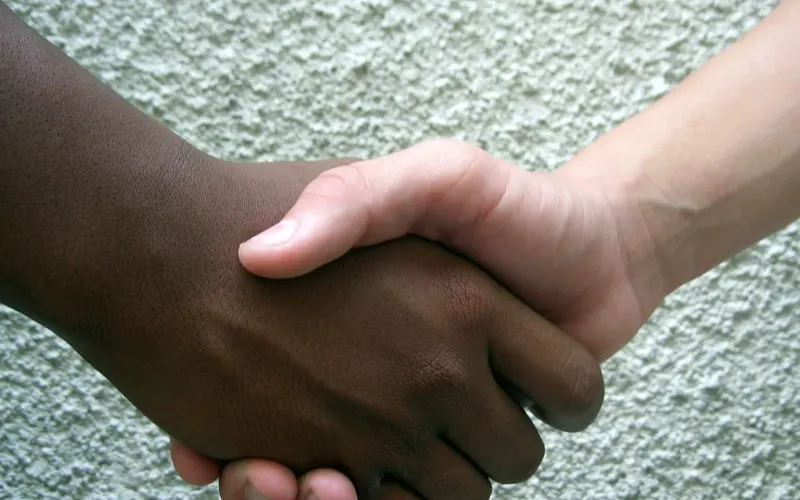
Respect at Work: Diversity & Inclusion
This diversity and inclusion quiz covers the biases, behaviours and Indian laws that shape a respectful workplace, from small daily slights to the POSH Act. 15 questions for HR sessions and onboarding.
15 questionsMedium~3 minNo timer
Updated:
If you liked this
 First Aid Basics: Be the First HelperWorkplace & Safety
 Fire Drill Ready: Workplace SafetyWorkplace & Safety
 Road Sense: Traffic Rules & SafetyWorkplace & Safety
 AI & Tech, Minus the JargonWorkplace & Safety
 Green Habits: Everyday SustainabilityWorkplace & Safety
 Spot the Phish: Cyber Safety at WorkWorkplace & Safety
Trending today
 Bollywood QuizBollywood
 India GK Question Answer Quiz (Indian GK)General Knowledge
 Cricket World Cup QuizSports
 सामान्य ज्ञान प्रश्न (GK in Hindi Questions)Hindi
 Guess the FlagGeography
 Current Affairs Quiz (October 2026)Current Affairs
 Friends TV Series QuizMovies & TV
 KBC क्विज़ (KBC Hindi Quiz)Hindi
 F1 Quiz (Formula 1)Sports
 Naruto QuizAnime & Games
All Workplace & Safety quizzes →
About this Diversity and Inclusion quiz
This diversity and inclusion quiz is built for HR sessions, onboarding and team workshops. Its 15 questions cover everyday behaviours, such as bias in hiring, small slights and how to respond as a bystander, alongside the Indian laws that protect people at work, from sexual harassment rules to disability and maternity rights.
Inclusion is less about grand statements and more about daily choices: who gets heard in a meeting, how a joke lands and whether support fits the person who needs it. Each question is a short scenario or a key term, and the explanation says why it matters, so the quiz starts conversations rather than ending them.
Use it in induction, a POSH or DEI awareness session or a manager training module. Play solo, or put it on a shared screen and discuss answers as a group. It is a learning aid, not legal advice. It is free and needs no sign-up.
Diversity and Inclusion questions with answers
Show answers
Two identical CVs with different names get different scores, and the reviewer never notices. The broad term?
- Deliberate favouritism
- Unconscious bias
- Tokenism
- Open prejudice
Answer: Unconscious bias. Hidden biases steer decisions we believe are neutral. Noticing them is step one.
One colleague gets a screen reader, another a standing desk. Different support, same fair shot. That's…?
- Equality
- Tokenism
- Equity
- Assimilation
Answer: Equity. Equality gives everyone the same; equity adjusts the support so everyone gets a fair shot.
In a meeting, a colleague mimics a teammate's accent for laughs. Best bystander move?
- Laugh along to keep it light
- Speak up calmly or check in with them
- Ignore it, it's only a joke
- Post about it on social media
Answer: Speak up calmly or check in with them. A calm word from a bystander sets the norm and backs the person targeted.
"You speak such good English!" said to a colleague born and raised in India. Small, maybe meant kindly. The term?
- Constructive feedback
- Banter
- Microaggression
- Mentoring
Answer: Microaggression. Often unintended, but slights like this pile up and wear people down.
The 1997 guidelines behind the POSH Act, 2013 came from which Supreme Court case?
- Kesavananda Bharati v State of Kerala
- Shah Bano case
- Maneka Gandhi v Union of India
- Vishaka v State of Rajasthan
Answer: Vishaka v State of Rajasthan. The Vishaka guidelines covered workplace harassment until Parliament passed POSH.
Your firm has 40 employees. Under the POSH Act, which body must it set up to hear harassment complaints?
- A Local Committee
- A Works Committee
- An Internal Committee
- An Ethics Board
Answer: An Internal Committee. Workplaces with 10 or more employees need an Internal Committee; smaller ones go to the district's Local Committee.
Women and minorities can see the top jobs but keep hitting an invisible barrier. Its name?
- Glass cliff
- Sticky floor
- Glass ceiling
- Broken rung
Answer: Glass ceiling. The glass ceiling. Its cousin, the glass cliff, is being promoted only when things are already failing.
When "culture fit" quietly comes to mean "like me" in hiring, which bias is at work?
- Affinity bias
- Confirmation bias
- Anchoring bias
- Recency bias
Answer: Affinity bias. Affinity bias is favouring people who remind us of ourselves. It creeps into hiring and promotions unless panels use clear criteria.
Which of these phrases do most disability style guides recommend when you need to mention a colleague's mobility aid?
- Wheelchair-bound
- Confined to a wheelchair
- Suffering from paralysis
- A wheelchair user
Answer: A wheelchair user. For many people a wheelchair means freedom to move, not confinement. If you know how someone describes themselves, follow their lead.
Which Supreme Court judgment first recognised transgender people as a "third gender"?
- Indra Sawhney v Union of India
- NALSA v Union of India
- Navtej Singh Johar v Union of India
- K.S. Puttaswamy v Union of India
Answer: NALSA v Union of India. NALSA (2014) affirmed the right to self-identify gender. Navtej Johar (2018) decriminalised homosexuality.
Under the POSH Act, a sexual harassment complaint should normally be made within how long of the incident?
- Three months
- One week
- One year
- Five years
Answer: Three months. The Internal Committee can extend this by another three months, with reasons in writing, if something stopped the woman from complaining sooner.
Under India's labour law, how many weeks of paid maternity leave can an eligible woman employee get for her first child?
- 12 weeks
- 26 weeks
- 18 weeks
- 52 weeks
Answer: 26 weeks. The 2017 amendment raised it from 12 to 26 weeks, and the Code on Social Security, 2020 keeps that. From the third child it is 12 weeks.
Which is a gender-neutral word for the person who runs a meeting?
- Chairperson
- Chairman
- Headman
- Foreman
Answer: Chairperson. UN and UN Women language guidelines suggest chair or chairperson in place of chairman.
A candidate went to a top college, so the panel rates everything else about her highly too. Which bias is this?
- Horn effect
- Recency bias
- Groupthink
- Halo effect
Answer: Halo effect. One shining trait colours the whole judgement. Psychologist Edward Thorndike named it in 1920; the horn effect is the negative version.
A colleague with a hearing impairment gets live captions in meetings and agendas in writing beforehand. What does India's disability law call such adjustments?
- Reasonable accommodation
- Special favour
- Affirmative quota
- Positive discrimination
Answer: Reasonable accommodation. The RPwD Act requires necessary changes that don't impose an undue burden, and denying them counts as discrimination.
Frequently asked questions
What does inclusion mean at work?
Inclusion means people of every background feel respected, are heard and can do their best work. Diversity is having a mix of people; inclusion is how that mix is treated day to day, in meetings, promotions and informal moments.
How can I be a good ally to colleagues at work?
Listen to colleagues' experiences, give credit to the person whose idea it was, make sure quieter voices get heard, and don't let disrespect pass as normal. Small, consistent actions matter more than big gestures.
Who is this diversity and inclusion quiz for?
It suits all employees, people managers, HR and L&D teams, and anyone who handles workplace complaints, looking for a quick refresher. No prior training is needed.