

Lead the Way: Feedback & Leadership
This leadership quiz is a quick check for new managers and team leads on feedback, delegation, team building and the big ideas of management. 15 questions with practical explanations.
15 questionsMedium~3 minNo timer
Updated:
If you liked this
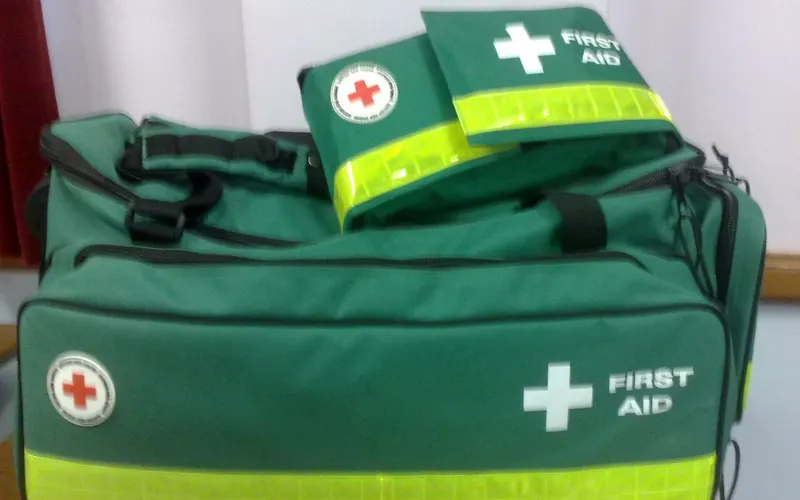 First Aid Basics: Be the First HelperWorkplace & Safety
 Fire Drill Ready: Workplace SafetyWorkplace & Safety
 Road Sense: Traffic Rules & SafetyWorkplace & Safety
 AI & Tech, Minus the JargonWorkplace & Safety
 Green Habits: Everyday SustainabilityWorkplace & Safety
 Spot the Phish: Cyber Safety at WorkWorkplace & Safety
Trending today
 Bollywood QuizBollywood
 India GK Question Answer Quiz (Indian GK)General Knowledge
 Cricket World Cup QuizSports
 सामान्य ज्ञान प्रश्न (GK in Hindi Questions)Hindi
 Guess the FlagGeography
 Current Affairs Quiz (October 2026)Current Affairs
 Friends TV Series QuizMovies & TV
 KBC क्विज़ (KBC Hindi Quiz)Hindi
 F1 Quiz (Formula 1)Sports
 Naruto QuizAnime & Games
All Workplace & Safety quizzes →
About this Leadership quiz
This leadership quiz is a refresher for new managers, team leads and anyone in a leadership programme. Its 15 questions cover giving useful feedback, handling a struggling performer, choosing a leadership style, delegating, running one-on-ones and how teams grow, along with the people and ideas behind modern management thinking.
Each question pairs a practical situation or a famous model with a short explanation. Some models come from research, such as Google's study of what makes teams effective, and others from influential books and essays written by managers and psychologists. Together they give new leaders a shared vocabulary for talking about how they lead and where they want to improve.
Run it at the start of a leadership workshop, in a managers' meeting or as pre-reading for a coaching session, then discuss which answers surprised people. Play solo for a score or on a shared screen. It is free, needs no sign-up and takes about five minutes.
Leadership questions with answers
Show answers
"In Monday's client call you cut Priya off twice, and she stopped sharing ideas." In SBI feedback, that last part is the what?
- Insight
- Involvement
- Improvement
- Impact
Answer: Impact. Situation, Behaviour, Impact: say what happened and what it caused, with no label on the person.
Of Daniel Goleman's six leadership styles, which one is summed up as "Come with me"?
- Pacesetting
- Coercive
- Authoritative
- Affiliative
Answer: Authoritative. The authoritative leader rallies people to a vision. Coercive is "Do what I tell you".
Your strongest analyst has missed three deadlines in a row. Best first move?
- Quietly reassign all their work
- Call it out in the team meeting
- Talk privately to understand why
- Report them to HR straight away
Answer: Talk privately to understand why. It could be workload, unclear asks or something personal. Start with a private conversation.
A new joiner gets step-by-step direction; a ten-year veteran gets a free hand. Which model backs that?
- Situational Leadership
- Transactional Leadership
- Laissez-faire leadership
- Theory X
Answer: Situational Leadership. Hersey and Blanchard: match your style to each person's readiness for the task.
His TED talk drew three circles, Why, How and What, and his book is "Leaders Eat Last". Who?
- Adam Grant
- Brené Brown
- Simon Sinek
- Stephen Covey
Answer: Simon Sinek. Simon Sinek's Golden Circle talk is among the most watched TED talks ever.
Instead of announcing the plan, a manager asks the team "What should we do?" Mainly, that builds…?
- Micromanagement
- Confusion about roles
- Ownership and participation
- Delays in every decision
Answer: Ownership and participation. People own the outcomes they helped shape.
Google's study of 180 teams found psychological safety mattered most. Its name?
- Project Moonshot
- Project Aristotle
- Project Oxygen
- Project Loon
Answer: Project Aristotle. Project Aristotle, after "the whole is greater than the sum of its parts". Project Oxygen studied managers.
A former AT&T manager, Robert K. Greenleaf, coined which leadership idea in a 1970 essay?
- Servant leadership
- Transformational leadership
- Adaptive leadership
- Authentic leadership
Answer: Servant leadership. In "The Servant as Leader", Greenleaf argued the best leaders serve first and judge success by how their people grow. He had spent 38 years at AT&T.
Which of these is the most useful feedback to give a team member?
- "You're lazy."
- "You need a better attitude."
- "Everyone is annoyed with you."
- "You missed the last two deadlines, and the client noticed."
Answer: "You missed the last two deadlines, and the client noticed.". Behaviour can change; labels like "lazy" just make people defensive. Specific facts and their effect give the person something to act on.
Bruce Tuckman's 1965 model of how teams develop runs Forming, Storming, Norming and which fourth stage?
- Adjourning
- Performing
- Transforming
- Reforming
Answer: Performing. Performing is when the team works smoothly towards its goals. Adjourning was added as a fifth stage in 1977.
You hand a project to a team member. Which approach is real delegation?
- Agree the outcome, their decision rights and a check-in date
- Give step-by-step orders and check every hour
- Hand it over with no deadline or context
- Keep the final call and redo their work
Answer: Agree the outcome, their decision rights and a check-in date. A clear result, clear authority and agreed check-ins remove the urge to hover. If they must ask you about every decision, you haven't delegated.
In High Output Management, Intel's Andy Grove said the agenda for a manager's one-on-one should come mainly from whom?
- The manager
- The team member
- HR
- The manager's own boss
Answer: The team member. Grove saw the one-on-one as the team member's meeting: preparing the agenda makes them reflect on their work and raise what matters.
A star salesperson is promoted to sales manager and struggles. Which principle says people in a hierarchy tend to rise to their level of incompetence?
- The Peter Principle
- Parkinson's Law
- The Dilbert Principle
- Murphy's Law
Answer: The Peter Principle. Laurence J. Peter's 1969 book was meant as satire, but it stuck: being good at one job doesn't mean you'll be good at the next.
Douglas McGregor called the view that people dislike work and need tight control Theory X. What did he call the view that people are self-motivated?
- Theory Z
- Theory Y
- Theory A
- Theory W
Answer: Theory Y. In The Human Side of Enterprise (1960), McGregor argued that trust and responsibility get more from people than close supervision.
In the Johari window, what is the pane holding things others know about you but you don't?
- Open area
- Hidden area
- Unknown area
- Blind area
Answer: Blind area. Psychologists Joseph Luft and Harrington Ingham created the model in 1955. Honest feedback is how you shrink the blind spot.
Frequently asked questions
What makes a good team leader?
Good team leaders set clear goals, give honest and specific feedback, trust people with real responsibility, make it safe to raise problems and adjust their style to each person's experience. They also take the blame when things go wrong and share the credit when they go right.
How often should managers give feedback?
Little and often works better than saving everything for an annual review. Give feedback soon after the event, in private if it is critical, and focus on what the person did and its effect rather than on their character.
Who is this leadership quiz for?
It suits first-time managers, team leads, project leads and HR or L&D teams running leadership programmes. No prior training is needed.