
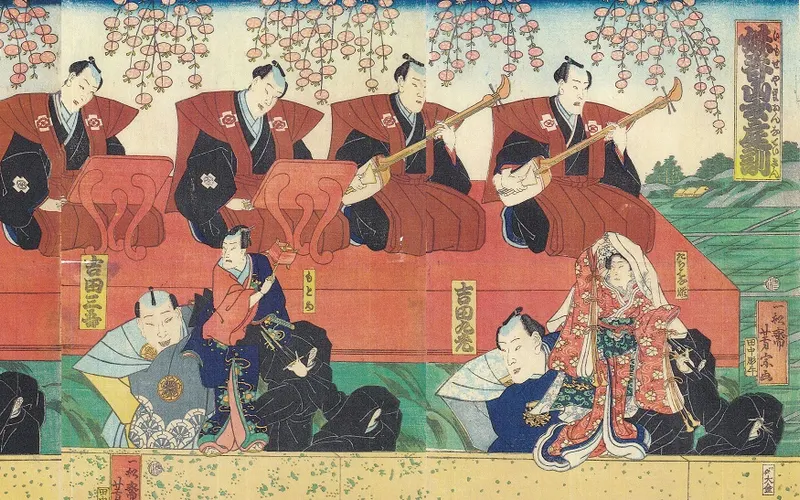
Japanese Hiragana Quiz
This Japanese Hiragana Quiz has 15 questions, from easy warm-ups to a few real stumpers, each with its answer. Play free, see your score instantly, and share it with friends.
15 questionsMixed (easy → hard)~3 minNo timer
Updated:
If you liked this


Trending today
 Bollywood QuizBollywood
 India GK Question Answer Quiz (Indian GK)General Knowledge
 Cricket World Cup QuizSports
 सामान्य ज्ञान प्रश्न (GK in Hindi Questions)Hindi
 Guess the FlagGeography
 Current Affairs Quiz (October 2026)Current Affairs
 Friends TV Series QuizMovies & TV
 KBC क्विज़ (KBC Hindi Quiz)Hindi
 F1 Quiz (Formula 1)Sports
 Naruto QuizAnime & Games
About this Japanese Hiragana quiz
This hiragana quiz tests how well you can read the 46 basic characters of Japanese's main phonetic script, plus the marks and small letters that change how they sound. The 15 questions start with easy warm-ups like あ and か, move on to readings that trip up beginners, such as し (shi) and つ (tsu), and finish with harder ones on dakuten, the small っ, particles and where hiragana came from.
It suits anyone learning Japanese, anime fans who want to read titles and signs, and travellers brushing up before a trip to Japan. Every answer comes with a short explanation, so a wrong guess still teaches you something. Try it once without notes, then replay a few days later to see what stuck; spacing your practice like this is one of the fastest ways to lock kana into memory.
Fun fact: in the Heian period hiragana was so closely linked with the writing of court women that it was called onnade, or "women's hand", and classics such as The Tale of Genji were written largely in kana. Once hiragana feels easy, katakana and basic kanji are the natural next steps.
Japanese Hiragana questions with answers
Show answers
Which sound does あ, the first character in kana order, make?
- a
- i
- u
- e
Answer: a. あ is "a". The vowel row reads あ a, い i, う u, え e, お o, and every other row follows the same vowel order.
What is the reading of the hiragana か?
- sa
- ka
- ta
- na
Answer: ka. か is "ka". It starts the k-row: か, き, く, け, こ (ka, ki, ku, ke, ko).
What does ありがとう (arigatou) mean in English?
- Good morning
- Goodbye
- Thank you
- Excuse me
Answer: Thank you. ありがとう means "thank you". Adding ございます (gozaimasu) makes it more polite.
Beginners often misread し. What is its correct reading?
- sa
- su
- se
- shi
Answer: shi. し is "shi", not "si". The s-row reads さ sa, し shi, す su, せ se, そ so.
How do you read the word ねこ (cat)?
- nego
- neko
- meko
- reko
Answer: neko. ねこ is ね (ne) + こ (ko). ご would be "go" because of its two dakuten strokes, while め (me) and れ (re) are lookalikes of ね.
Adding the two small dakuten strokes to か (ka) changes it to which sound?
- ga
- ha
- pa
- za
Answer: ga. Dakuten voice the consonant: か ka becomes が ga, just as さ sa becomes ざ za.
Which mark turns は (ha) into ぱ (pa)?
- Dakuten (two short strokes)
- A small tsu (っ)
- The long-vowel bar (ー)
- Handakuten (a small circle)
Answer: Handakuten (a small circle). The handakuten circle is used only on the h-row: は ha becomes ぱ pa, ひ hi becomes ぴ pi, and so on.
When は is used as the topic particle, as in わたしは (watashi wa), how is it pronounced?
- ha
- ba
- wa
- he
Answer: wa. As a particle, は is read "wa". Likewise へ is read "e" when it marks direction.
In きって (kitte, stamp), what does the small っ do?
- Makes the vowel long
- Turns the word into a question
- Doubles the next consonant with a short pause
- Makes the word plural
Answer: Doubles the next consonant with a short pause. A small っ (sokuon) adds a brief pause that doubles the next consonant: きて (kite) versus きって (kitte).
The t-row has a tricky character: つ. How is it read?
- chi
- te
- to
- tsu
Answer: tsu. つ is "tsu". The t-row is irregular: た ta, ち chi, つ tsu, て te, と to.
How do you read きゃ (き followed by a small ゃ)?
- kya
- kiya
- kiyo
- gya
Answer: kya. A small ゃ, ゅ or ょ blends with the i-sound before it: き + ゃ = kya, as in きゃく (kyaku, guest).
ぬ looks a lot like め, ね and わ. How is ぬ read?
- me
- nu
- ne
- wa
Answer: nu. ぬ (nu) is like め (me) with a small loop at the end of the stroke. ね is "ne" and わ is "wa".
What makes ん unusual among the 46 basic hiragana?
- It is written only in katakana
- It is used only as a grammar particle
- It is always silent
- It is the only one that is a consonant on its own, with no vowel
Answer: It is the only one that is a consonant on its own, with no vowel. ん is the syllabic "n". Standard Japanese words do not begin with it, but it often ends them, as in ほん (hon, book).
How many basic hiragana characters are there in the modern set, not counting dakuten forms?
- 26
- 46
- 50
- 71
Answer: 46. There are 46 basic hiragana. The traditional 50-sound grid has gaps, and adding the dakuten and handakuten forms brings the total to 71.
Hiragana developed in the Heian period from what?
- Simplified cursive forms of Chinese characters
- Small pieces cut from Chinese characters
- Korean hangul letters
- Sanskrit script brought by monks
Answer: Simplified cursive forms of Chinese characters. Hiragana grew out of flowing cursive man'yogana (Chinese characters used for their sound). Katakana came from taking parts of characters.
Frequently asked questions
Where can I find Japanese Hiragana questions with answers?
Right here. All 15 questions on this page are listed with their answers in the answer key, each with a short note on the reading or rule. Open the key after you play to review the characters you missed.
How many questions are in this Japanese Hiragana quiz?
There are 15 multiple-choice questions, ordered roughly from easy to hard. Most players finish in about four minutes.
Can I play the Japanese Hiragana quiz online for free without signing up?
Yes. The quiz is free and needs no account or login, so just press Start. You see your score as soon as you finish and can share it with friends.
How long does it take to learn hiragana?
Many learners can read all 46 basic characters within one to two weeks of short daily practice. Learn one row at a time (a, ka, sa and so on) and test yourself with a quiz like this one to check your progress.