
Indian Constitution Quiz
15 questions, one score, zero sign-ups. This Indian Constitution Quiz mixes easy and tricky questions, and every answer comes with a quick explanation.
15 questionsMixed (easy → hard)~3 minNo timer
Updated:
If you liked this


Trending today
 Bollywood QuizBollywood
 India GK Question Answer Quiz (Indian GK)General Knowledge
 Cricket World Cup QuizSports
 सामान्य ज्ञान प्रश्न (GK in Hindi Questions)Hindi
 Guess the FlagGeography
 Current Affairs Quiz (October 2026)Current Affairs
 Friends TV Series QuizMovies & TV
 KBC क्विज़ (KBC Hindi Quiz)Hindi
 F1 Quiz (Formula 1)Sports
 Naruto QuizAnime & Games
About this Indian Constitution quiz
This constitution quiz takes you through the Indian Constitution itself: the Preamble, key Articles such as 1, 21 and 324, Fundamental Rights and how they have changed, the features India borrowed from other countries, and recent amendments like GST and women's reservation. The questions run from easy to tricky, so the page works for school students, teachers, college learners and adults who simply want to know their constitution better.
Every answer carries a short explanation, so the quiz doubles as a fast revision tool. Play once for a score, then open the constitution quiz questions and answers in the answer key below and read through the reasons. Teachers can use it as a class activity before Constitution Day on 26 November or Republic Day, and aspirants for UPSC, state PSC and SSC exams can use it as a quick check before moving on to deeper polity reading.
The questions focus on what the Constitution says today, not only on its history. That is why several of them trace changes, such as the Right to Property moving out of the Fundamental Rights in 1978 and the Right to Education coming in through Article 21A in 2002.
Did you know? India's Constitution is often described as the longest written constitution of any sovereign country, and it has been amended more than a hundred times since 1950.
Indian Constitution questions with answers
Show answers
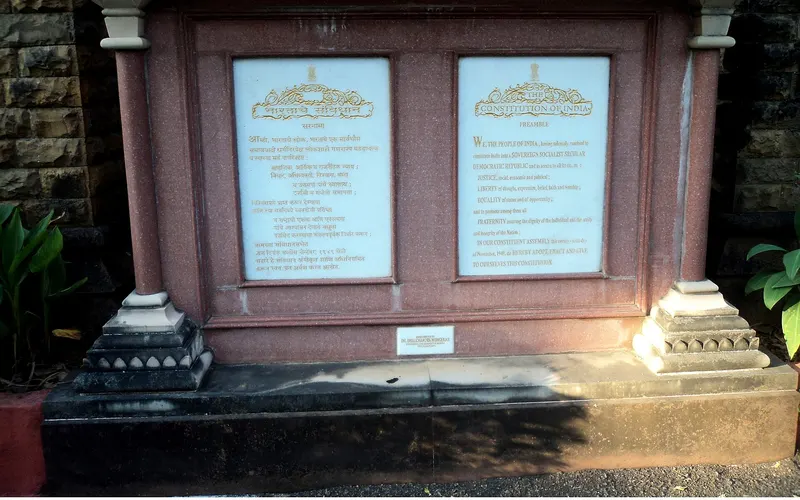
With which words does the Preamble to the Constitution of India begin?
- We, the people of India
- In the name of the Republic
- India, that is Bharat
- We, the members of the Constituent Assembly
Answer: We, the people of India. The Preamble opens with "We, the people of India", showing that the Constitution draws its authority from the people themselves.
Which Article protects life and personal liberty, saying no person shall be deprived of them except by procedure established by law?
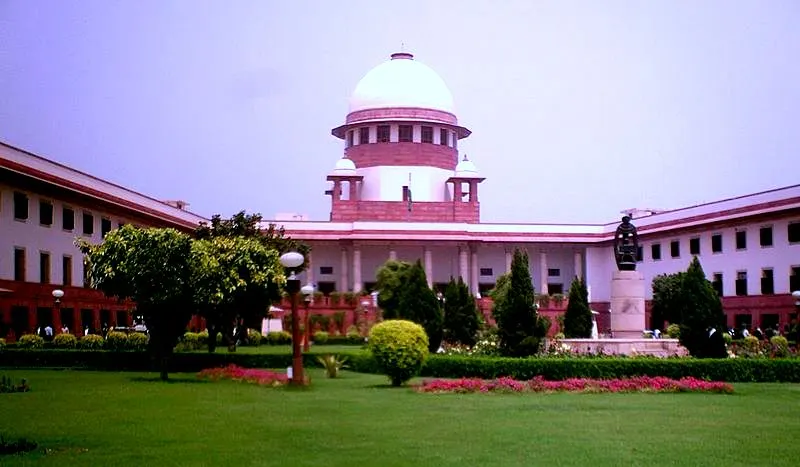
Photo: Legaleagle86, CC BY-SA 3.0, via Wikimedia Commons - Article 14
- Article 19
- Article 21
- Article 25
Answer: Article 21. Article 21 is the source of many rights the courts have read into it, such as privacy, a clean environment and a speedy trial.
According to Article 1, India, that is Bharat, shall be a what?
- Federation of States
- Union of States
- Confederation of Provinces
- Republic of Provinces
Answer: Union of States. Article 1 uses "Union of States". Dr Ambedkar explained that no state has the right to break away from the Union.
The Fundamental Rights are set out in which Part of the Constitution?
- Part II
- Part IV
- Part V
- Part III
Answer: Part III. Part III (Articles 12 to 35) holds the Fundamental Rights. Part II deals with citizenship and Part IV with the Directive Principles.
Which of these features was NOT borrowed from the British constitution?
- Parliamentary government
- Rule of law
- Fundamental Rights
- Single citizenship
Answer: Fundamental Rights. The idea of a written bill of Fundamental Rights came from the US Constitution. Parliamentary rule, rule of law and single citizenship follow the British model.
The idea of a Concurrent List of shared law-making subjects was inspired by the constitution of which country?
- Australia
- Canada
- Ireland
- Japan
Answer: Australia. The Concurrent List draws on Australia's constitution. India's strong-centre federation, by contrast, took cues from Canada.
How many freedoms does Article 19(1) guarantee to citizens today?
- Seven
- Five
- Eight
- Six
Answer: Six. There were seven. The 44th Amendment (1978) removed the freedom to acquire, hold and dispose of property, leaving six.
The Right to Property stopped being a Fundamental Right through which amendment?
- 42nd Amendment
- 44th Amendment
- 52nd Amendment
- 61st Amendment
Answer: 44th Amendment. The 44th Amendment (1978) made it a legal right under Article 300A, so it is still protected, but not as a Fundamental Right.
Article 21A, which makes free and compulsory education a Fundamental Right, applies to children of which age group?
Photo: David Lisbona from Haifa, Israel, CC BY 2.0, via Wikimedia Commons - 3 to 10 years
- 5 to 12 years
- 6 to 14 years
- 6 to 18 years
Answer: 6 to 14 years. The 86th Amendment (2002) inserted Article 21A for children aged 6 to 14. The Right to Education Act, 2009 put it into practice.
Which Article of the Constitution sets up the Election Commission of India?
- Article 324
- Article 280
- Article 148
- Article 315
Answer: Article 324. Article 324 vests the conduct of elections in the Election Commission. Article 280 is the Finance Commission, 148 the CAG and 315 the Public Service Commissions.
According to Article 343, what is the official language of the Union?
- Hindi and English equally
- Hindi in the Devanagari script
- English only
- All 22 scheduled languages
Answer: Hindi in the Devanagari script. Article 343 names Hindi in Devanagari as the official language, with numerals in their international form. English continues alongside it under a 1963 law.
Under which Article can the President grant pardons and suspend, remit or commute sentences?
Photo: Mohit00767, CC BY-SA 4.0, via Wikimedia Commons - Article 72
- Article 74
- Article 123
- Article 161
Answer: Article 72. Article 72 gives the President pardoning power. Article 161 gives governors a similar power, and Article 123 deals with ordinances.
Which constitutional amendment paved the way for the Goods and Services Tax (GST)?
- 99th Amendment
- 100th Amendment
- 102nd Amendment
- 101st Amendment
Answer: 101st Amendment. The 101st Amendment Act, 2016 created the GST framework and the GST Council (Article 279A). GST began on 1 July 2017.
The 106th Amendment (2023), known as the Nari Shakti Vandan Adhiniyam, reserves what share of seats for women?
Photo: Pinakpani, CC BY-SA 4.0, via Wikimedia Commons - One-fourth of Lok Sabha seats only
- Half of all Rajya Sabha seats
- One-third in the Lok Sabha and state assemblies
- One-third in panchayats only
Answer: One-third in the Lok Sabha and state assemblies. It reserves one-third of seats in the Lok Sabha, state assemblies and the Delhi assembly. It takes effect after delimitation following the next census.
How many Schedules does the Constitution of India have today?
- 8
- 10
- 12
- 14
Answer: 12. It began with 8. Amendments added the 9th (1951), 10th (1985), 11th (1992) and 12th (1992), making 12.
Frequently asked questions
Where can I find Indian Constitution questions with answers?
On this page. Below the quiz, the answer key lists all 15 constitution questions with the correct option and a short explanation naming the Article or amendment involved.
How many questions are in this Indian Constitution quiz?
There are 15 multiple-choice questions with four options each. They cover the Preamble, Fundamental Rights, borrowed features, key Articles and recent amendments, starting easy and getting harder.
Can I play the Indian Constitution quiz online for free without signing up?
Yes. The quiz is free, needs no login and shows your score straight away. You can share your result with friends or classmates and challenge them to beat it.
Is this a good 'know your constitution' quiz for students?
Yes. The questions stick to facts taught in civics and political science classes, and each explanation adds context. It suits class 9 and above, college students and anyone revising constitution GK questions for exams.