
GK for Competitive Exams
This GK for Competitive Exams quiz has 15 questions, from easy warm-ups to a few real stumpers, each with its answer. Play free, see your score instantly, and share it with friends.
15 questionsMixed (easy → hard)~3 minNo timer
Updated:
If you liked this
Trending today
 Bollywood QuizBollywood
 India GK Question Answer Quiz (Indian GK)General Knowledge
 Cricket World Cup QuizSports
 सामान्य ज्ञान प्रश्न (GK in Hindi Questions)Hindi
 Guess the FlagGeography
 Current Affairs Quiz (October 2026)Current Affairs
 Friends TV Series QuizMovies & TV
 KBC क्विज़ (KBC Hindi Quiz)Hindi
 F1 Quiz (Formula 1)Sports
 Naruto QuizAnime & Games
All General Knowledge quizzes →
About this GK for Competitive Exams quiz
This GK for competitive exams quiz is a quick, honest check of the static general knowledge that keeps turning up in SSC, banking, railway, state PSC and defence papers. Its 15 questions move from easy warm-ups, such as India's smallest state, to genuine stumpers like the first Chief Justice of India and the city closest to the IST meridian.
The mix mirrors a real general awareness section: Indian geography, geography MCQs for competitive exams on straits and tropics, ancient history, the Constitution, science, world organisations and a few famous firsts. Every answer comes with a short explanation, so even a wrong guess teaches you a fact and the reason behind it.
Use it the way toppers use mock tests. Play once without notes, note which questions slowed you down, then read the answer key and explanations below. Play again a day later to see whether the facts stuck. If static GK for competitive exams is your weak spot, follow the related quizzes on Indian history and polity to go deeper on one subject at a time.
One fact worth remembering: the Indian Standard Time meridian of 82.5 degrees East was chosen because it runs close to the middle of the country, which is why IST is exactly five and a half hours ahead of Greenwich.
GK for Competitive Exams questions with answers
Show answers
Which is the smallest state of India by area?
- Goa
- Sikkim
- Tripura
- Nagaland
Answer: Goa. Goa covers about 3,702 sq km. Sikkim is the second smallest state; Rajasthan is the largest.
Kaziranga National Park, famous for the one-horned rhinoceros, is in which state?
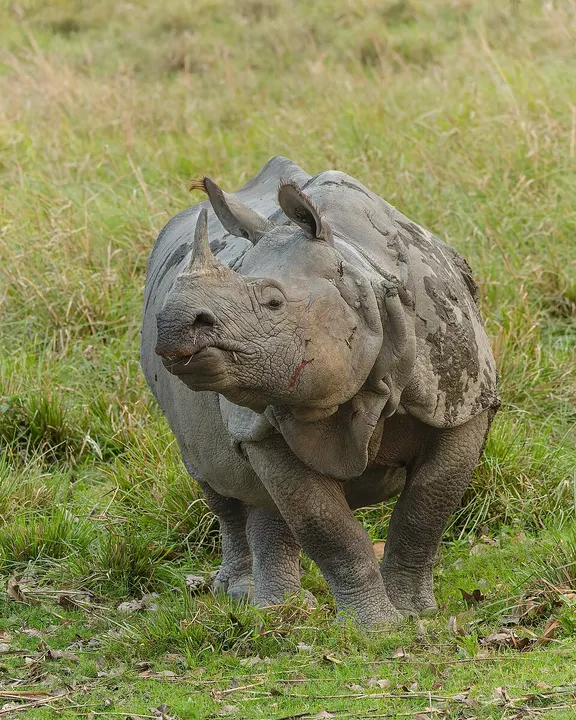
Photo: Tisha Mukherjee, CC BY-SA 4.0, via Wikimedia Commons - West Bengal
- Assam
- Meghalaya
- Arunachal Pradesh
Answer: Assam. Kaziranga lies on the Brahmaputra floodplains in Assam and is a UNESCO World Heritage Site, home to most of the world's one-horned rhinos.
Which strait separates India from Sri Lanka?
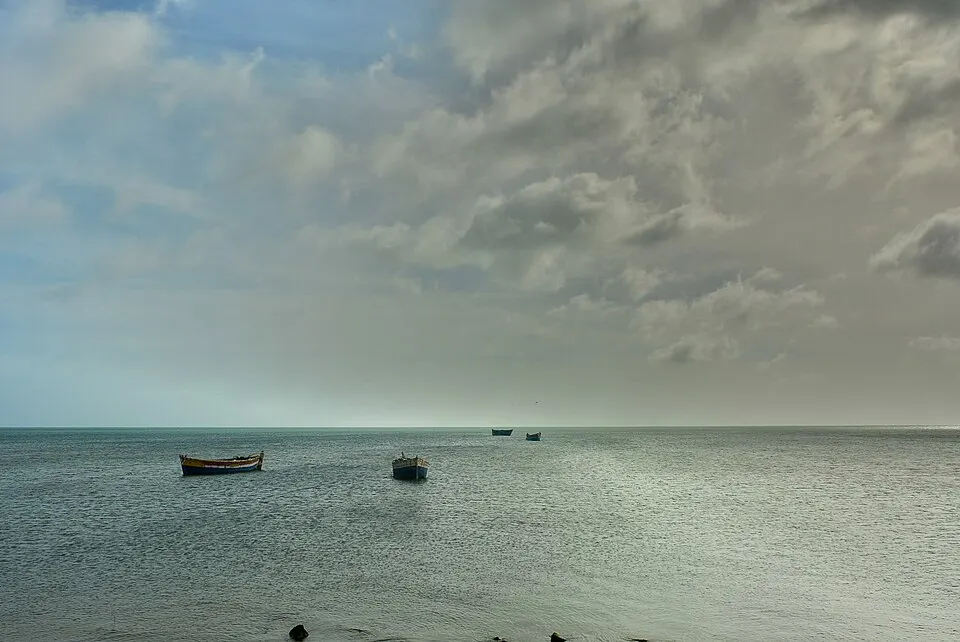
Photo: Sidharth.D., CC BY 4.0, via Wikimedia Commons - Strait of Malacca
- Bab-el-Mandeb
- Palk Strait
- Strait of Hormuz
Answer: Palk Strait. The Palk Strait lies between Tamil Nadu and northern Sri Lanka. Malacca separates Malaysia and Sumatra; Hormuz links the Persian Gulf to the Gulf of Oman.
The Tropic of Capricorn passes through which of these countries?
- India
- Egypt
- Mexico
- Brazil
Answer: Brazil. The Tropic of Capricorn (about 23.4 degrees South) crosses Brazil near Sao Paulo. India, Egypt and Mexico lie on the Tropic of Cancer instead.
Which is the longest river of peninsular India?
- Godavari
- Krishna
- Narmada
- Kaveri
Answer: Godavari. The Godavari runs about 1,465 km from near Nashik in Maharashtra to the Bay of Bengal, which is why it is called the 'Dakshin Ganga'.
The World Health Organization (WHO) is headquartered in which city?
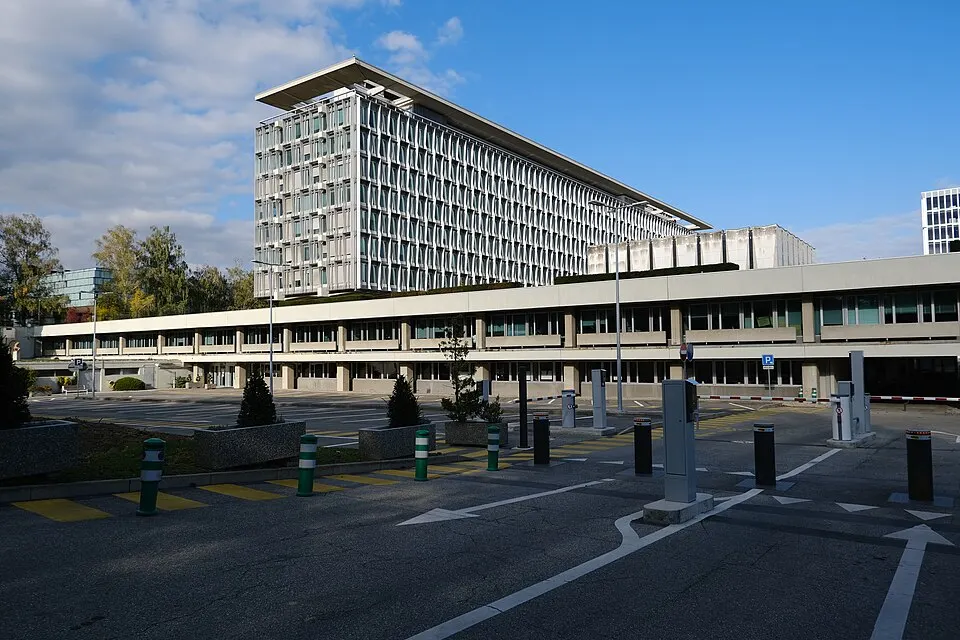
Photo: Guilhem Vellut from Annecy, France, CC BY 2.0, via Wikimedia Commons - New York
- Geneva
- Paris
- Vienna
Answer: Geneva. WHO, set up in 1948, is based in Geneva, Switzerland. New York hosts the UN headquarters and Paris hosts UNESCO.
Which Article of the Constitution gives the Right to Constitutional Remedies, which Dr B. R. Ambedkar called its 'heart and soul'?
- Article 14
- Article 21
- Article 32
- Article 51A
Answer: Article 32. Article 32 lets citizens move the Supreme Court directly to enforce Fundamental Rights through writs such as habeas corpus and mandamus.
The great stupa at Sanchi was originally commissioned by which ruler?
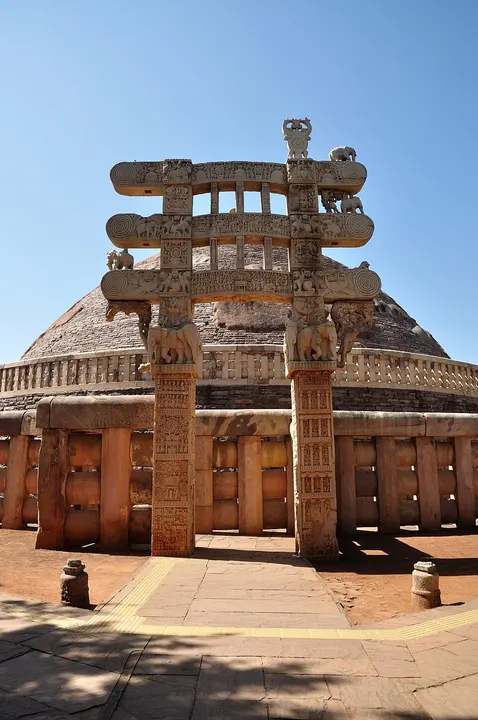
Photo: Biswarup Ganguly, CC BY 3.0, via Wikimedia Commons - Kanishka
- Harshavardhana
- Chandragupta II
- Ashoka
Answer: Ashoka. Emperor Ashoka commissioned the original brick stupa at Sanchi (Madhya Pradesh) in the 3rd century BCE; it was enlarged in stone later.
The Rand is the currency of which country?
- South Africa
- Botswana
- Kenya
- Nigeria
Answer: South Africa. The Rand is South Africa's currency, named after the Witwatersrand gold reef. Botswana uses the Pula, Kenya the Shilling and Nigeria the Naira.
Who was the first Indian to win a Nobel Prize?
- C. V. Raman
- Rabindranath Tagore
- Har Gobind Khorana
- Mother Teresa
Answer: Rabindranath Tagore. Tagore won the 1913 Nobel Prize in Literature, largely for 'Gitanjali'. C. V. Raman followed in 1930 with the Nobel Prize in Physics.
Which of these is NOT a Harappan (Indus Valley) site?
- Kalibangan
- Dholavira
- Pataliputra
- Rakhigarhi
Answer: Pataliputra. Pataliputra (modern Patna) was the capital of Magadha and the Mauryas, much later. The other three are Harappan sites in Rajasthan, Gujarat and Haryana.
The 'Raman Effect', for which C. V. Raman won the Nobel Prize, describes the scattering of what?
- Sound
- Electrons
- Heat
- Light
Answer: Light. Raman showed that some light changes wavelength when scattered by molecules. Its discovery on 28 February 1928 is marked as National Science Day.
Which is the largest gland in the human body?
- Liver
- Pancreas
- Thyroid
- Pituitary
Answer: Liver. The liver is the largest gland and the largest internal organ. It makes bile, stores glycogen and breaks down toxins.
Who was the first Chief Justice of India?
- M. Patanjali Sastri
- H. J. Kania
- B. K. Mukherjea
- Fazl Ali
Answer: H. J. Kania. Justice Harilal J. Kania became the first Chief Justice when the Supreme Court was set up on 26 January 1950. Patanjali Sastri succeeded him in 1951.
The meridian of 82.5 degrees East, used for Indian Standard Time, passes near which city?
- Nagpur
- Bhopal
- Mirzapur
- Kolkata
Answer: Mirzapur. The IST meridian passes near Mirzapur in Uttar Pradesh. Being 82.5 degrees east of Greenwich puts IST 5 hours 30 minutes ahead of GMT.
Frequently asked questions
Where can I find GK for competitive exams questions with answers?
Right on this page. Play the 15-question quiz, then open the answer key below it to see every question with the correct answer and a short explanation. The related quizzes link to more general knowledge questions for competitive exams, sorted by subject.
Is this GK for competitive exams quiz useful for competitive exams?
Yes. The questions cover the static GK areas that most often appear in SSC, banking, railway and state PSC papers: geography, history, polity, science and international bodies. Treat it as a revision and self-test tool alongside your standard textbooks and previous-year papers.
How many questions are in this GK for competitive exams quiz?
There are 15 multiple-choice questions, each with four options. They start easy and get harder, and most people finish in about five minutes.
Can I play the GK for competitive exams quiz online for free without signing up?
Yes. The quiz is completely free and needs no login. You see your score instantly at the end and can share it with friends or play again to beat it.