
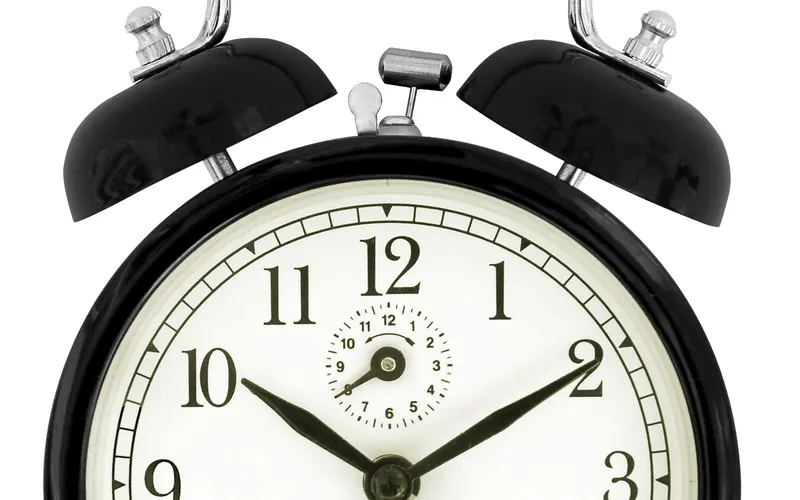
Beat the Clock: Time Management Hacks
This time management quiz tests the techniques and laws behind getting more done, from prioritising and quick wins to deep focus and planning lists. 15 questions for workshops and team huddles.
15 questionsMedium~3 minNo timer
Updated:
If you liked this
 First Aid Basics: Be the First HelperWorkplace & Safety
 Fire Drill Ready: Workplace SafetyWorkplace & Safety
 Road Sense: Traffic Rules & SafetyWorkplace & Safety
 AI & Tech, Minus the JargonWorkplace & Safety
 Green Habits: Everyday SustainabilityWorkplace & Safety
 Spot the Phish: Cyber Safety at WorkWorkplace & Safety
Trending today
 Bollywood QuizBollywood
 India GK Question Answer Quiz (Indian GK)General Knowledge
 Cricket World Cup QuizSports
 सामान्य ज्ञान प्रश्न (GK in Hindi Questions)Hindi
 Guess the FlagGeography
 Current Affairs Quiz (October 2026)Current Affairs
 Friends TV Series QuizMovies & TV
 KBC क्विज़ (KBC Hindi Quiz)Hindi
 F1 Quiz (Formula 1)Sports
 Naruto QuizAnime & Games
All Workplace & Safety quizzes →
About this Time Management quiz
This time management quiz covers the best-known productivity techniques and the odd laws of human behaviour behind them. Its 15 questions take in prioritising, fixed time limits, quick wins, deep focus, planning lists and visual task boards, and why work so often takes longer than anyone planned.
Each technique comes with its origin: who described it, what it means and how it plays out at a real desk. The aim isn't to make anyone busier, but to help teams spend their best hours on the work that matters most and stop fighting their own attention, one interruption at a time.
Use it to open a productivity workshop, a team huddle or a manager training session, then ask everyone to pick one technique to try for a week and report back. Play solo or on a shared screen with the whole team. It is free, needs no sign-up and takes about five minutes.
Time Management questions with answers
Show answers
The story goes that waiters remember unpaid orders perfectly and forget them once the bill is settled. The Zeigarnik effect says we remember which tasks best?
- Ones done with others
- Ones we enjoyed
- Unfinished or interrupted ones
- Ones done in the morning
Answer: Unfinished or interrupted ones. Open loops nag at us. Jotting down the next step before you stop helps the brain let go.
Francesco Cirillo timed his study blocks with a kitchen timer shaped like what?
- A lemon
- An egg
- An apple
- A tomato
Answer: A tomato. Pomodoro is Italian for tomato, which is how the technique got its name.
A training course due next quarter is important but not urgent. Where does the Eisenhower Matrix say it belongs?
- Schedule it
- Delete it
- Delegate it
- Do it immediately
Answer: Schedule it. Urgent and important: do now. Important only: schedule. Urgent only: delegate. Neither: drop it.
You give the report exactly 45 minutes and stop when time's up. Name the technique.
- Task batching
- Timeboxing
- Pareto principle
- Time tracking
Answer: Timeboxing. A fixed slot forces decisions and stops the task from sprawling. Parkinson's Law in reverse.
Replying "Yes, Thursday works" takes 30 seconds. David Allen's two-minute rule says you should…?
- Skip it
- Do it now
- Add it to a list
- Delegate it
Answer: Do it now. Writing a tiny task down and tracking it takes longer than just doing it.
Given a week for a two-hour report, it somehow takes the whole week. Whose law is that?
- Murphy's Law
- Goodhart's Law
- Parkinson's Law
- Pareto's Law
Answer: Parkinson's Law. C. Northcote Parkinson, 1955: work expands to fill the time available for it.
This author's law: it always takes longer than you expect, even when you…?
- Work in a bigger team
- Start a day early
- Keep a to-do list
- Take Hofstadter's Law into account
Answer: Take Hofstadter's Law into account. Douglas Hofstadter's joke law nails the planning fallacy: we underestimate even after adding a buffer.
You answer emails during a video call to save time. What does research on task-switching suggest?
- Both get done faster
- Each switch costs time, so you're often slower overall
- It only works for short emails
- It improves your memory of the call
Answer: Each switch costs time, so you're often slower overall. Psychologist David Meyer estimates switching can eat up to 40% of productive time, and mistakes rise too.
In Brian Tracy's book Eat That Frog!, what is the "frog" you should tackle first thing in the morning?
- Your hardest, most important task
- A short coffee break
- Your email inbox
- Your quickest, easiest task
Answer: Your hardest, most important task. It is the task you're most likely to put off. Get it done early and the rest of the day feels lighter.
"Put first things first" is Habit 3 in which Stephen Covey book?
- The Power of Habit
- The 7 Habits of Highly Effective People
- Getting Things Done
- Atomic Habits
Answer: The 7 Habits of Highly Effective People. The 7 Habits, where Covey drew the urgent/important quadrant from Eisenhower's thinking.
The 80/20 rule, that roughly 20% of efforts bring 80% of results, is named after which Italian economist?
- Vilfredo Pareto
- Henry Gantt
- Frederick Taylor
- Peter Drucker
Answer: Vilfredo Pareto. Pareto noticed about 80% of Italy's land was owned by 20% of the people. Quality guru Joseph Juran later named the principle after him.
In 1918 a consultant told steel boss Charles Schwab: each evening, list the six most important tasks for tomorrow and do them in order. Who was he?
- Peter Drucker
- Frederick Taylor
- Dale Carnegie
- Ivy Lee
Answer: Ivy Lee. Schwab reportedly paid him $25,000 after three months of trying the Ivy Lee method.
You answer all your emails in two fixed slots a day instead of as each one arrives. What is this technique called?
- Multitasking
- Delegating
- Task batching
- Inbox zero
Answer: Task batching. Grouping similar small jobs cuts the number of switches. Turn off notifications between slots to make it work.
So absorbed in a task that hours vanish: what did psychologist Mihaly Csikszentmihalyi call this state?
- Hyperfocus
- Deep sleep
- Burnout
- Flow
Answer: Flow. Flow happens when a task is challenging enough to stretch your skills but not so hard that you give up.
A board with To do, Doing and Done columns borrows its name from a Toyota production system. What is it called?
- Kanban
- Kaizen
- Scrum
- Gantt
Answer: Kanban. Kanban is Japanese for signboard. Toyota engineer Taiichi Ohno used cards to track work through the factory.
Frequently asked questions
Why do we procrastinate?
Researchers such as Tim Pychyl and Fuschia Sirois argue that procrastination is mainly an emotion-regulation problem, not a time management one. We put off tasks that make us feel bored, anxious or unsure, to feel better in the short term at our future self's expense.
What is the best time management technique?
There is no single best one. Most people do well by combining a way to prioritise, a way to protect focus time and a short daily plan. Try one method for two weeks and keep what fits how you work.
Who is this time management quiz for?
It suits professionals, managers, students and anyone who juggles deadlines. No prior reading is needed, and every answer explains the technique in a sentence or two.