
Who Invented That?
This inventions quiz takes you through 15 great ideas and happy accidents, from a melted chocolate bar to a dog covered in burrs. Find out who made what, and how it happened.
15 questionsMedium~3 minNo timer
Updated:
If you liked this
Trending today
 Bollywood QuizBollywood
 India GK Question Answer Quiz (Indian GK)General Knowledge
 Cricket World Cup QuizSports
 सामान्य ज्ञान प्रश्न (GK in Hindi Questions)Hindi
 Guess the FlagGeography
 Current Affairs Quiz (October 2026)Current Affairs
 Friends TV Series QuizMovies & TV
 KBC क्विज़ (KBC Hindi Quiz)Hindi
 F1 Quiz (Formula 1)Sports
 Naruto QuizAnime & Games
All General Knowledge quizzes →
About this Inventions quiz
This inventions quiz is about the people behind everyday things and the odd moments that sparked them. Some ideas came from careful work, and many came from accidents: mould on a forgotten dish, a sticky failure in a lab, a drink left out in the cold. You will meet journalists, chemists, engineers and a schoolboy, and several Indian scientists whose work changed the world.
It suits curious students, quiz clubs, office trivia breaks and families. The questions give you a few clues to reason with, so you can often work out the answer even if you have never read the story. Each answer comes with a short note explaining what happened next.
Inventions rarely appear out of nowhere. Most build on earlier ideas, and many inventors worked in teams or raced rivals to the patent office. Play once to set a score, read the notes, then try again and see how many stories stick.
Inventions questions with answers
Show answers
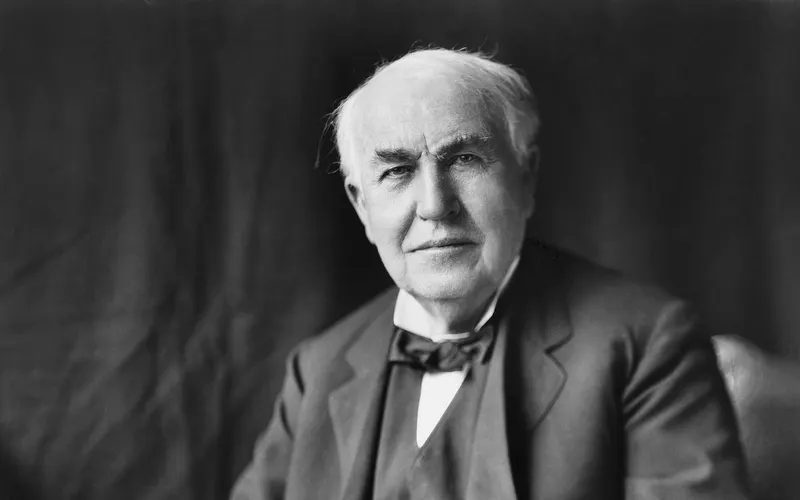
Fed up with smudges, the journalist pictured here, László Bíró, borrowed the idea of quick-drying newspaper ink. What did he invent?
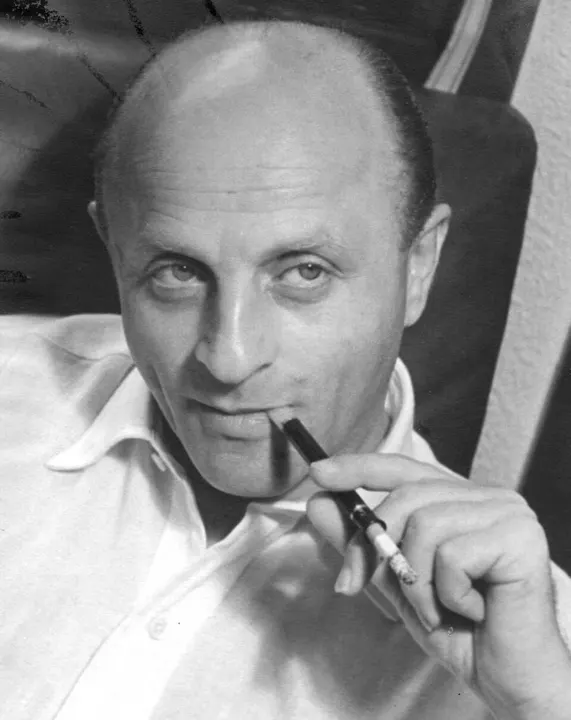
Photo: Unknown authorUnknown author, Public domain, via Wikimedia Commons - The paper clip
- The ballpoint pen
- The pencil sharpener
- The safety pin
Answer: The ballpoint pen. His 1938 ballpoint pen is why the British still call one a 'biro'.
He came back from a holiday in 1928 to find mould like this killing his bacteria. Whose lab was it?
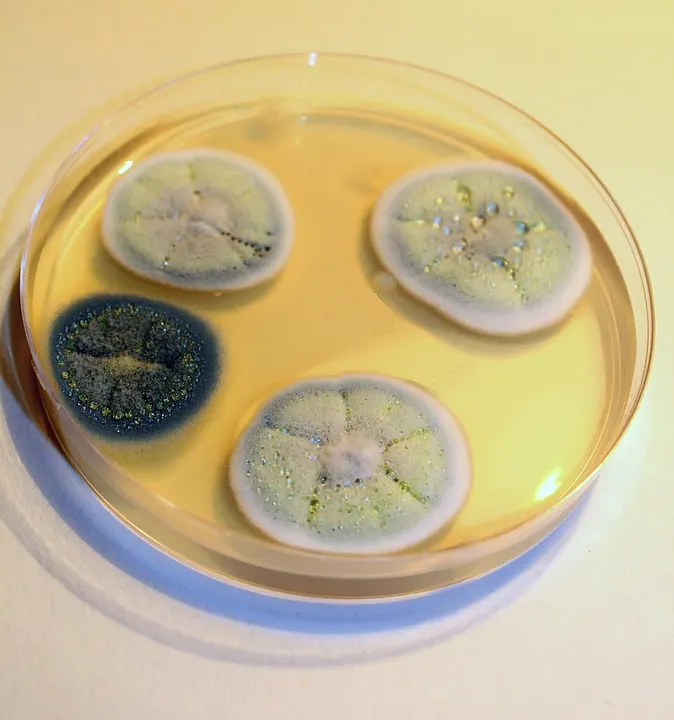
Photo: Convallaria majalis, CC BY-SA 4.0, via Wikimedia Commons - Alexander Fleming
- Edward Jenner
- Marie Curie
- Louis Pasteur
Answer: Alexander Fleming. Alexander Fleming's untidy bench at St Mary's, London, gave the world penicillin.
His boss scribbled 'Vague but exciting' on the 1989 proposal. Where did Tim Berners-Lee, pictured, work?
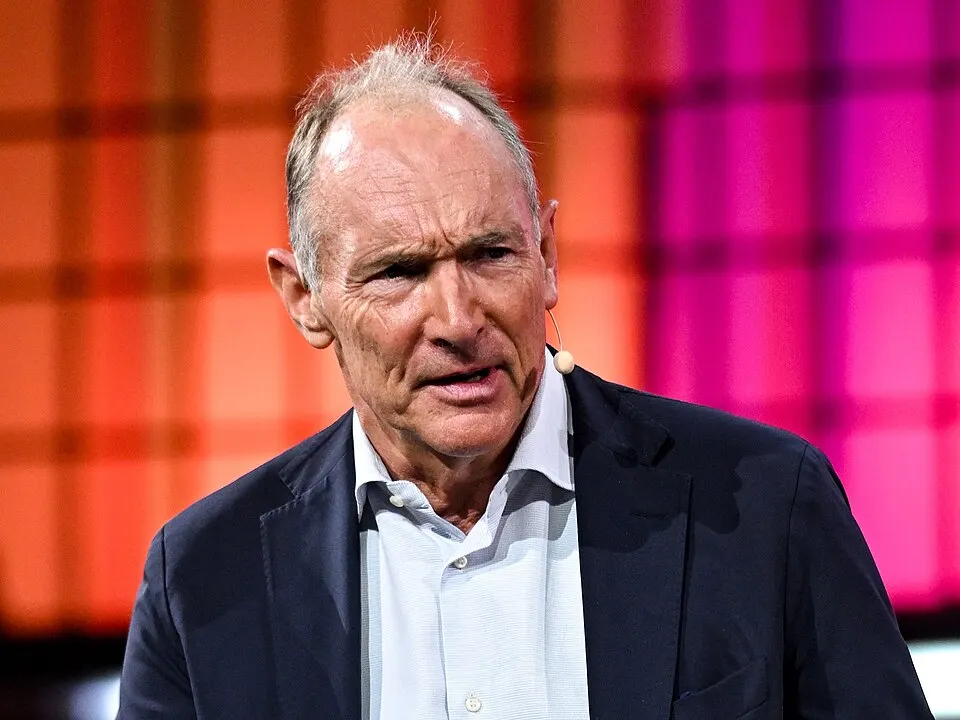
Photo: Summit, CC BY 4.0, via Wikimedia Commons - IBM
- NASA
- MIT
- CERN
Answer: CERN. At CERN, the physics lab near Geneva, where scientists needed to share documents.
Two bicycle makers from Dayton, Ohio, made the first powered aeroplane flight in 1903 on the windy dunes near Kitty Hawk. Which US state is that?
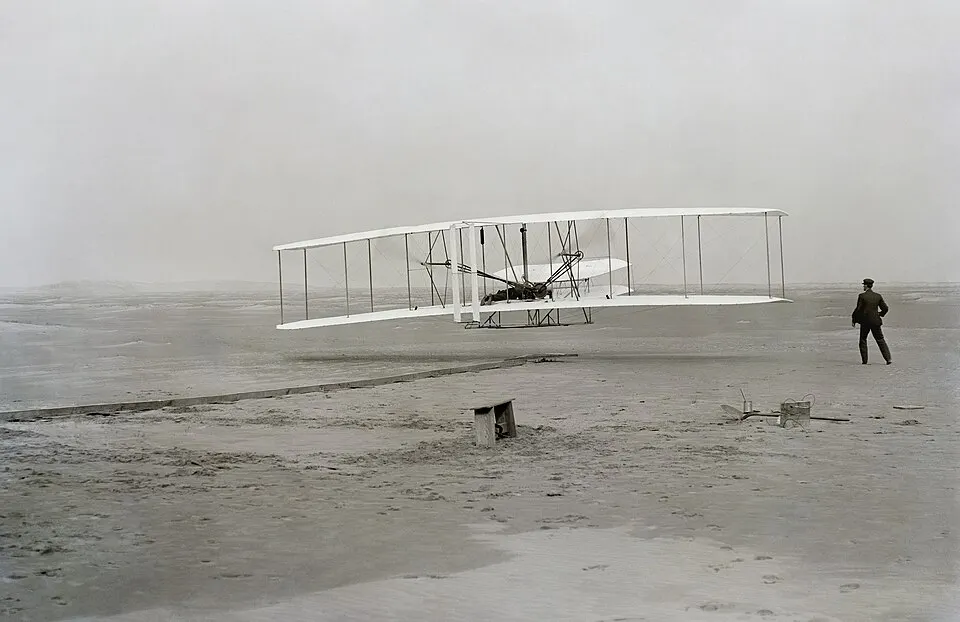
Photo: John T. Daniels, Public domain, via Wikimedia Commons - Virginia
- South Carolina
- North Carolina
- Georgia
Answer: North Carolina. The Wright brothers chose North Carolina's Outer Banks for steady wind and soft sand. The first flight, on 17 December 1903, lasted 12 seconds.
On a ship crossing the Mediterranean in 1921, C. V. Raman started the work that won him the 1930 Physics Nobel. What puzzled him?
- The deep blue colour of the sea
- The rolling of the ship in waves
- The twinkling of stars at night
- The salt left behind by sea spray
Answer: The deep blue colour of the sea. He doubted that the sea was blue only because it reflects the sky. Studying how light scatters led him to the Raman effect in 1928.
A chocolate bar melted in this engineer's pocket while he stood near radar kit. What did that lead to?
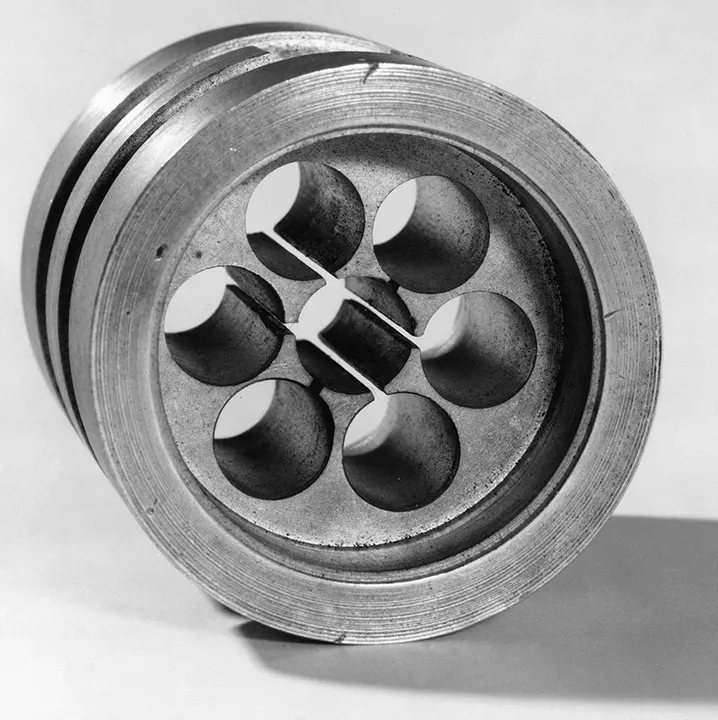
Photo: Science Museum London / Science and Society Picture Library, CC BY-SA 2.0, via Wikimedia Commons - The refrigerator
- The television
- The microwave oven
- The electric kettle
Answer: The microwave oven. The radar's magnetron was heating the chocolate. Percy Spencer's company, Raytheon, turned it into the microwave oven.
Tired of her servants chipping the fine china, Josephine Cochrane invented what in 1886?
- The pressure cooker
- The dishwasher
- The vacuum cleaner
- The washing machine
Answer: The dishwasher. She built the first commercially successful dishwasher, with wire racks and water jets.
The Bakhshali manuscript, found buried in a field in 1881 in what is now Pakistan, uses a small dot to mark an empty place in a number. What did that dot become?
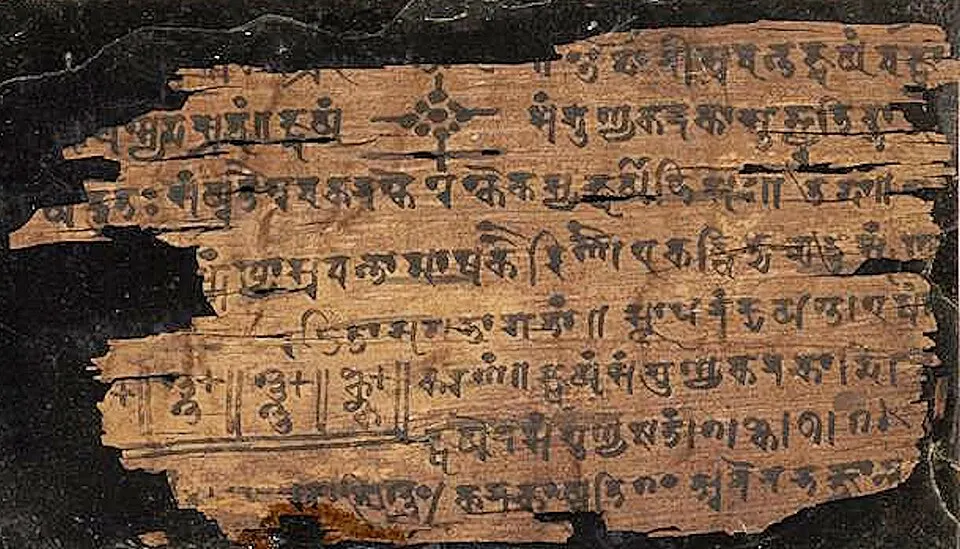
Photo: National Geographic, Public domain, via Wikimedia Commons - The decimal point
- The digit zero
- The full stop
- The minus sign
Answer: The digit zero. Carbon dating in 2017 placed parts of this birch-bark text in the 3rd or 4th century, making its dot the oldest known placeholder zero.
In 1895 J. C. Bose, pictured, rang a bell and set off a small charge of gunpowder across a Kolkata college, through two walls, with no wires. What did he send?
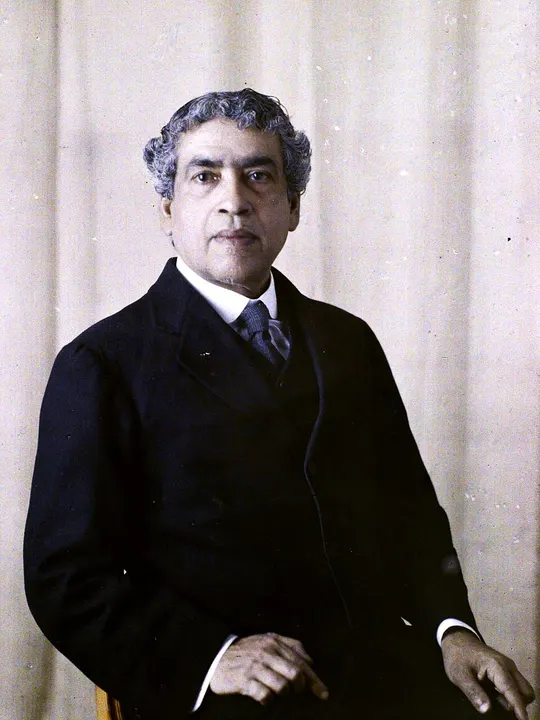
Photo: Georges Chevalier, CC BY-SA 4.0, via Wikimedia Commons - Radio waves
- Sound waves
- X-rays
- An electric current
Answer: Radio waves. Very short radio waves, now called millimetre waves. The IEEE honours it as the first millimetre-wave communication experiment.
A Swiss engineer's dog came home covered in these, and he turned them into the fastener shown here. What were they?
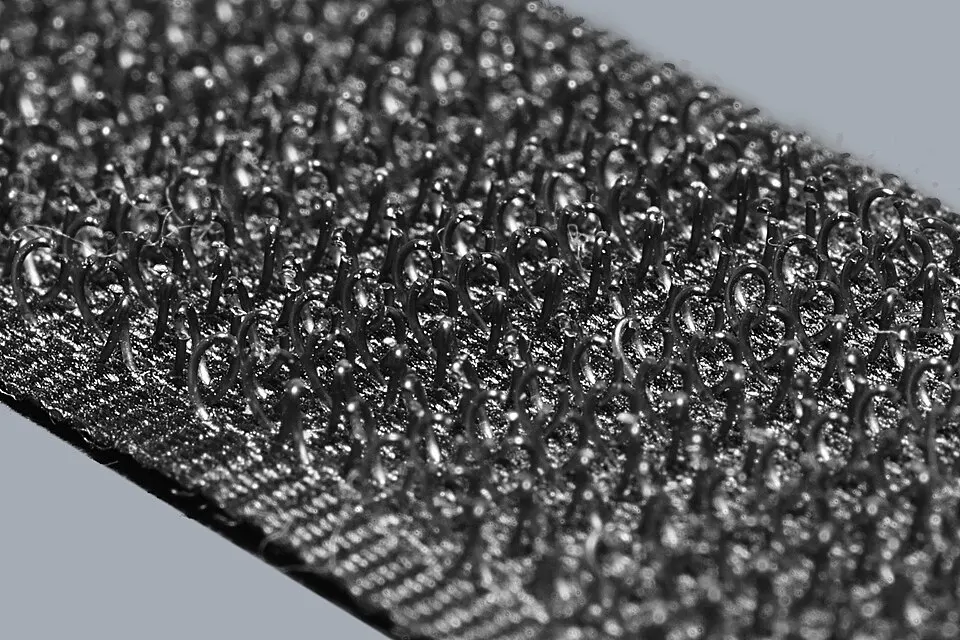
Photo: Alexander Klink, CC BY 3.0, via Wikimedia Commons - Gecko feet
- Burdock burrs
- Spider silk
- Seaweed
Answer: Burdock burrs. George de Mestral saw the tiny hooks on burdock burrs under a microscope and copied them to make Velcro.
In 1942 a Kodak chemist rejected a new compound for clear gun sights because it stuck to everything it touched. Years later it went on sale as what?
- Sellotape
- Fevicol
- Bubble wrap
- Super Glue
Answer: Super Glue. Harry Coover's cyanoacrylate was too sticky for gun sights. He saw its value in 1951, and it reached shops in 1958 before being renamed Super Glue.
As the company tells it, an 11-year-old left a fruity soda with its stirring stick on the porch on a very cold night in 1905. What did he end up inventing?
- The ice-cream cone
- Candy floss
- The ice lolly
- The slushie
Answer: The ice lolly. Frank Epperson's drink froze around the stick. He patented his 'Epsicle' in the 1920s, and his children helped rename it the Popsicle.
After seeing how hard it was to hook up a home printer, an Intel engineer from Vadodara helped design a plug that now links and charges almost everything. Which?
- HDMI
- Bluetooth
- Ethernet
- USB
Answer: USB. Ajay Bhatt co-created the Universal Serial Bus in the 1990s. He calls himself a co-creator, crediting his Intel team.
College students in the US loved tossing empty pie tins from a bakery in Bridgeport, Connecticut. A toy company named its plastic version after the bakery. What toy?
- The yo-yo
- The boomerang
- The Frisbee
- The hula hoop
Answer: The Frisbee. The tins came from the Frisbie Pie Company. Wham-O changed the spelling to Frisbee to stay clear of trademark trouble.
In 1957 two engineers in New Jersey sealed air between two plastic sheets and tried to sell it as textured wallpaper. It flopped, so what did it become?
- Bubble wrap
- Cling film
- A raincoat
- A swimming float
Answer: Bubble wrap. Alfred Fielding and Marc Chavannes went on to found Sealed Air, and their bubbles became the world's favourite packing material.
Frequently asked questions
What is the difference between an invention and a discovery?
An invention is something people make that did not exist before, such as the telephone or the steam engine. A discovery is finding something that already existed in nature, such as a new element or the way a mould kills bacteria.
Who invented the telephone?
Alexander Graham Bell received the first US patent for the telephone in 1876. Others, including Elisha Gray and Antonio Meucci, worked on similar ideas at the same time.
Is this inventions quiz suitable for school students?
Yes. It is written for teens and adults, but the stories are clear enough for middle-school students, and every answer has a short explanation teachers can build on.