
Myths & Legends of the World
This mythology quiz travels from Greece and Egypt to Scandinavia and India, with gods, heroes, monsters and magical weapons. Fifteen questions on the world's great stories, each with a short note.
15 questionsMedium~3 minNo timer
Updated:
If you liked this




Trending today
 Bollywood QuizBollywood
 India GK Question Answer Quiz (Indian GK)General Knowledge
 Cricket World Cup QuizSports
 सामान्य ज्ञान प्रश्न (GK in Hindi Questions)Hindi
 Guess the FlagGeography
 Current Affairs Quiz (October 2026)Current Affairs
 Friends TV Series QuizMovies & TV
 KBC क्विज़ (KBC Hindi Quiz)Hindi
 F1 Quiz (Formula 1)Sports
 Naruto QuizAnime & Games
All General Knowledge quizzes →
About this Mythology quiz
This mythology quiz is a quick tour of the stories people have told for thousands of years. It visits Greek heroes and monsters, Norse gods and their weapons, the Egyptian afterlife, King Arthur's Britain and the great Indian epics, with a few myths that still hide in everyday words.
It suits students reading the Ramayana, Mahabharata or Greek myths in class, fans of fantasy books and superhero films, and quiz nights that need a round with a story behind every answer. Several questions leave you clues to reason with, so a sharp guess can carry you even when a name slips your mind.
Myths often differ from one telling to another, and the questions follow the best-known versions, such as Hesiod and Ovid for Greece, the Prose Edda for the Norse gods and Valmiki's Ramayana. Each answer has a short explanation. Play once, read the notes, then try again and see how many of the stories you can now retell.
Mythology questions with answers
Show answers
Arthur Evans began digging up these ruins at Knossos in 1900, the palace linked to the Labyrinth myth. What name did he give their Bronze Age builders?
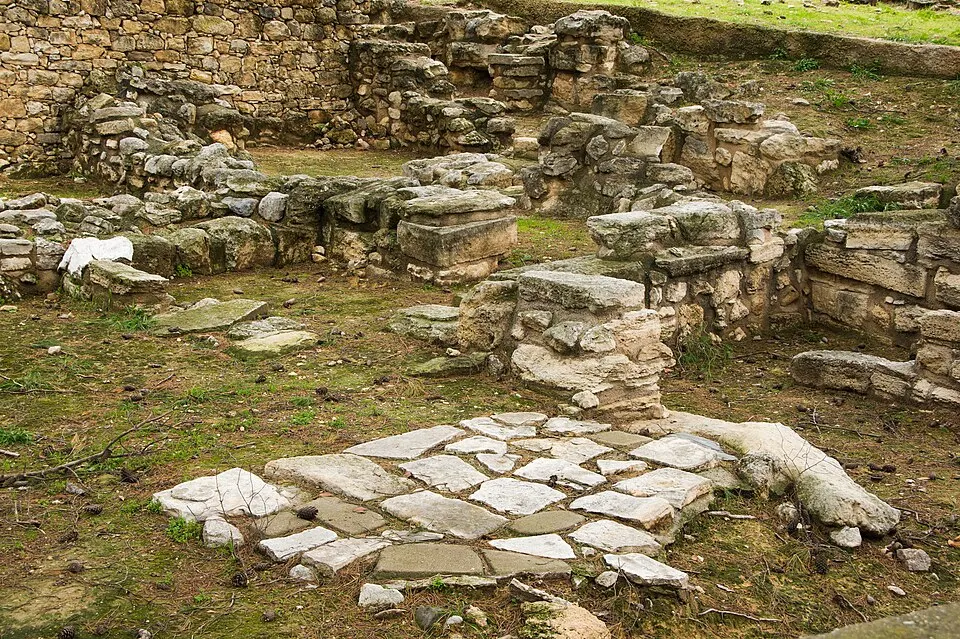
Photo: Jebulon, CC0, via Wikimedia Commons - Minoan
- Mycenaean
- Etruscan
- Phoenician
Answer: Minoan. He named them after King Minos, who in myth had Daedalus build the Labyrinth to hold the Minotaur.
While two dwarves forged Thor's hammer, a fly kept biting the smith, and the hammer came out with a short handle. Which god was the fly?
- Loki
- Odin
- Heimdall
- Freyr
Answer: Loki. Loki, the trickster, had bet his head that the dwarves would fail. Even with its short handle, Mjölnir was judged the best treasure.
Four legs at dawn, two at noon, three at evening. Who solved this riddle at Thebes?
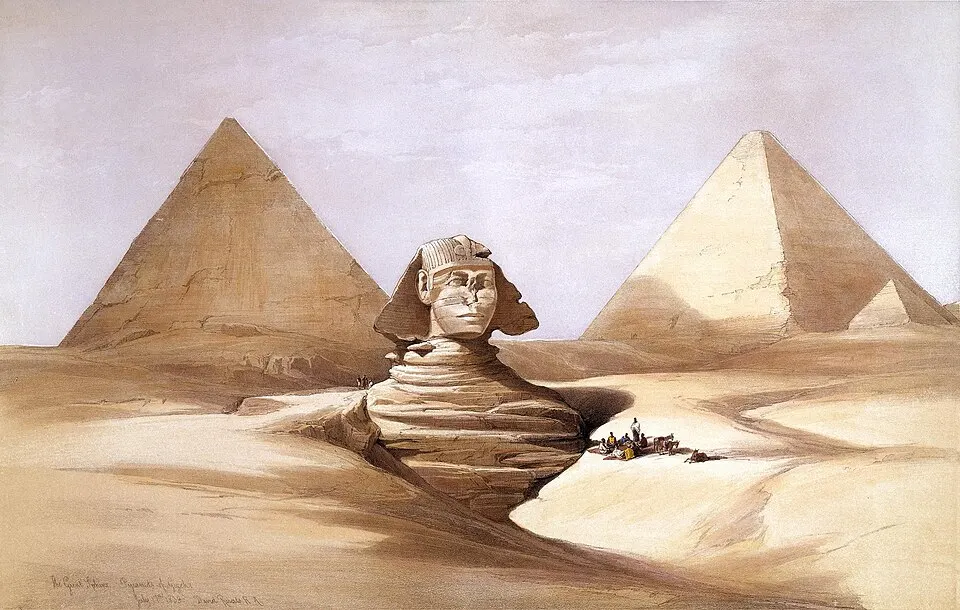
Photo: David Roberts, Public domain, via Wikimedia Commons - Jason
- Odysseus
- Theseus
- Oedipus
Answer: Oedipus. Oedipus answered 'man', and the Sphinx destroyed herself.
In Norse myth, a giant ash tree links the nine worlds. What is it called?
- Asgard
- Valhalla
- Bifröst
- Yggdrasil
Answer: Yggdrasil. Yggdrasil is the world tree; Bifröst is the rainbow bridge.
When Perseus cut off the head of the Gorgon on this shield, a winged horse sprang from her neck. What was it called?
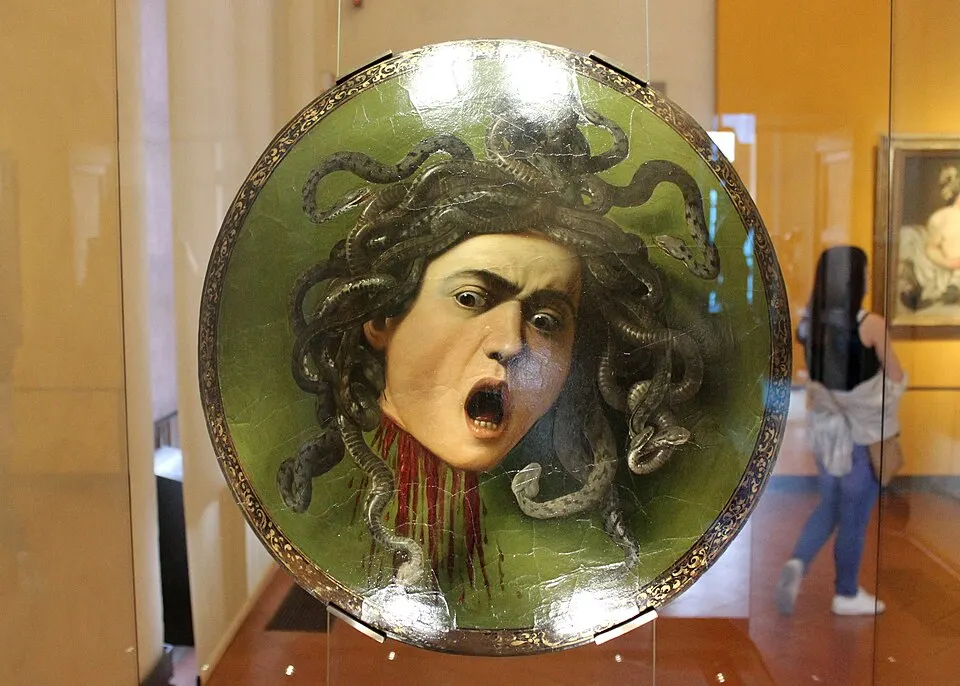
Photo: Caravaggio, CC BY-SA 4.0, via Wikimedia Commons - Arion
- Pegasus
- Sleipnir
- Bucephalus
Answer: Pegasus. Pegasus, born with his brother Chrysaor. Medusa was the only mortal one of the three Gorgon sisters.
In many tellings, the Lady of the Lake gave King Arthur his sword. What was it called?
- Tizona
- Durandal
- Joyeuse
- Excalibur
Answer: Excalibur. Excalibur. Durandal belonged to Roland, Joyeuse to Charlemagne.
Jackals prowled Egyptian graveyards, so the god of embalming wore a jackal's head. Name him.
- Osiris
- Horus
- Anubis
- Ra
Answer: Anubis. Anubis. Horus, by contrast, had a falcon's head.
Jatayu, the vulture who fought Ravana, had an elder brother whose wings were burnt when he flew ahead to shield Jatayu from the sun. Who was he?

Photo: Luc Viatour, CC BY-SA 3.0, via Wikimedia Commons - Garuda
- Sampati
- Aruna
- Shyeni
Answer: Sampati. Sampati. Wingless, he later told Hanuman's search party that Sita was held in Lanka.
Zeus sent Pandora, shown here, as a gift to Prometheus's brother, who took her in although he had been warned. Name him.
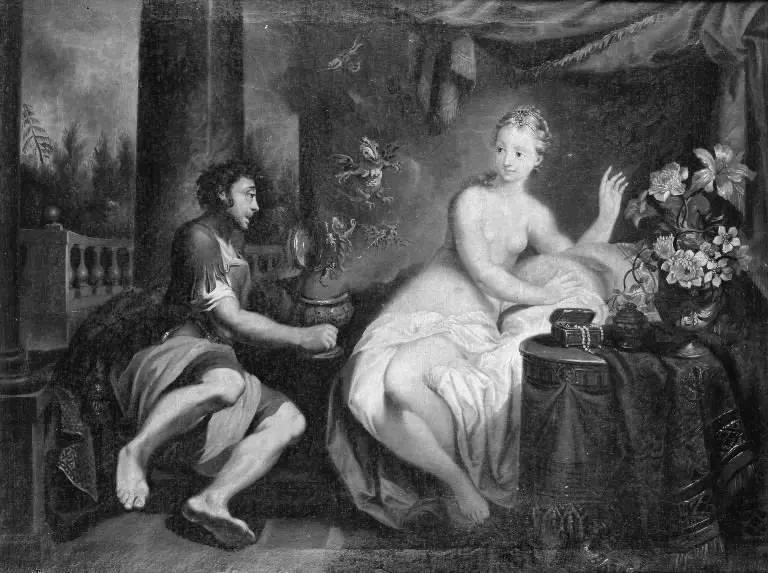
Photo: Anton Tischbein, Public domain, via Wikimedia Commons - Hephaestus
- Hermes
- Epimetheus
- Orpheus
Answer: Epimetheus. Epimetheus, whose name means 'afterthought'. Prometheus means 'forethought'.
Indra, disguised as a Brahmin, begged this warrior for the armour he was born with. Who?
- Arjuna
- Bhishma
- Abhimanyu
- Karna
Answer: Karna. Karna, son of Surya, gave away his kavacha and kundala anyway.
In the ancient Egyptian afterlife, a dead person's heart was placed on a scale. What sat on the other pan?
- A feather
- A gold coin
- A lotus flower
- A scarab beetle
Answer: A feather. The feather of Ma'at, goddess of truth. A heart heavier with wrongdoing was eaten by a crocodile-headed monster.
One day of the English week is named after the one-eyed chief of the Norse gods, under the name the Anglo-Saxons knew him by. Which day?
- Tuesday
- Wednesday
- Thursday
- Friday
Answer: Wednesday. Wednesday comes from Old English Wōdnesdæg, Woden's day. Woden is the Anglo-Saxon form of Odin.
A young weaver boasted she could beat the goddess Athena at the loom. After their contest, the goddess turned her into a spider. Name her.
- Daphne
- Io
- Arachne
- Callisto
Answer: Arachne. Arachne is Greek for spider, which is why spiders and scorpions are called arachnids.
A king's long penance brought the Ganga down from heaven, and Shiva caught her in his hair to break the fall. Indian languages name a mighty effort after him. Who?
- Sagara
- Bhagiratha
- Harishchandra
- Dasharatha
Answer: Bhagiratha. Bhagiratha wanted the river to purify the ashes of King Sagara's sons, his ancestors. Hence 'Bhagirath prayas'.
A handsome youth spurned the nymph Echo, then fell in love with his own reflection in a pool and wasted away. A flower grew in his place. Who was he?
- Narcissus
- Adonis
- Hyacinthus
- Orpheus
Answer: Narcissus. Narcissus, whose story in Ovid also gave us the word narcissism.
Frequently asked questions
What is the difference between a myth and a legend?
A myth is a traditional story, usually about gods or the beginning of the world, that explains how things came to be. A legend is usually about human heroes and is often tied to real places or people, like the tales of King Arthur.
What are the Roman names of the main Greek gods?
The Romans matched their gods to the Greek ones: Zeus became Jupiter, Hera became Juno, Athena became Minerva, Ares became Mars and Aphrodite became Venus.
Is this mythology quiz suitable for school students?
Yes. It is written for teens and adults, but there is nothing frightening or unsuitable, and the explanations make it useful for classes studying myths and epics.