
Guess the Person
Guess the Person: 15 rounds. Look at each clue, pick the right answer and beat the clock. No sign-up, instant score, and every answer revealed at the end.
15 questionsMixed (easy → hard)~3 minNo timer
Updated:
If you liked this




Trending today
 Bollywood QuizBollywood
 India GK Question Answer Quiz (Indian GK)General Knowledge
 Cricket World Cup QuizSports
 सामान्य ज्ञान प्रश्न (GK in Hindi Questions)Hindi
 Guess the FlagGeography
 Current Affairs Quiz (October 2026)Current Affairs
 Friends TV Series QuizMovies & TV
 KBC क्विज़ (KBC Hindi Quiz)Hindi
 F1 Quiz (Formula 1)Sports
 Naruto QuizAnime & Games
About this Guess the Person quiz
Guess the person is a quick clue game: each round gives you a few facts about a famous figure, written as if they are speaking, and you pick who it is from four names. This guess the person quiz has 15 rounds covering scientists, leaders, writers, artists, astronauts and a cricketer, with a mix of world figures and Indians who changed their fields.
The rounds get harder as you go. The first few people are household names, while the later ones (a self-taught maths genius, a pioneer of computing and the scientist behind a famous X-ray photo) will test even well-read players. Every answer comes with a short explanation, so you learn something new whether you get it right or not.
It works well as a guess the person game online for a class warm-up, a family quiz night or a work icebreaker. Read each clue slowly: the first fact is usually the hardest, and the last one often gives it away. For a team version, read the clues aloud one at a time and award more points to whoever answers earliest. The full answer key is further down this page.
Fun fact: Albert Einstein, the subject of round one, did not win his Nobel Prize for relativity, his most famous idea. The 1921 award was for explaining the photoelectric effect, work that helped lay the ground for modern solar panels.
Guess the Person questions with answers
Show answers
Who is this? Clue: I was a physicist, E = mc² is my most famous equation, and I won the 1921 Nobel Prize in Physics.
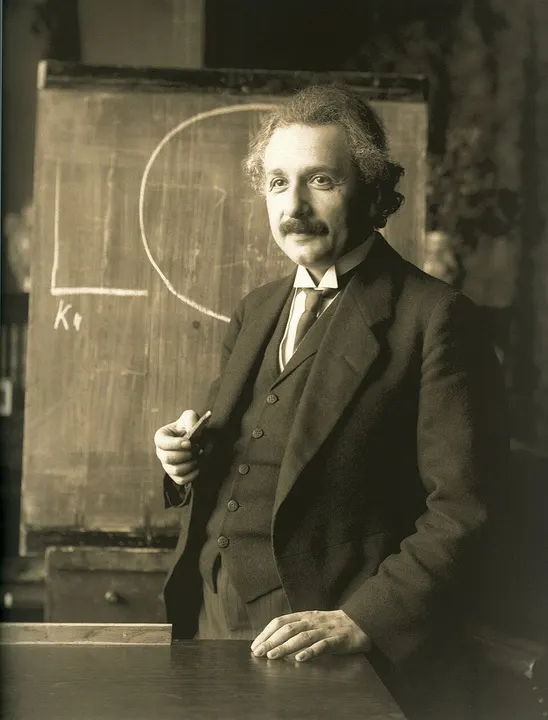
Photo: Ferdinand Schmutzer / Adam Cuerden, Public domain, via Wikimedia Commons - Isaac Newton
- Albert Einstein
- Niels Bohr
- Stephen Hawking
Answer: Albert Einstein. Albert Einstein won the 1921 Nobel Prize for explaining the photoelectric effect, not for his theory of relativity.
Who is this? Clue: I led the Salt March from Sabarmati to Dandi in 1930, and my birthday, 2 October, is the International Day of Non-Violence.
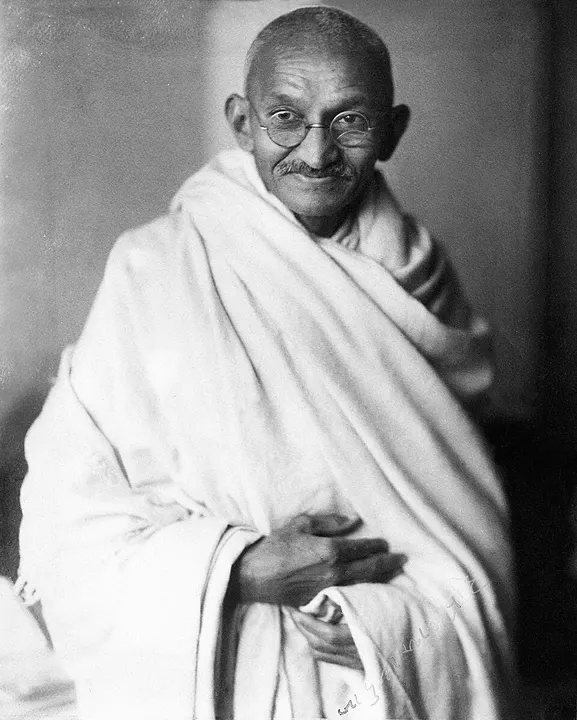
Photo: Elliott & Fry, Public domain, via Wikimedia Commons - Mahatma Gandhi
- Jawaharlal Nehru
- Sardar Vallabhbhai Patel
- Subhas Chandra Bose
Answer: Mahatma Gandhi. Gandhi's 24-day Salt March protested the British tax on salt. He was nominated for the Nobel Peace Prize five times but never won.
Who is this? Clue: I was the 16th President of the United States and gave the Gettysburg Address in 1863.
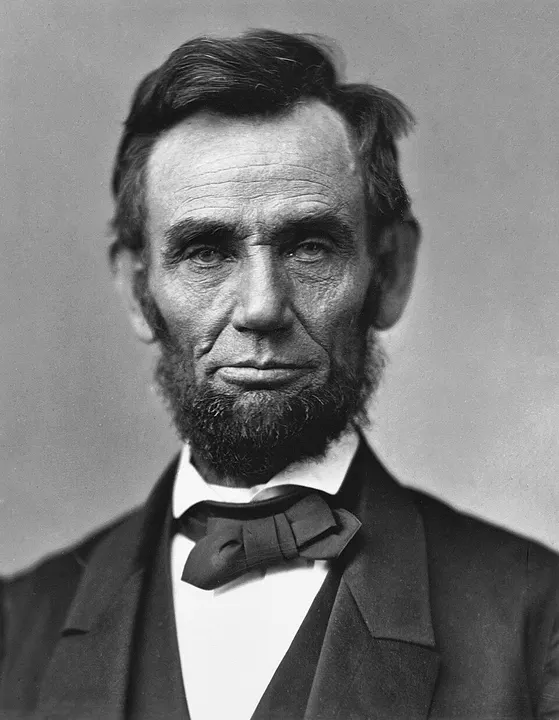
Photo: Alexander Gardner, Public domain, via Wikimedia Commons - George Washington
- Thomas Jefferson
- Ulysses S. Grant
- Abraham Lincoln
Answer: Abraham Lincoln. Abraham Lincoln led the USA through the Civil War and issued the Emancipation Proclamation in 1863.
Who is this? Clue: I was born in Stratford-upon-Avon in 1564 and wrote Hamlet, Macbeth and Romeo and Juliet.
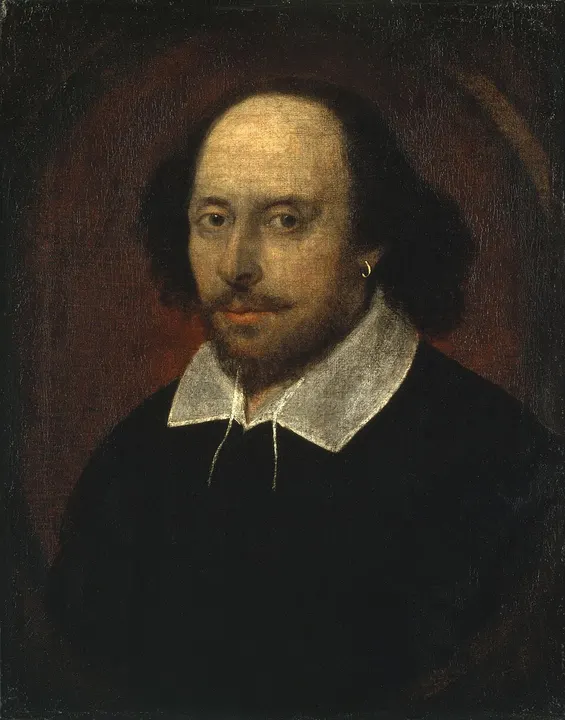
Photo: Attributed to John Taylor, Public domain, via Wikimedia Commons - Christopher Marlowe
- Charles Dickens
- William Shakespeare
- Geoffrey Chaucer
Answer: William Shakespeare. William Shakespeare wrote around 37 plays, many of them performed at London's Globe Theatre.
Who is this? Clue: In July 1969 I became the first human to walk on the Moon.
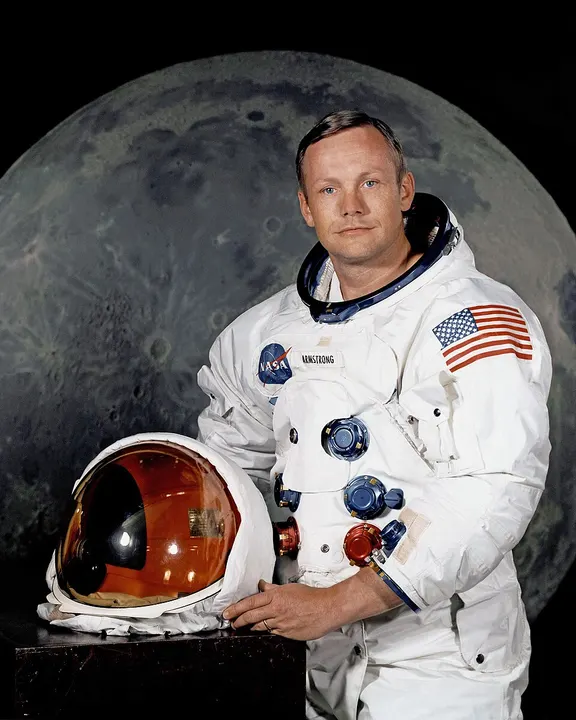
Photo: Unknown authorUnknown author, Public domain, via Wikimedia Commons - Neil Armstrong
- Buzz Aldrin
- Yuri Gagarin
- Michael Collins
Answer: Neil Armstrong. Neil Armstrong commanded Apollo 11. Buzz Aldrin followed him onto the surface, while Michael Collins stayed in orbit.
Who is this? Clue: I was the first woman to win a Nobel Prize, and I remain the only person to win Nobel Prizes in two different sciences.
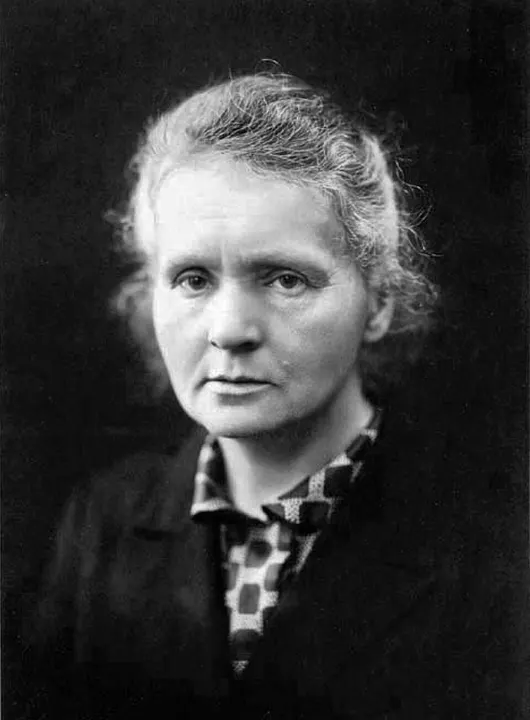
Photo: Henri Manuel, Public domain, via Wikimedia Commons - Rosalind Franklin
- Marie Curie
- Lise Meitner
- Dorothy Hodgkin
Answer: Marie Curie. Marie Curie won the Physics prize in 1903 and the Chemistry prize in 1911 for her work on radioactivity, polonium and radium.
Who is this? Clue: I painted the Mona Lisa and The Last Supper, and filled my notebooks with mirror writing and flying machines.
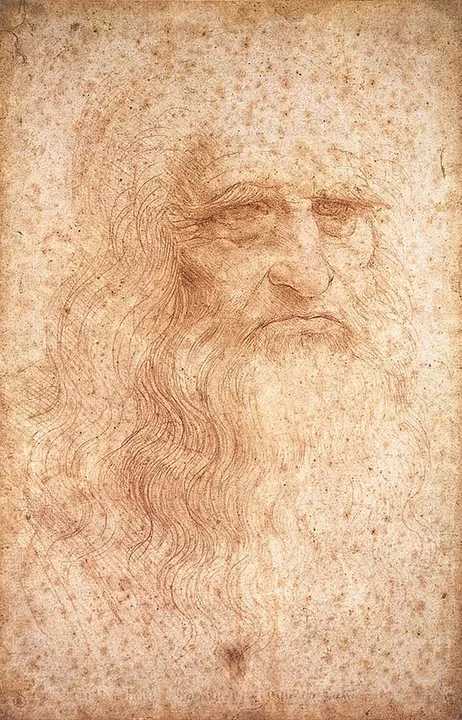
Photo: Public domain, via Wikimedia Commons - Michelangelo
- Raphael
- Sandro Botticelli
- Leonardo da Vinci
Answer: Leonardo da Vinci. Leonardo da Vinci was a painter, engineer and inventor. He wrote right to left, so his notes read normally in a mirror.
Who is this? Clue: I made my Test debut at 16 against Pakistan in 1989, I am the only player with 100 international centuries, and I received the Bharat Ratna in 2014.
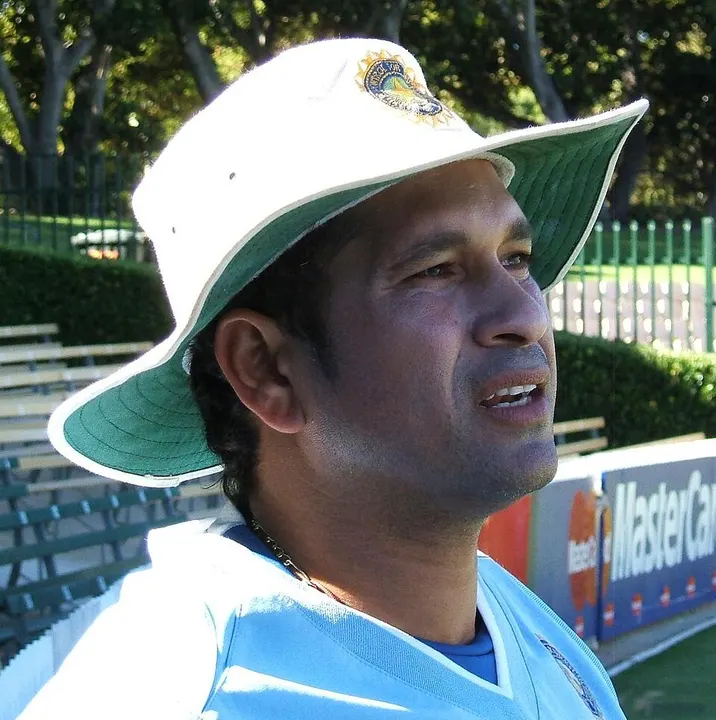
Photo: Blnguyen, CC BY-SA 3.0, via Wikimedia Commons - Sunil Gavaskar
- Virat Kohli
- Sachin Tendulkar
- Rahul Dravid
Answer: Sachin Tendulkar. Sachin Tendulkar was the first sportsperson to receive the Bharat Ratna, India's highest civilian award.
Who is this? Clue: Known as the 'Missile Man of India', I served as India's 11th President and wrote the autobiography Wings of Fire.
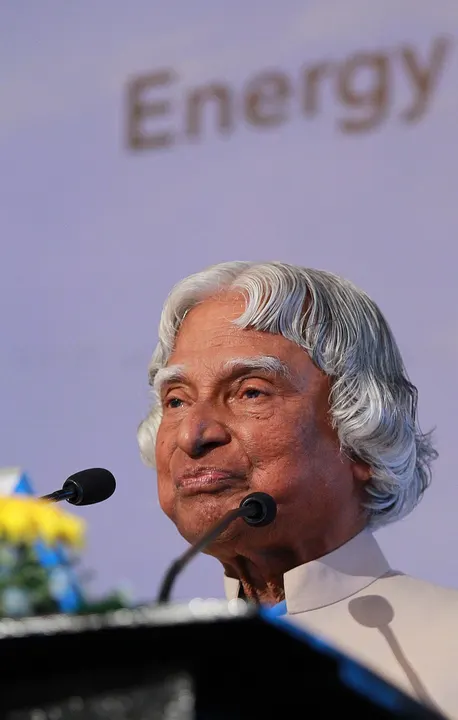
Photo: Damith Wickramasinghe from Sri Lanka, CC BY 2.0, via Wikimedia Commons - A. P. J. Abdul Kalam
- Vikram Sarabhai
- Homi J. Bhabha
- C. V. Raman
Answer: A. P. J. Abdul Kalam. Dr A. P. J. Abdul Kalam led India's missile programme and was President from 2002 to 2007.
Who is this? Clue: I spent 27 years in prison, shared the 1993 Nobel Peace Prize, and became my country's first Black president in 1994.
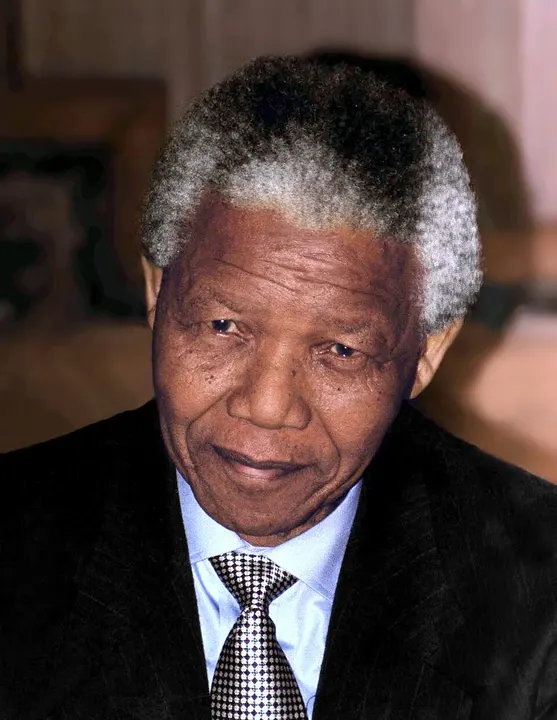
Photo: Kingkongphoto & www.celebrity-photos.com from Laurel, CC BY-SA 2.0, via Wikimedia Commons - Desmond Tutu
- Nelson Mandela
- Kofi Annan
- Martin Luther King Jr.
Answer: Nelson Mandela. Nelson Mandela shared the Peace Prize with F. W. de Klerk for ending apartheid peacefully, then led South Africa until 1999.
Who is this? Clue: I won the 1913 Nobel Prize in Literature for Gitanjali, and I wrote the national anthems of both India and Bangladesh.
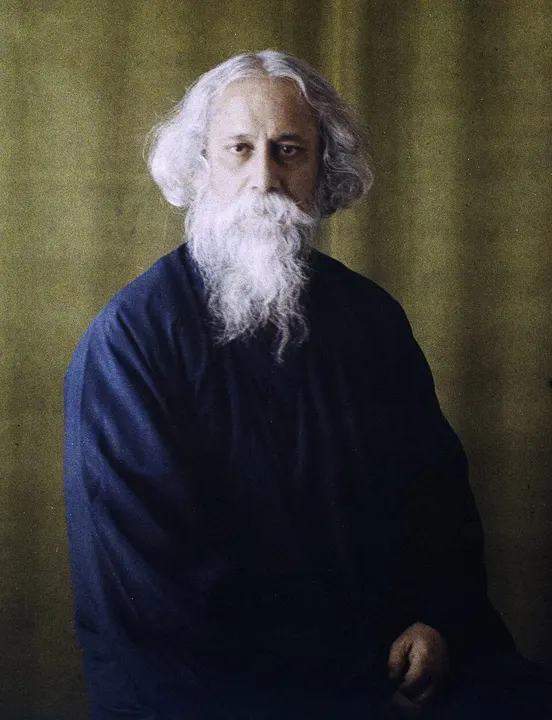
Photo: Georges Chevalier, CC BY 4.0, via Wikimedia Commons - Bankim Chandra Chatterjee
- Sarojini Naidu
- Kazi Nazrul Islam
- Rabindranath Tagore
Answer: Rabindranath Tagore. Rabindranath Tagore was the first non-European to win the Literature prize. He wrote Jana Gana Mana and Amar Shonar Bangla.
Who is this? Clue: Born in Karnal, Haryana, I became the first woman of Indian origin in space in 1997, and I died in the Columbia disaster in 2003.
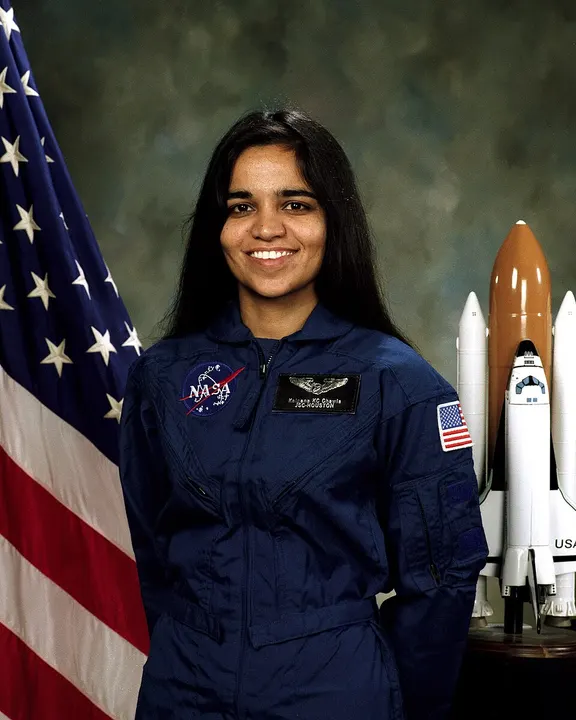
Photo: NASA, Public domain, via Wikimedia Commons - Sunita Williams
- Kalpana Chawla
- Sirisha Bandla
- Tessy Thomas
Answer: Kalpana Chawla. Kalpana Chawla first flew on NASA's Space Shuttle mission STS-87. Columbia broke apart on re-entry on 1 February 2003.
Who is this? Clue: I was a self-taught mathematician who worked with G. H. Hardy at Cambridge, and 1729 is called the 'taxicab number' because of me.
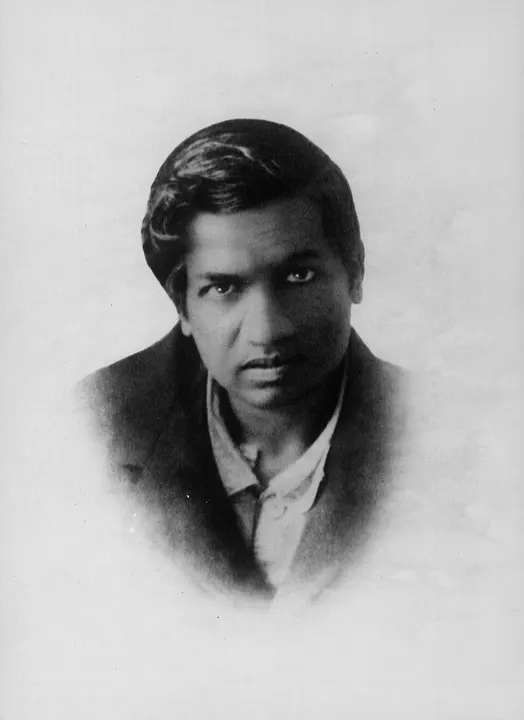
Photo: Unknown authorUnknown author, Public domain, via Wikimedia Commons - Aryabhata
- P. C. Mahalanobis
- Srinivasa Ramanujan
- Shakuntala Devi
Answer: Srinivasa Ramanujan. Ramanujan noted 1729 is the smallest number that is the sum of two cubes in two ways (1 + 1728 and 729 + 1000). India marks his birthday, 22 December, as National Mathematics Day.
Who is this? Clue: I was Lord Byron's daughter, and my 1843 notes on Charles Babbage's Analytical Engine include what is often called the first computer program.
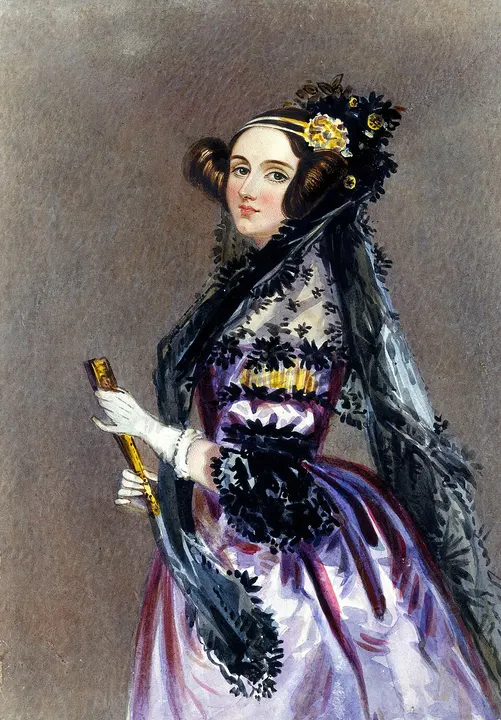
Photo: Alfred Edward Chalon, Public domain, via Wikimedia Commons - Grace Hopper
- Mary Shelley
- Ada Lovelace
- Hedy Lamarr
Answer: Ada Lovelace. Ada Lovelace described an algorithm for the engine to calculate Bernoulli numbers, and saw that machines could handle more than just numbers.
Who is this? Clue: An X-ray image of DNA from my lab, known as Photo 51, was key to discovering its double helix structure, though I died before the Nobel Prize was awarded for it.
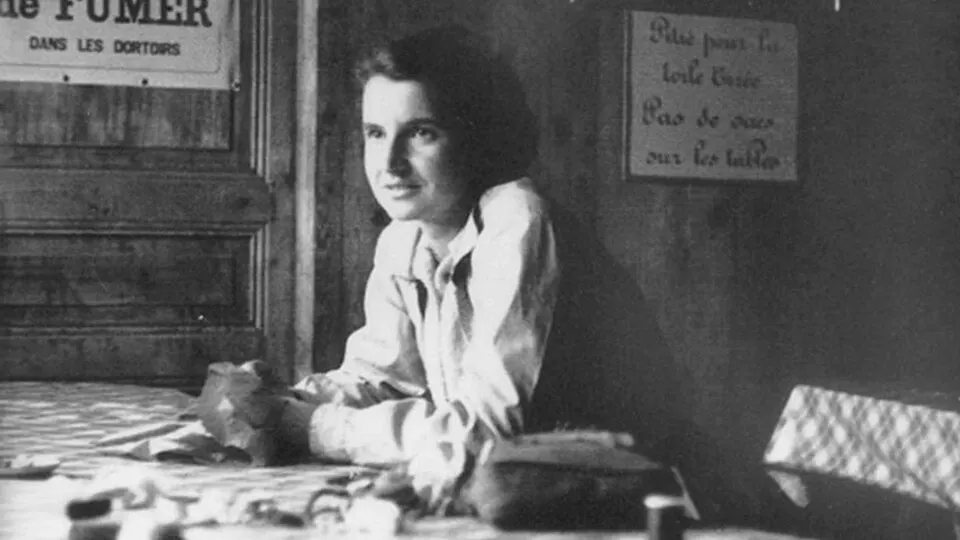
Photo: CSHL, CC BY-SA 4.0, via Wikimedia Commons - Rosalind Franklin
- Barbara McClintock
- Chien-Shiung Wu
- Jane Goodall
Answer: Rosalind Franklin. Rosalind Franklin died in 1958 aged 37. Photo 51 was taken in 1952 by her PhD student Raymond Gosling, and in 1962 Watson, Crick and Wilkins shared the Nobel Prize for the double helix.
Frequently asked questions
How many questions are in this Guess the Person quiz?
There are 15 questions. Each one gives you one to three clues about a famous person, and they run from easy household names to tougher figures from science and history.
Can I play the Guess the Person quiz online for free without signing up?
Yes. The quiz is completely free, needs no account or app, and runs in any phone or desktop browser. You see your score instantly and every answer is revealed at the end.
How do you play the guess the person game?
Read the clues in each question, which describe what the person did, where they came from or what they are known for, then pick the right name from four options. You can play solo, or read the clues aloud to a group and see who guesses first.
Why are there clues instead of photos?
Photos of famous people are often copyrighted, and clues also make the game fairer and more interesting. Instead of recognising a face, you have to know what each person actually achieved.