
Soils & Natural Vegetation Quiz: Indian Geography Practice
10 questions on India's soils (alluvial, black, red, laterite, arid, saline), soil erosion and the major forest types from evergreen to mangroves.
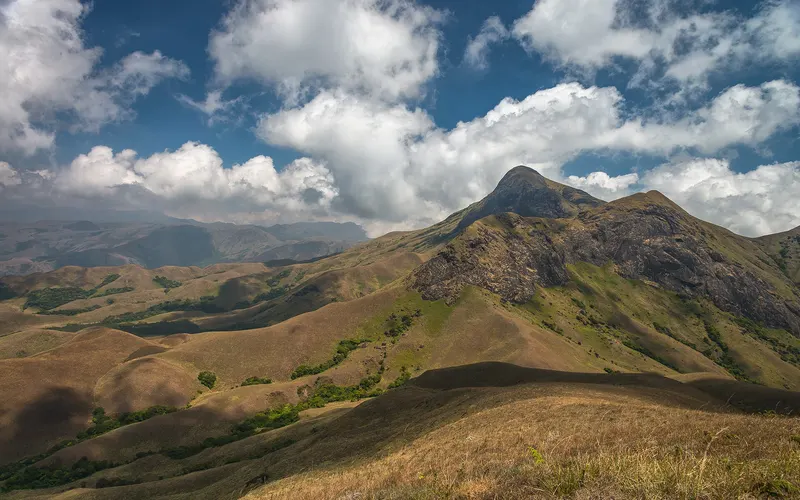
Soils & Natural Vegetation Quiz: Indian Geography Practice
Tip: use keys 1-4 to answer, Enter for next.
Answers to the starter quiz
Spoilers! These are the Starter quiz’s answers. Easy, Medium, Hard and Mixed rounds show their own answers when you finish.
Black soil, formed from the weathering of Deccan lava rocks and ideal for cotton, is also known as:
- Kankar
- Bhur
- Regur
- Kallar
Answer: Regur. Black (regur) soil holds moisture well, develops deep cracks in summer and becomes sticky when wet. Its high moisture retention suits cotton.
Laterite soil develops mainly in areas of:
- Low rainfall and high temperature
- High rainfall and high temperature with intense leaching
- Cold climate with permafrost
- Floodplains with fresh deposits
Answer: High rainfall and high temperature with intense leaching. Heavy rain washes away silica and lime (leaching), leaving iron and aluminium oxides behind. Laterite is poor in fertility but suits cashew and is cut into bricks.
The reddish colour of red soil is due to the presence of:
- Iron oxide
- Humus
- Calcium carbonate
- Potash
Answer: Iron oxide. Iron diffused through crystalline and metamorphic rocks gives red soil its colour. It looks yellow when the iron is in a hydrated form.
Saline and alkaline soils (reh, kallar or usar) can be reclaimed by adding:
- Lime
- Urea
- Potash
- Gypsum
Answer: Gypsum. Gypsum supplies calcium that replaces sodium in the soil, improving its structure. Lime is used for the opposite problem, acidic soils.
Black soils are generally rich in lime, iron and magnesia, but poor in:
- Clay content
- Moisture retention
- Phosphorus
- Calcium
Answer: Phosphorus. Black soils are typically deficient in phosphorus, nitrogen and organic matter, so fertilisers are needed despite their high natural fertility.
Which forest type covers the largest area in India?
- Tropical deciduous forests
- Tropical evergreen forests
- Montane forests
- Mangrove forests
Answer: Tropical deciduous forests. Tropical deciduous (monsoon) forests, which shed leaves in the dry season, are the most widespread. Teak and sal are their important trees.
The Sundari tree, which gives the Sundarbans their name, is a:
- Thorn forest tree
- Mangrove tree
- Coniferous tree
- Dry deciduous tree
Answer: Mangrove tree. Sundari is a mangrove tree of the Ganga–Brahmaputra delta. Mangroves grow in tidal zones and have breathing roots to survive in waterlogged, salty soil.
Tropical evergreen forests in India are found mainly where annual rainfall is:
- Below 70 cm
- Between 70 and 100 cm
- Between 100 and 200 cm
- Above 200 cm
Answer: Above 200 cm. They grow in very wet, warm areas such as the Western Ghats, north-east India and the Andaman and Nicobar Islands, with no fixed leaf-shedding season.
Khejri, babool and acacia are typical trees of which vegetation type?
- Tropical thorn forests
- Mangrove forests
- Moist deciduous forests
- Alpine vegetation
Answer: Tropical thorn forests. Thorn forests grow where rainfall is below about 70 cm, as in Rajasthan, Gujarat and parts of the Deccan. Long roots and small or thorny leaves reduce water loss.
The ravines (badlands) of the Chambal valley are mainly the result of:
- Sheet erosion
- Wind erosion
- Coastal erosion
- Gully erosion
Answer: Gully erosion. Running water cuts deep channels (gullies) into soft soil; they widen and join until the land becomes unfit for farming. Sheet erosion removes a thin layer evenly over a large area.
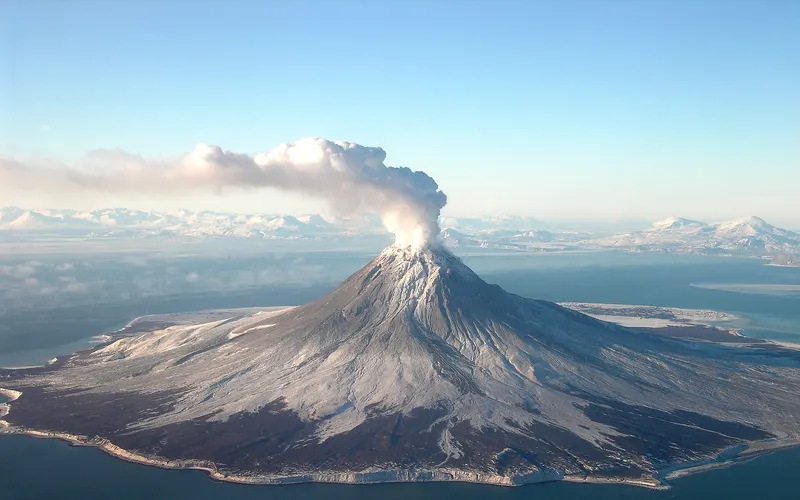
Geomorphology Quiz: Interior of the Earth, Plate Tectonics & Landforms
10 questions on the Earth's interior, seismic waves, plate boundaries, rocks, earthquakes and landforms made by rivers, wind, ice and groundwater.
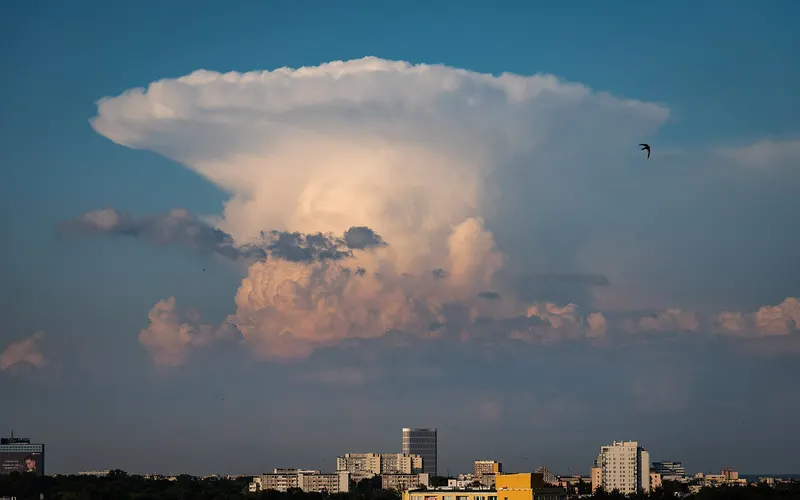
Climatology & Oceanography Quiz: Physical Geography Practice
10 questions on atmospheric layers, pressure belts, planetary and local winds, cyclones, ocean currents and tides. Physical geography with explanations.
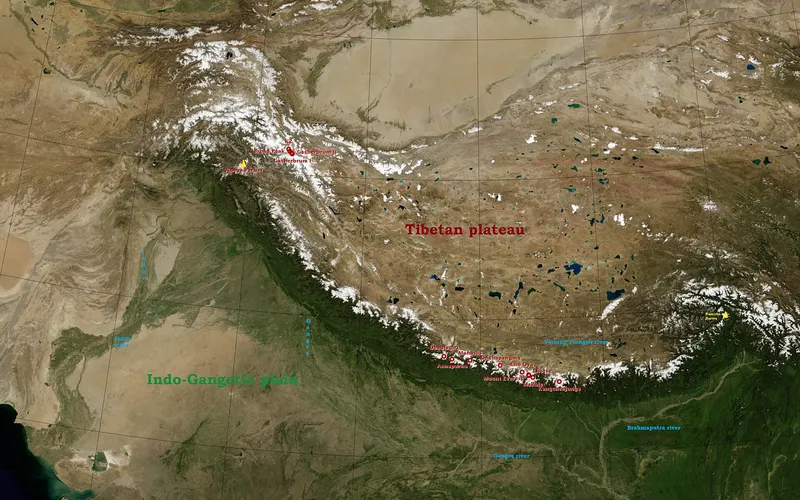
Physiography of India Quiz: Himalayas, Plains, Plateau, Coasts & Islands
10 questions on India's physical divisions: Himalayan ranges, bhabar and khadar, peninsular hills and peaks, coastal plains and island groups.
Indian Climate & Monsoon Quiz: Seasons, Winds and Rainfall
10 questions on India's monsoon climate: onset and retreat, western disturbances, pre-monsoon showers, local winds, rain shadow areas and El Nino.