
Indian Climate & Monsoon Quiz: Seasons, Winds and Rainfall
10 questions on India's monsoon climate: onset and retreat, western disturbances, pre-monsoon showers, local winds, rain shadow areas and El Nino.
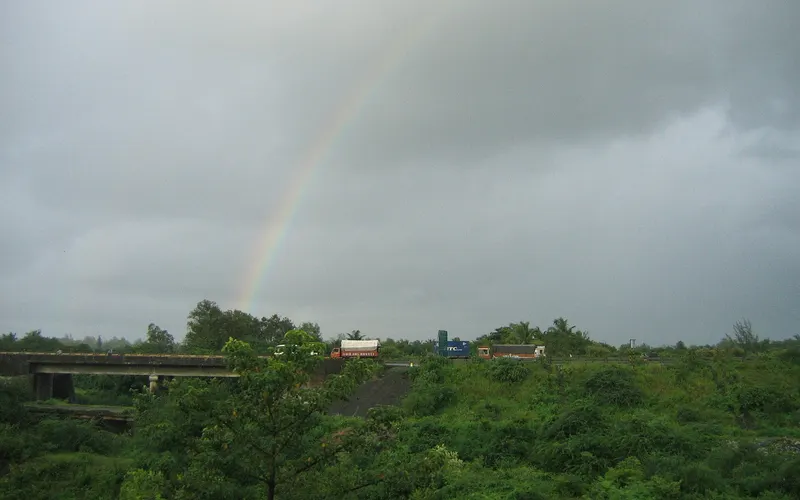
Indian Climate & Monsoon Quiz: Seasons, Winds and Rainfall
Tip: use keys 1-4 to answer, Enter for next.
Answers to the starter quiz
Spoilers! These are the Starter quiz’s answers. Easy, Medium, Hard and Mixed rounds show their own answers when you finish.
Pre-monsoon showers in Kerala and coastal Karnataka that help in the early ripening of mangoes are popularly called:
- Blossom showers
- Kal Baisakhi
- Mango showers
- Western disturbances
Answer: Mango showers. Mango showers fall towards the end of summer along the Kerala and Karnataka coasts. Blossom showers help coffee flowers bloom in Kerala and nearby areas.
The violent evening thunderstorms of the hot season known as 'Kal Baisakhi' (Nor'westers) are typical of:
- Punjab and Haryana
- West Bengal and Assam
- Kerala and Tamil Nadu
- Gujarat and Rajasthan
Answer: West Bengal and Assam. Kal Baisakhi means 'calamity of the month of Baisakh'. These dreaded storms with squalls bring rain useful for tea, jute and rice in the east.
The winter rainfall of north-western India, which benefits the rabi crops, is caused mainly by:
- Western disturbances
- The retreating monsoon
- The Arabian Sea branch of the monsoon
- Tropical cyclones from the Bay of Bengal
Answer: Western disturbances. Western disturbances are low-pressure systems originating over the Mediterranean region, brought into India by the westerly jet stream. Their small winter rain is valuable for wheat.
The Coromandel coast of Tamil Nadu receives a large part of its rainfall during October to December because:
- The south-west monsoon is strongest then
- It lies in the path of western disturbances
- Of local thunderstorms caused by intense heat
- Of north-east winds that pick up moisture over the Bay of Bengal
Answer: Of north-east winds that pick up moisture over the Bay of Bengal. During the retreating monsoon and winter, north-easterly winds cross the Bay of Bengal, gain moisture and shed it on the Tamil Nadu coast. In the south-west monsoon this coast lies in a relatively dry rain-shadow zone.
Mawsynram, one of the wettest places on Earth, is located in the:
- Khasi Hills of Meghalaya
- Western Ghats of Karnataka
- Garo Hills of Assam
- Naga Hills of Nagaland
Answer: Khasi Hills of Meghalaya. The funnel-shaped Khasi hills trap the moist Bay of Bengal branch of the monsoon, giving Mawsynram and nearby Cherrapunji (Sohra) extremely heavy rain.
The strong, hot and dry winds that blow over the northern plains in May and June are called:
- Chinook
- Loo
- Foehn
- Mistral
Answer: Loo. The Loo blows during the afternoons of the hot season across the plains from Punjab to Bihar and can cause heatstroke.
Pune receives much less monsoon rainfall than Mumbai mainly because Pune:
- Is at a higher latitude
- Is far from the Bay of Bengal
- Lies on the leeward side of the Western Ghats
- Gets only the retreating monsoon
Answer: Lies on the leeward side of the Western Ghats. Moist south-west winds rise over the windward slopes of the Western Ghats and shed their rain there; air descending on the leeward side is dry, creating a rain-shadow area.
The term 'October heat' refers to:
- Heatwaves of the pre-monsoon season
- Hot dry winds of Rajasthan in autumn
- The rise in temperature caused by El Nino
- Hot, humid weather after the monsoon retreats from the land
Answer: Hot, humid weather after the monsoon retreats from the land. As the monsoon withdraws, skies clear and temperatures rise while the ground is still moist, making the weather oppressive in many parts of India.
The normal date of onset of the south-west monsoon over Kerala is around:
- 1 May
- 1 June
- 15 July
- 1 September
Answer: 1 June. The monsoon usually reaches the Kerala coast around 1 June and then advances north to cover the whole country by about early July.
Consider the following statements: 1. El Nino is an abnormal warming of surface waters in the central and eastern equatorial Pacific Ocean. 2. El Nino years are often associated with a weaker Indian summer monsoon. Which of the statements given above is/are correct?
- 1 only
- 2 only
- Both 1 and 2
- Neither 1 nor 2
Answer: Both 1 and 2. El Nino warms the Pacific off Peru and Ecuador and disturbs the Walker circulation, and many Indian drought years have coincided with it. A positive Indian Ocean Dipole can partly offset its effect.
Geomorphology Quiz: Interior of the Earth, Plate Tectonics & Landforms
10 questions on the Earth's interior, seismic waves, plate boundaries, rocks, earthquakes and landforms made by rivers, wind, ice and groundwater.
Climatology & Oceanography Quiz: Physical Geography Practice
10 questions on atmospheric layers, pressure belts, planetary and local winds, cyclones, ocean currents and tides. Physical geography with explanations.
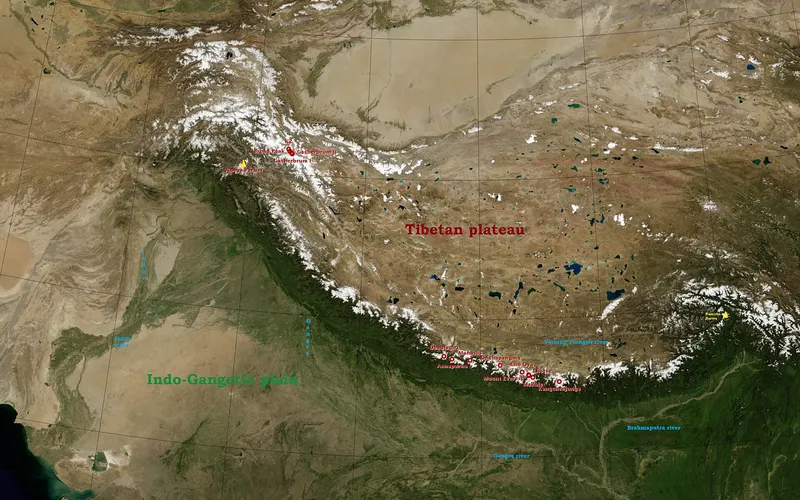
Physiography of India Quiz: Himalayas, Plains, Plateau, Coasts & Islands
10 questions on India's physical divisions: Himalayan ranges, bhabar and khadar, peninsular hills and peaks, coastal plains and island groups.
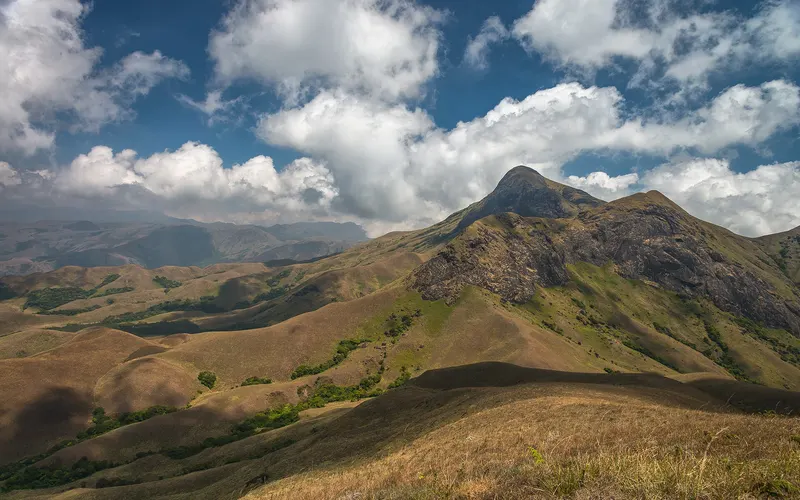
Soils & Natural Vegetation Quiz: Indian Geography Practice
10 questions on India's soils (alluvial, black, red, laterite, arid, saline), soil erosion and the major forest types from evergreen to mangroves.