
Geomorphology Quiz: Interior of the Earth, Plate Tectonics & Landforms
10 questions on the Earth's interior, seismic waves, plate boundaries, rocks, earthquakes and landforms made by rivers, wind, ice and groundwater.
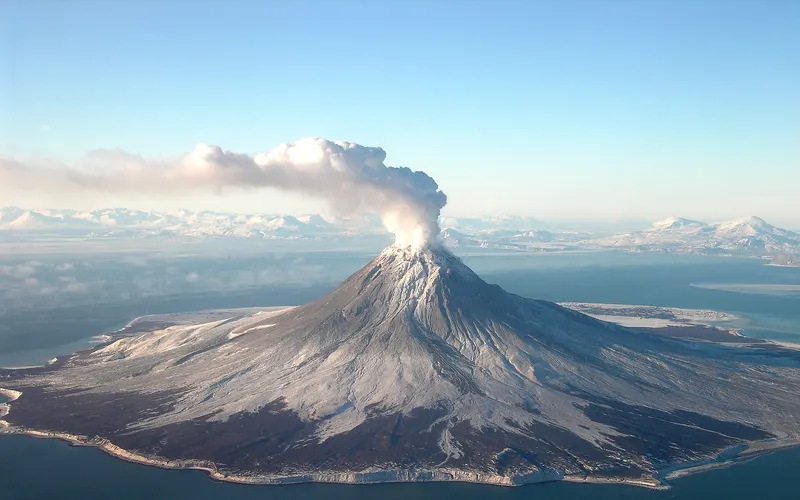
Geomorphology Quiz: Interior of the Earth, Plate Tectonics & Landforms
Tip: use keys 1-4 to answer, Enter for next.
Answers to the starter quiz
Spoilers! These are the Starter quiz’s answers. Easy, Medium, Hard and Mixed rounds show their own answers when you finish.
The boundary between the Earth's mantle and its outer core is known as the:
- Mohorovicic discontinuity
- Conrad discontinuity
- Gutenberg discontinuity
- Lehmann discontinuity
Answer: Gutenberg discontinuity. The Gutenberg discontinuity lies at a depth of about 2,900 km. The Moho separates crust from mantle; the Lehmann discontinuity separates the outer and inner core.
Which type of seismic wave cannot travel through the Earth's outer core, giving evidence that the outer core is liquid?
- S-waves
- P-waves
- Love waves
- Rayleigh waves
Answer: S-waves. S-waves are transverse (shear) waves and cannot pass through liquids. Their absence beyond about 105 degrees from the epicentre creates the S-wave shadow zone.
The asthenosphere, the weak and partly molten layer on which lithospheric plates move, forms part of the:
- Lower crust
- Upper mantle
- Lower mantle
- Outer core
Answer: Upper mantle. The asthenosphere lies in the upper mantle. It is the main source of magma that reaches the surface during volcanic eruptions.
The Mid-Atlantic Ridge is a classic example of which type of plate boundary?
- Convergent
- Transform
- Subduction
- Divergent
Answer: Divergent. At divergent (constructive) boundaries plates move apart and new crust is created as magma wells up, forming mid-ocean ridges and sea-floor spreading.
The Himalayas were formed mainly by:
- Collision of the Indian plate with the Eurasian plate
- Subduction of the Pacific plate below the Indian plate
- Divergence of the African and Indian plates
- Volcanic activity along a hotspot
Answer: Collision of the Indian plate with the Eurasian plate. When the northward-moving Indian plate met the Eurasian plate, the sediments of the Tethys Sea between them were folded up. Both are continental plates, so neither sank easily.
Marble is the metamorphic form of which rock?
- Granite
- Shale
- Sandstone
- Limestone
Answer: Limestone. Heat and pressure recrystallise limestone into marble. Shale becomes slate, sandstone becomes quartzite and granite becomes gneiss.
A long, narrow valley formed when a block of land sinks between two roughly parallel faults is called a:
- Gorge
- Rift valley
- Canyon
- Hanging valley
Answer: Rift valley. Down-faulting produces a rift valley (graben); the raised block is a horst or block mountain. Gorges and canyons are cut by river erosion.
In limestone caves, the icicle-like deposits of calcium carbonate that hang down from the roof are called:
- Stalagmites
- Sinkholes
- Stalactites
- Uvalas
Answer: Stalactites. Stalactites hang from the ceiling; stalagmites rise from the floor, and when the two join they form a pillar. These are depositional features of groundwater in karst areas.
Which of the following landforms is produced by the action of wind?
- Drumlin
- Cirque
- Oxbow lake
- Barchan
Answer: Barchan. A barchan is a crescent-shaped sand dune of deserts. Drumlins and cirques are glacial landforms; oxbow lakes are formed by meandering rivers.
Consider the following statements: 1. The point on the Earth's surface vertically above the focus of an earthquake is the epicentre. 2. The Mercalli scale measures the energy released (magnitude) of an earthquake. Which of the statements given above is/are correct?
- 1 only
- 2 only
- Both 1 and 2
- Neither 1 nor 2
Answer: 1 only. The epicentre is directly above the focus (hypocentre). The Richter scale measures magnitude; the Mercalli scale measures intensity, i.e. the visible damage and effects.
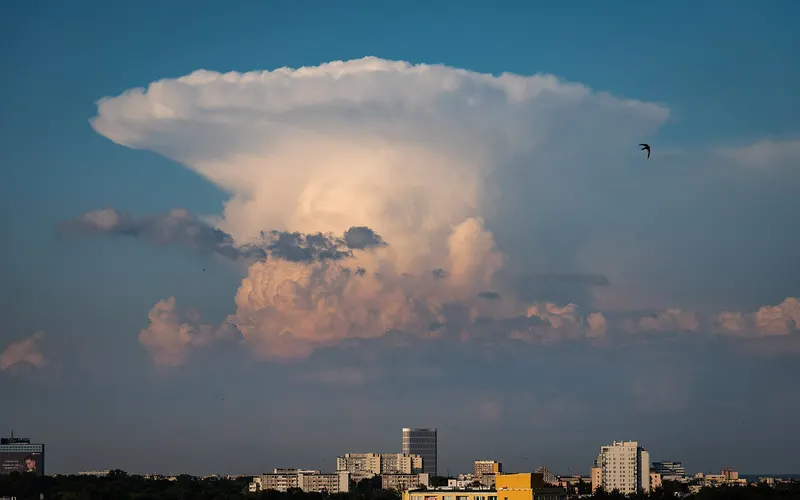
Climatology & Oceanography Quiz: Physical Geography Practice
10 questions on atmospheric layers, pressure belts, planetary and local winds, cyclones, ocean currents and tides. Physical geography with explanations.
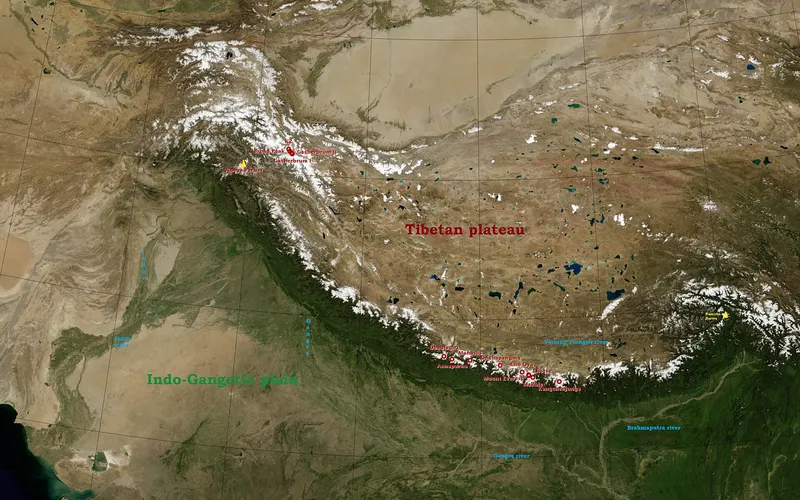
Physiography of India Quiz: Himalayas, Plains, Plateau, Coasts & Islands
10 questions on India's physical divisions: Himalayan ranges, bhabar and khadar, peninsular hills and peaks, coastal plains and island groups.
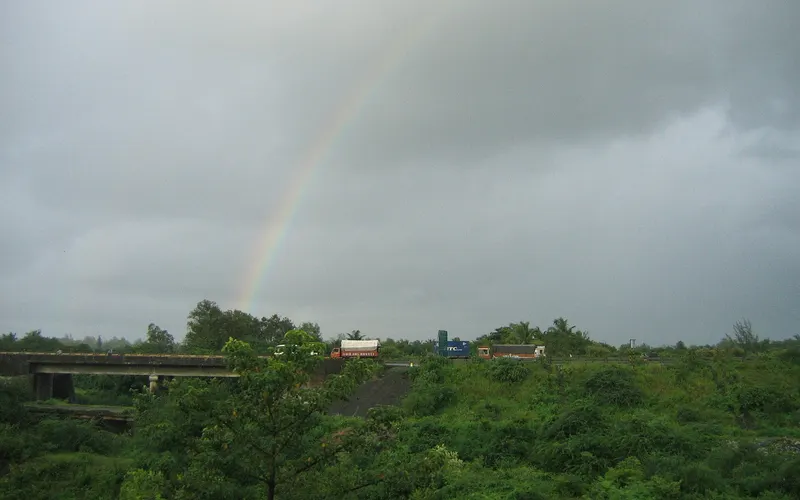
Indian Climate & Monsoon Quiz: Seasons, Winds and Rainfall
10 questions on India's monsoon climate: onset and retreat, western disturbances, pre-monsoon showers, local winds, rain shadow areas and El Nino.
Soils & Natural Vegetation Quiz: Indian Geography Practice
10 questions on India's soils (alluvial, black, red, laterite, arid, saline), soil erosion and the major forest types from evergreen to mangroves.