
Climatology & Oceanography Quiz: Physical Geography Practice
10 questions on atmospheric layers, pressure belts, planetary and local winds, cyclones, ocean currents and tides. Physical geography with explanations.
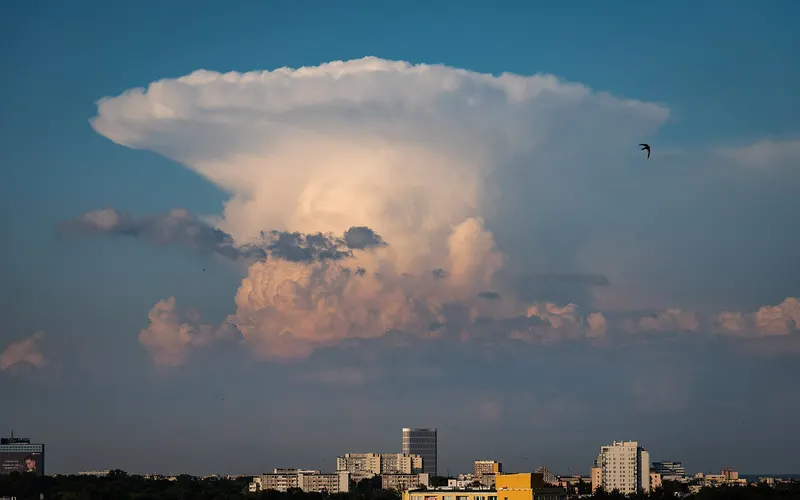
Climatology & Oceanography Quiz: Physical Geography Practice
Tip: use keys 1-4 to answer, Enter for next.
Answers to the starter quiz
Spoilers! These are the Starter quiz’s answers. Easy, Medium, Hard and Mixed rounds show their own answers when you finish.
The ozone layer that absorbs most of the Sun's ultraviolet radiation lies mainly in the:
- Troposphere
- Stratosphere
- Mesosphere
- Exosphere
Answer: Stratosphere. Most atmospheric ozone is concentrated in the stratosphere, roughly 15 to 35 km above the surface. Weather phenomena occur in the troposphere below it.
Radio waves transmitted from the Earth are reflected back to the surface by the:
- Troposphere
- Ozonosphere
- Ionosphere
- Tropopause
Answer: Ionosphere. The ionosphere contains electrically charged particles (ions) that reflect radio waves, which makes long-distance radio communication possible.
Which of the following is true about the Coriolis force?
- It is maximum at the equator
- It deflects winds to the left in the Northern Hemisphere
- It is the same at all latitudes
- It is absent at the equator and maximum at the poles
Answer: It is absent at the equator and maximum at the poles. The Coriolis force is zero at the equator and greatest at the poles. It deflects winds to the right in the Northern Hemisphere and to the left in the Southern Hemisphere.
The term 'Roaring Forties' refers to:
- Strong westerly winds of the Southern Hemisphere
- Trade winds near the equator
- Cyclones of the Bay of Bengal
- Polar easterlies of the Arctic
Answer: Strong westerly winds of the Southern Hemisphere. Over the open oceans of the Southern Hemisphere there is little land to slow the westerlies, so they blow with great force around 40 degrees S (the Furious Fifties and Shrieking Sixties lie further south).
The 'Horse Latitudes' are associated with which pressure belt?
- Equatorial low
- Subpolar low
- Subtropical high
- Polar high
Answer: Subtropical high. Around 30 degrees N and S, descending air forms the subtropical high-pressure belts with calm conditions. The calm equatorial low-pressure belt is called the doldrums.
Which warm, dry local wind blowing down the eastern slopes of the Rocky Mountains is called the 'snow eater'?
- Mistral
- Sirocco
- Harmattan
- Chinook
Answer: Chinook. The Chinook warms as it descends and melts snow quickly, helping grazing in the prairies. The Foehn is a similar wind in the Alps.
Which of the following is a cold ocean current?
- Benguela Current
- Gulf Stream
- Kuroshio Current
- Brazil Current
Answer: Benguela Current. The Benguela Current flows north along the south-west coast of Africa. Cold currents generally flow along the western coasts of continents in tropical and subtropical latitudes.
The Grand Banks near Newfoundland are rich fishing grounds mainly because:
- Two cold currents meet there
- The warm Gulf Stream meets the cold Labrador Current
- Of a large river delta on the coast
- The sea there is very deep
Answer: The warm Gulf Stream meets the cold Labrador Current. Mixing of warm and cold waters on a shallow continental shelf favours the growth of plankton, the food of fish.
Spring tides occur when:
- The Moon is at its first or third quarter
- The Moon is farthest from the Earth
- The Sun, Moon and Earth are in a straight line
- The Sun and Moon are at right angles to the Earth
Answer: The Sun, Moon and Earth are in a straight line. At new moon and full moon the gravitational pulls of the Sun and Moon add up, giving higher high tides. When they are at right angles (quarter moons) we get weaker neap tides.
Tropical cyclones of the western North Pacific, affecting China, Japan and the Philippines, are called:
- Hurricanes
- Willy-willies
- Tornadoes
- Typhoons
Answer: Typhoons. The same storm is a hurricane in the Atlantic and eastern Pacific, a typhoon in the western Pacific and a cyclone in the Indian Ocean.
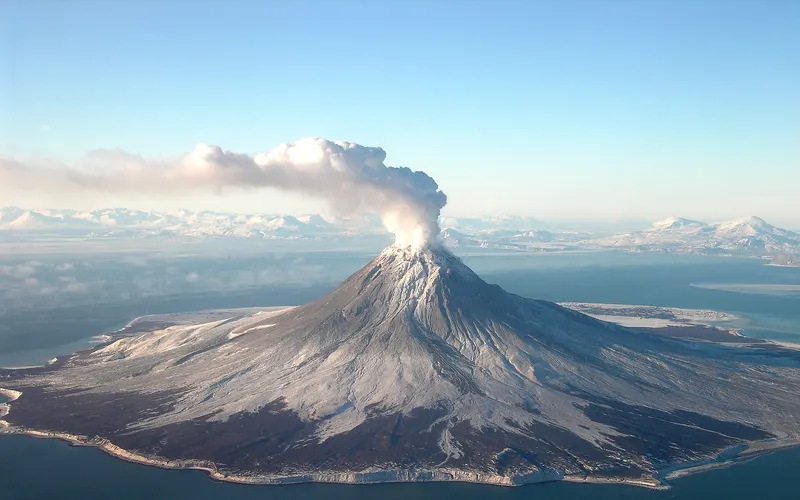
Geomorphology Quiz: Interior of the Earth, Plate Tectonics & Landforms
10 questions on the Earth's interior, seismic waves, plate boundaries, rocks, earthquakes and landforms made by rivers, wind, ice and groundwater.
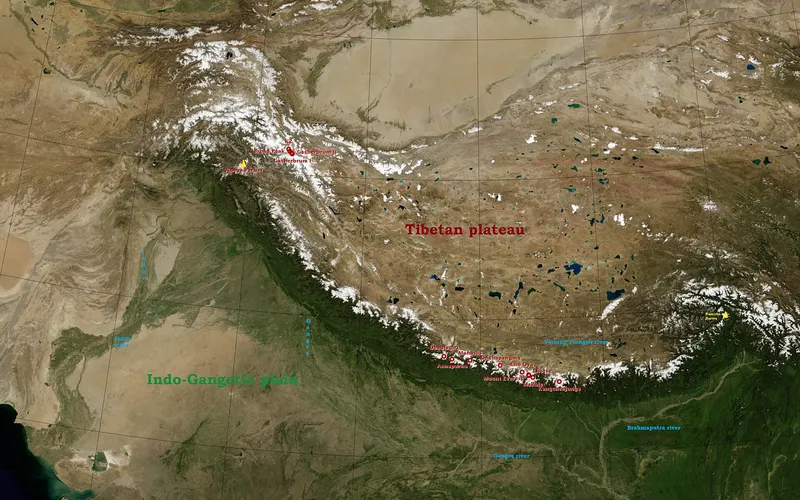
Physiography of India Quiz: Himalayas, Plains, Plateau, Coasts & Islands
10 questions on India's physical divisions: Himalayan ranges, bhabar and khadar, peninsular hills and peaks, coastal plains and island groups.
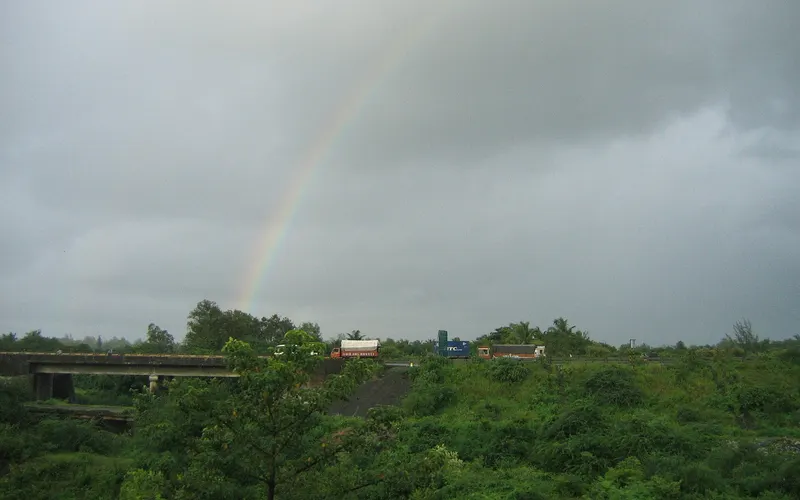
Indian Climate & Monsoon Quiz: Seasons, Winds and Rainfall
10 questions on India's monsoon climate: onset and retreat, western disturbances, pre-monsoon showers, local winds, rain shadow areas and El Nino.
Soils & Natural Vegetation Quiz: Indian Geography Practice
10 questions on India's soils (alluvial, black, red, laterite, arid, saline), soil erosion and the major forest types from evergreen to mangroves.