
Physiography of India Quiz: Himalayas, Plains, Plateau, Coasts & Islands
10 questions on India's physical divisions: Himalayan ranges, bhabar and khadar, peninsular hills and peaks, coastal plains and island groups.
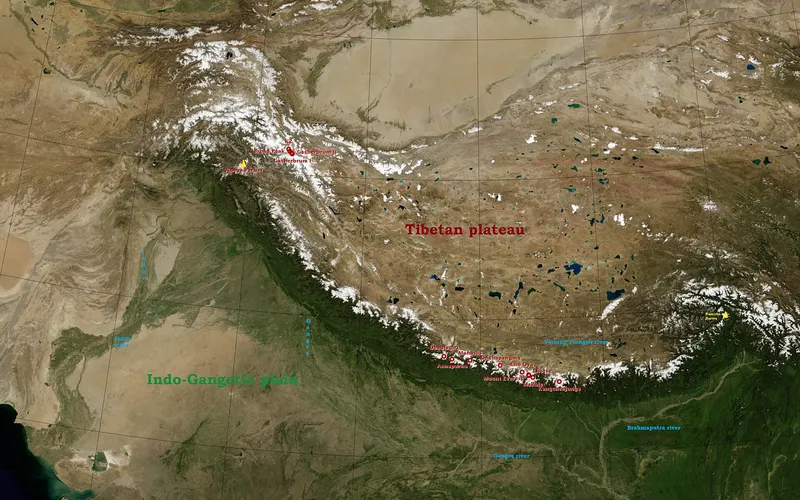
Physiography of India Quiz: Himalayas, Plains, Plateau, Coasts & Islands
Tip: use keys 1-4 to answer, Enter for next.
Answers to the starter quiz
Spoilers! These are the Starter quiz’s answers. Easy, Medium, Hard and Mixed rounds show their own answers when you finish.
The narrow belt of pebbles at the foot of the Shiwaliks, where streams disappear underground, is called the:
- Terai
- Bhabar
- Bhangar
- Khadar
Answer: Bhabar. Rivers coming down from the hills deposit pebbles and boulders in the bhabar, and the streams sink into this porous belt. They re-emerge further south in the marshy terai.
In the northern plains, the newer alluvium of the floodplains, renewed almost every year, is known as:
- Khadar
- Bhangar
- Kankar
- Bhabar
Answer: Khadar. Khadar is the new, fertile alluvium of floodplains. Bhangar is the older alluvium lying above flood level, often with calcareous kankar nodules.
The highest peak of peninsular India is:
- Doddabetta
- Mahendragiri
- Anaimudi
- Guru Shikhar
Answer: Anaimudi. Anaimudi (about 2,695 m) in the Anamalai hills of Kerala is the highest peak south of the Himalayas. Doddabetta is the highest peak of the Nilgiris.
The Western Ghats and the Eastern Ghats meet at the:
- Cardamom Hills
- Javadi Hills
- Mahendragiri Hills
- Nilgiri Hills
Answer: Nilgiri Hills. The two Ghats converge at the Nilgiri hills. The Western Ghats are continuous and higher; the Eastern Ghats are broken by rivers draining into the Bay of Bengal.
Which channel separates the Andaman Islands from the Nicobar Islands?
- Ten Degree Channel
- Eight Degree Channel
- Nine Degree Channel
- Palk Strait
Answer: Ten Degree Channel. The Ten Degree Channel lies between Little Andaman and Car Nicobar. The Nine and Eight Degree Channels lie in the Lakshadweep–Maldives region.
India's only active volcano, Barren Island, lies in the:
- Arabian Sea
- Andaman Sea
- Gulf of Mannar
- Lakshadweep Sea
Answer: Andaman Sea. Barren Island lies in the Andaman Sea, east of the main Andaman group. The Lakshadweep islands, by contrast, are of coral origin.
Longitudinal valleys such as Dehra Dun lie between which two ranges?
- Greater Himalaya and Lesser Himalaya
- Karakoram and Ladakh
- Lesser Himalaya and Shiwaliks
- Shiwaliks and the Indo-Gangetic plain
Answer: Lesser Himalaya and Shiwaliks. These flat-floored valleys between the Himachal (Lesser Himalaya) and the outermost Shiwaliks are called duns, e.g. Dehra Dun, Kotli Dun and Patli Dun.
Guru Shikhar, the highest peak of the Aravalli range, is located at:
- Kumbhalgarh
- Udaipur
- Ajmer
- Mount Abu
Answer: Mount Abu. Guru Shikhar (about 1,722 m) is on Mount Abu in Rajasthan. The Aravallis are among the oldest fold mountains in the world, now heavily eroded.
The Coromandel Coast lies along the coast of:
- Tamil Nadu
- Odisha
- Kerala
- Gujarat
Answer: Tamil Nadu. The eastern coastal plain is called the Northern Circars in its northern part and the Coromandel Coast in the south (Tamil Nadu). Malabar is the southern part of the west coast.
The Tropic of Cancer does NOT pass through which of these states?
- Tripura
- Mizoram
- Odisha
- Jharkhand
Answer: Odisha. It passes through eight states: Gujarat, Rajasthan, Madhya Pradesh, Chhattisgarh, Jharkhand, West Bengal, Tripura and Mizoram. Odisha lies wholly south of it.
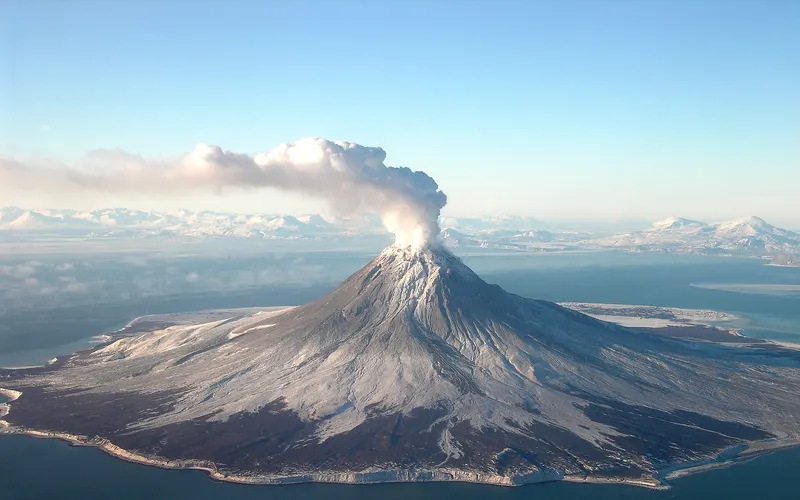
Geomorphology Quiz: Interior of the Earth, Plate Tectonics & Landforms
10 questions on the Earth's interior, seismic waves, plate boundaries, rocks, earthquakes and landforms made by rivers, wind, ice and groundwater.
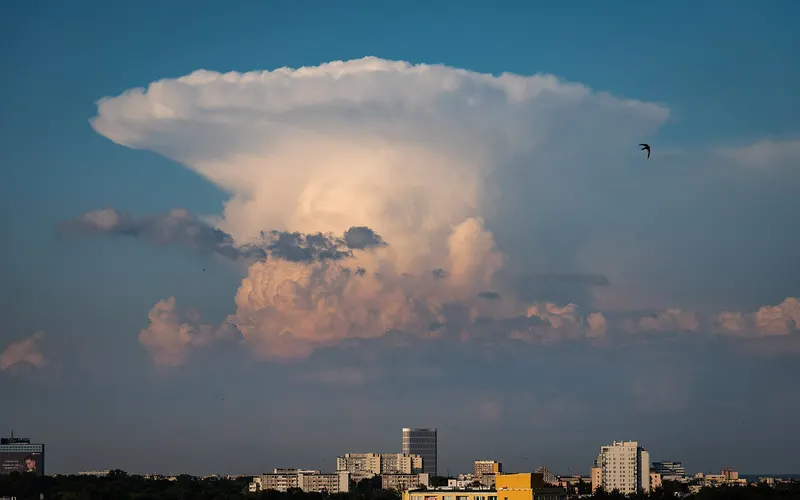
Climatology & Oceanography Quiz: Physical Geography Practice
10 questions on atmospheric layers, pressure belts, planetary and local winds, cyclones, ocean currents and tides. Physical geography with explanations.
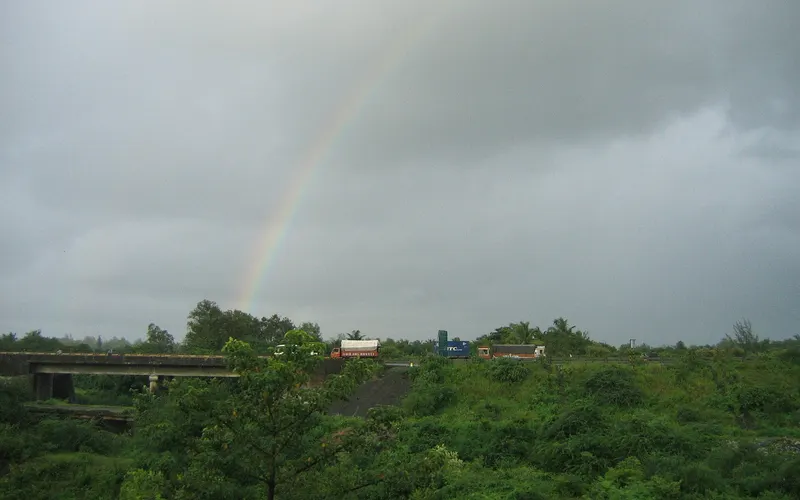
Indian Climate & Monsoon Quiz: Seasons, Winds and Rainfall
10 questions on India's monsoon climate: onset and retreat, western disturbances, pre-monsoon showers, local winds, rain shadow areas and El Nino.
Soils & Natural Vegetation Quiz: Indian Geography Practice
10 questions on India's soils (alluvial, black, red, laterite, arid, saline), soil erosion and the major forest types from evergreen to mangroves.