
Ecology & Ecosystems Quiz: Environment Practice for UPSC
10 questions on ecosystems: food chains, the 10 percent law, ecological pyramids, succession, ecotones, nutrient cycles and biomagnification.
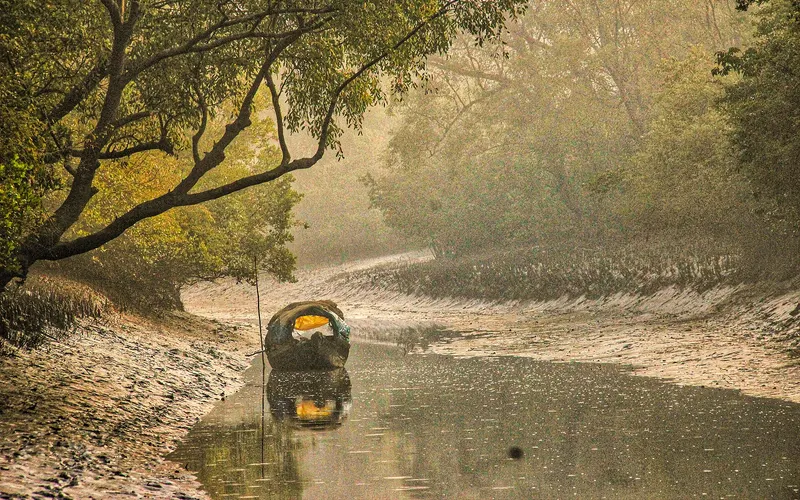
Ecology & Ecosystems Quiz: Environment Practice for UPSC
Tip: use keys 1-4 to answer, Enter for next.
Answers to the starter quiz
Spoilers! These are the Starter quiz’s answers. Easy, Medium, Hard and Mixed rounds show their own answers when you finish.
The term 'ecosystem' was first used by:
- Ernst Haeckel
- Charles Elton
- Raymond Lindeman
- A. G. Tansley
Answer: A. G. Tansley. Arthur Tansley introduced 'ecosystem' in 1935. Haeckel coined 'ecology', Elton developed ecological pyramids and Lindeman proposed the 10 percent law.
In a food chain, producers fix 10,000 J of energy. Following the 10 percent law, how much energy reaches the tertiary consumers?
- 1,000 J
- 100 J
- 10 J
- 1 J
Answer: 10 J. About 10% passes to each higher level: primary consumers 1,000 J, secondary 100 J, tertiary 10 J. The rest is lost mostly as heat in respiration.
Which ecological pyramid is always upright?
- Pyramid of energy
- Pyramid of numbers
- Pyramid of biomass
- Pyramid of size
Answer: Pyramid of energy. Energy always decreases at each successive trophic level, so the energy pyramid can never be inverted. Pyramids of numbers and biomass can be.
An inverted pyramid of biomass is typically found in:
- A grassland
- An ocean ecosystem
- A tropical forest
- A desert
Answer: An ocean ecosystem. In the sea, the small standing biomass of fast-reproducing phytoplankton supports a larger biomass of zooplankton and fish at any one moment.
In primary succession on bare rock, the usual pioneer species are:
- Grasses
- Shrubs
- Ferns
- Lichens
Answer: Lichens. Lichens secrete acids that weather rock and begin soil formation, preparing the ground for mosses, then herbs, shrubs and finally a climax forest.
A transition zone between two different ecosystems, such as between a forest and a grassland, is called a(n):
- Ecotone
- Niche
- Biome
- Habitat
Answer: Ecotone. Ecotones often contain more species than either neighbouring community — the edge effect. Mangroves and estuaries are examples of ecotones.
The increase in the concentration of a non-degradable chemical such as DDT at successively higher levels of a food chain is called:
- Eutrophication
- Bioremediation
- Biomagnification
- Bioaccumulation in water
Answer: Biomagnification. Such chemicals are not broken down or excreted easily, so they build up in body tissue and become most concentrated in top predators like fish-eating birds.
Bacteria of the genus Rhizobium, found in the root nodules of leguminous plants, are important because they:
- Fix atmospheric nitrogen
- Release oxygen at night
- Decompose dead wood
- Convert nitrates into free nitrogen
Answer: Fix atmospheric nitrogen. Rhizobium converts atmospheric nitrogen into forms plants can use, which is why legumes like gram and moong enrich the soil. Converting nitrates back into nitrogen gas is denitrification.
A detritus food chain begins with:
- Green plants
- Herbivores
- Dead organic matter
- Top carnivores
Answer: Dead organic matter. It starts with dead leaves, remains and waste broken down by decomposers and detritivores such as fungi, bacteria and earthworms. A grazing food chain starts with green plants.
A species whose effect on its community is much larger than its numbers suggest, so that its removal changes the whole ecosystem, is called a:
- Flagship species
- Keystone species
- Indicator species
- Endemic species
Answer: Keystone species. Top predators like the tiger and ecosystem engineers like the elephant are often keystone species. A flagship species is chosen to symbolise conservation; an indicator species reflects environmental health.
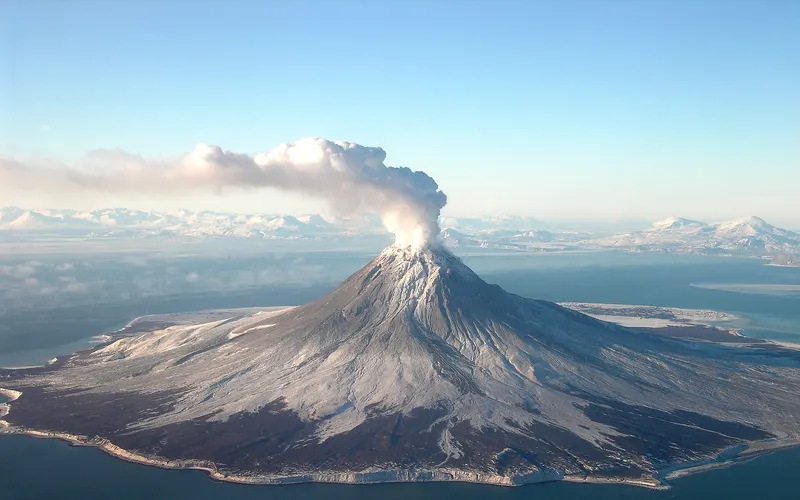
Geomorphology Quiz: Interior of the Earth, Plate Tectonics & Landforms
10 questions on the Earth's interior, seismic waves, plate boundaries, rocks, earthquakes and landforms made by rivers, wind, ice and groundwater.
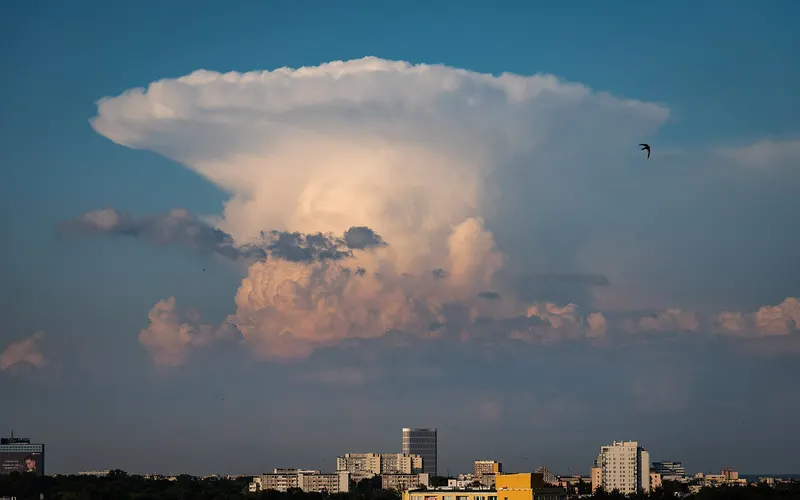
Climatology & Oceanography Quiz: Physical Geography Practice
10 questions on atmospheric layers, pressure belts, planetary and local winds, cyclones, ocean currents and tides. Physical geography with explanations.
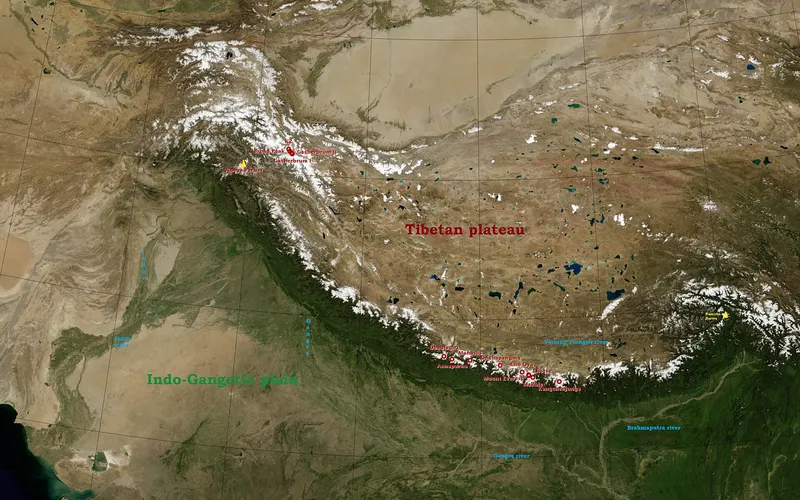
Physiography of India Quiz: Himalayas, Plains, Plateau, Coasts & Islands
10 questions on India's physical divisions: Himalayan ranges, bhabar and khadar, peninsular hills and peaks, coastal plains and island groups.
Indian Climate & Monsoon Quiz: Seasons, Winds and Rainfall
10 questions on India's monsoon climate: onset and retreat, western disturbances, pre-monsoon showers, local winds, rain shadow areas and El Nino.