
Climate Change & Pollution Quiz: Environmental Issues Practice
10 questions on greenhouse gases, ozone depletion, acid rain, smog, water pollutants and their diseases, eutrophication, BOD and industrial disasters.
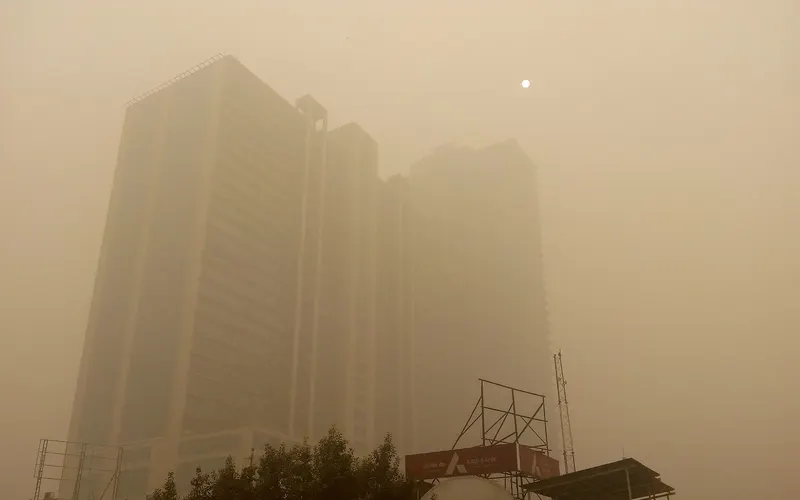
Climate Change & Pollution Quiz: Environmental Issues Practice
Tip: use keys 1-4 to answer, Enter for next.
Answers to the starter quiz
Spoilers! These are the Starter quiz’s answers. Easy, Medium, Hard and Mixed rounds show their own answers when you finish.
Minamata disease, first identified in Japan, is caused by poisoning from:
- Cadmium
- Lead
- Mercury
- Arsenic
Answer: Mercury. Industrial waste containing methylmercury contaminated fish in Minamata Bay. Cadmium poisoning causes itai-itai disease.
'Blue baby syndrome' in infants is linked to excess of which substance in drinking water?
- Nitrate
- Fluoride
- Chloride
- Iron
Answer: Nitrate. Nitrates reduce the blood's ability to carry oxygen (methaemoglobinaemia), giving the skin a bluish tinge. Excess fluoride causes fluorosis.
Acid rain is caused mainly by emissions of:
- Carbon monoxide and methane
- Sulphur dioxide and nitrogen oxides
- Ozone and chlorine
- Ammonia and carbon dioxide
Answer: Sulphur dioxide and nitrogen oxides. SO2 and NOx from burning coal and fuel form sulphuric and nitric acids in the air. Rain with a pH below about 5.6 is considered acid rain.
The Bhopal gas tragedy of 1984 was caused by the leakage of:
- Chlorine
- Phosgene
- Hydrogen sulphide
- Methyl isocyanate
Answer: Methyl isocyanate. Methyl isocyanate (MIC) leaked from the Union Carbide pesticide plant on the night of 2–3 December 1984. The disaster led to the Environment (Protection) Act, 1986.
A high Biochemical Oxygen Demand (BOD) in a water body indicates:
- The water is very clean
- High levels of dissolved oxygen
- Heavy pollution by organic matter
- Low numbers of microbes
Answer: Heavy pollution by organic matter. BOD is the oxygen microbes need to break down organic waste. More sewage or organic waste means higher BOD and less oxygen left for fish.
The thickness of the ozone layer is measured in:
- Decibels
- Dobson units
- Pascals
- Parts per thousand
Answer: Dobson units. One Dobson unit equals a 0.01 mm thick layer of pure ozone at standard temperature and pressure. Chlorofluorocarbons (CFCs) are the main ozone-depleting substances.
Which of the following is a secondary pollutant formed in photochemical smog?
- Peroxyacetyl nitrate (PAN)
- Carbon monoxide
- Sulphur dioxide
- Lead
Answer: Peroxyacetyl nitrate (PAN). Secondary pollutants form in the air by reactions; PAN and ground-level ozone form when sunlight acts on nitrogen oxides and hydrocarbons from vehicles. CO, SO2 and lead are emitted directly (primary).
Which of the following is NOT a greenhouse gas?
- Methane
- Nitrous oxide
- Sulphur hexafluoride
- Nitrogen
Answer: Nitrogen. Nitrogen (N2), the most abundant gas of the air, does not absorb infrared radiation. CO2, methane, nitrous oxide, HFCs, PFCs and SF6 are greenhouse gases covered by the Kyoto Protocol.
Eutrophication of a lake is caused mainly by:
- Excess salts from evaporation
- Excess nitrates and phosphates
- Thermal pollution alone
- Too little sunlight
Answer: Excess nitrates and phosphates. Fertiliser run-off and sewage add nutrients that trigger algal blooms. When the algae die and decompose, dissolved oxygen falls and fish die.
Which agricultural practice is a significant source of methane emissions?
- Drip irrigation
- Mulching
- Flooded paddy cultivation
- Crop rotation with legumes
Answer: Flooded paddy cultivation. In waterlogged paddy fields, microbes decompose organic matter without oxygen and release methane. Livestock digestion (enteric fermentation) and landfills are other big sources.
Geomorphology Quiz: Interior of the Earth, Plate Tectonics & Landforms
10 questions on the Earth's interior, seismic waves, plate boundaries, rocks, earthquakes and landforms made by rivers, wind, ice and groundwater.
Climatology & Oceanography Quiz: Physical Geography Practice
10 questions on atmospheric layers, pressure belts, planetary and local winds, cyclones, ocean currents and tides. Physical geography with explanations.
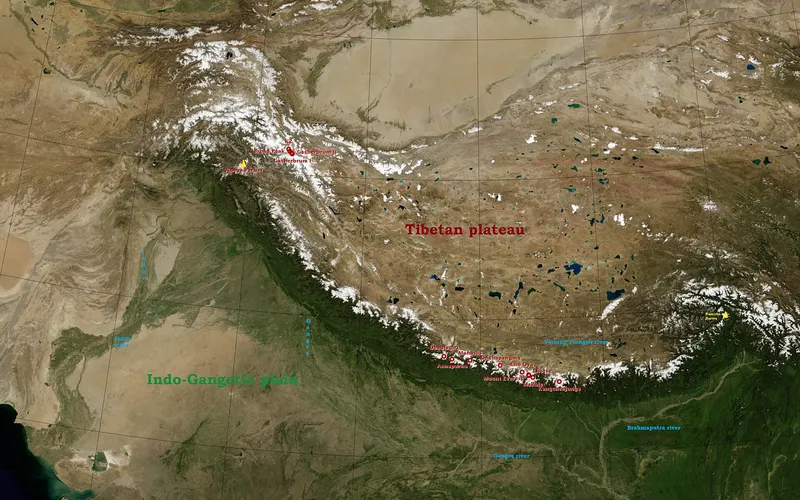
Physiography of India Quiz: Himalayas, Plains, Plateau, Coasts & Islands
10 questions on India's physical divisions: Himalayan ranges, bhabar and khadar, peninsular hills and peaks, coastal plains and island groups.
Indian Climate & Monsoon Quiz: Seasons, Winds and Rainfall
10 questions on India's monsoon climate: onset and retreat, western disturbances, pre-monsoon showers, local winds, rain shadow areas and El Nino.