
Space Technology Quiz: ISRO Missions & Milestones
10 exam-style questions on ISRO's history, launch vehicles, Chandrayaan, Mangalyaan, Aditya-L1, SpaDeX, orbits and rocket engines. With explanations.
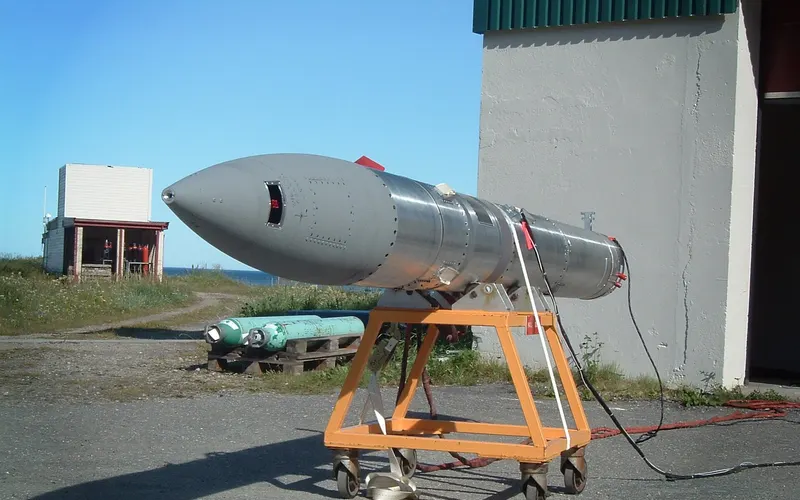
Space Technology Quiz: ISRO Missions & Milestones
Tip: use keys 1-4 to answer, Enter for next.
Answers to the starter quiz
Spoilers! These are the Starter quiz’s answers. Easy, Medium, Hard and Mixed rounds show their own answers when you finish.
India's first satellite, Aryabhata, was launched in 1975 using:
- SLV-3 from Sriharikota
- A Soviet rocket from Kapustin Yar
- PSLV from Sriharikota
- An American rocket from Cape Canaveral
Answer: A Soviet rocket from Kapustin Yar. Aryabhata was built by ISRO and launched on 19 April 1975 by a Soviet Kosmos-3M rocket. India could not yet launch satellites itself.
Which was the first Indian launch vehicle to place a satellite in orbit (Rohini, 1980)?
- ASLV
- PSLV
- GSLV
- SLV-3
Answer: SLV-3. SLV-3 put Rohini into orbit on 18 July 1980 from Sriharikota, making India a space-faring nation. APJ Abdul Kalam was its project director.
Consider the following statements about Chandrayaan-3: 1. It was launched by ISRO's LVM3 rocket. 2. Its lander Vikram touched down near the lunar south pole in August 2023. 3. It carried a new science orbiter similar to that of Chandrayaan-2. Which of the statements given above are correct?
- 1 and 2 only
- 2 and 3 only
- 1 and 3 only
- 1, 2 and 3
Answer: 1 and 2 only. Chandrayaan-3 had a propulsion module, lander Vikram and rover Pragyan — no new science orbiter; the Chandrayaan-2 orbiter served as a communication backup.
India's Mars Orbiter Mission (Mangalyaan) made India the first country to:
- Land a rover on Mars
- Return a sample from Mars
- Reach Mars orbit in its first attempt
- Fly a helicopter on Mars
Answer: Reach Mars orbit in its first attempt. Launched in November 2013 by PSLV, it entered Mars orbit on 24 September 2014. India also became the first Asian nation to reach Mars orbit.
Aditya-L1, India's solar observatory, orbits the Sun–Earth Lagrange point L1. Roughly how far is L1 from Earth?
- About 1.5 million km
- About 384,000 km
- About 36,000 km
- About 15 million km
Answer: About 1.5 million km. L1 is about 1.5 million km from Earth towards the Sun — roughly 1% of the Earth–Sun distance — where the Sun can be watched without eclipses.
The Satish Dhawan Space Centre, the main launch site of ISRO, is located at:
- Thiruvananthapuram
- Sriharikota
- Bengaluru
- Ahmedabad
Answer: Sriharikota. Sriharikota is an island in Andhra Pradesh. Vikram Sarabhai Space Centre is in Thiruvananthapuram, ISRO HQ in Bengaluru and the Space Applications Centre in Ahmedabad.
A cryogenic rocket engine, used in the upper stage of GSLV, burns:
- Kerosene and liquid oxygen
- Hydrazine and nitrogen tetroxide
- Solid HTPB-based propellant
- Liquid hydrogen and liquid oxygen
Answer: Liquid hydrogen and liquid oxygen. Cryogenic engines use propellants stored at extremely low temperatures — liquid hydrogen (about −253 °C) and liquid oxygen (about −183 °C) — giving high efficiency.
With the SpaDeX mission (January 2025), India became the fourth country to:
- Land near the lunar south pole
- Dock two spacecraft in orbit
- Send its own astronaut into space
- Launch more than 100 satellites in one go
Answer: Dock two spacecraft in orbit. SpaDeX docked two small satellites in orbit on 16 January 2025, after the USA, Russia and China. Docking is key to future space stations and Moon missions.
Who is regarded as the father of the Indian space programme?
- Homi J. Bhabha
- Satish Dhawan
- Vikram Sarabhai
- APJ Abdul Kalam
Answer: Vikram Sarabhai. Vikram Sarabhai led INCOSPAR (1962) and founded ISRO (1969). Bhabha led the nuclear programme; Dhawan headed ISRO after Sarabhai.
A geostationary satellite orbits above the equator at an altitude of roughly:
- About 800 km
- About 2,000 km
- About 36,000 km
- About 384,000 km
Answer: About 36,000 km. At about 35,786 km a satellite takes 24 hours per orbit, matching Earth's rotation, so it appears fixed in the sky — ideal for communication and weather satellites.
Play next
All science quizzes →
Physics in Everyday Life Quiz: General Science Practice
10 exam-style questions on SI units, motion, heat, sound, light, lenses and household electricity. With a clear explanation for every answer.
Basic Chemistry Quiz: Acids, Metals & Everyday Chemicals
10 exam-style questions on acids and bases, pH, common chemical names, metals, alloys, corrosion and household fuels. Each answer explained.
Cell & Plant Biology Quiz: Life Science up to Class 10
10 exam-style questions on cells and organelles, plant tissues, hormones, nitrogen fixation, reproduction and classification. Every answer explained.
Human Body Quiz: Organs, Blood & Glands
10 exam-style questions on human organs, bones, blood groups, hormones, the brain, kidneys and digestion. With an explanation for every answer.