
Cell & Plant Biology Quiz: Life Science up to Class 10
10 exam-style questions on cells and organelles, plant tissues, hormones, nitrogen fixation, reproduction and classification. Every answer explained.
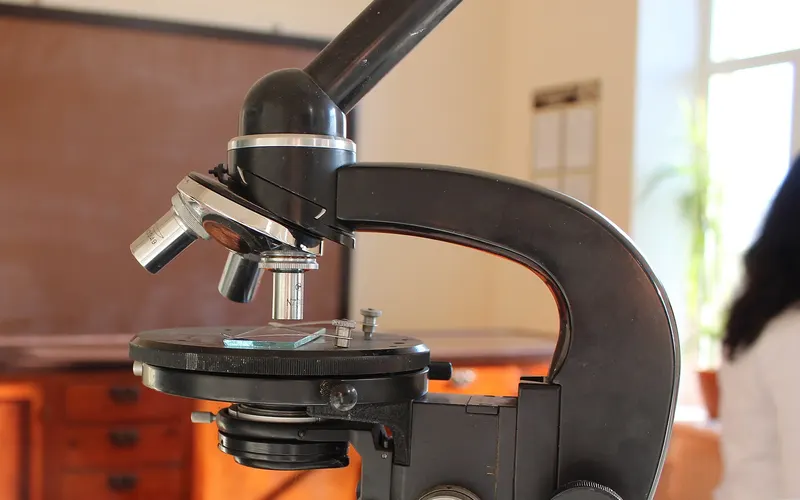
Cell & Plant Biology Quiz: Life Science up to Class 10
Tip: use keys 1-4 to answer, Enter for next.
Answers to the starter quiz
Spoilers! These are the Starter quiz’s answers. Easy, Medium, Hard and Mixed rounds show their own answers when you finish.
Who first observed and named cells, while examining a thin slice of cork in 1665?
- Robert Hooke
- Anton van Leeuwenhoek
- Robert Brown
- Rudolf Virchow
Answer: Robert Hooke. Hooke saw dead cork cells and called them cells. Leeuwenhoek later saw living cells; Robert Brown discovered the nucleus in 1831.
Which cell organelle is called the 'suicide bag' of the cell?
- Ribosome
- Golgi apparatus
- Lysosome
- Mitochondrion
Answer: Lysosome. Lysosomes hold digestive enzymes; if the cell is damaged they can burst and digest the cell itself.
Which of these is found in plant cells but NOT in animal cells?
- Mitochondria
- Ribosomes
- Nucleus
- Chloroplasts
Answer: Chloroplasts. Plant cells have chloroplasts, a cellulose cell wall and a large central vacuole. Mitochondria, ribosomes and the nucleus occur in both.
Which plant hormone is mainly responsible for the ripening of fruits?
- Auxin
- Ethylene
- Cytokinin
- Gibberellin
Answer: Ethylene. Ethylene is a gaseous hormone that promotes fruit ripening. Auxin drives growth towards light, gibberellin stem elongation, cytokinin cell division.
Which plant tissue carries water and dissolved minerals from the roots to the leaves?
- Phloem
- Xylem
- Cambium
- Epidermis
Answer: Xylem. Xylem conducts water and minerals upward; phloem carries food made in the leaves to other parts.
Which bacterium lives in the root nodules of leguminous plants and fixes atmospheric nitrogen?
- Lactobacillus
- Azotobacter
- Streptomyces
- Rhizobium
Answer: Rhizobium. Rhizobium lives in symbiosis inside nodules of pulses. Azotobacter also fixes nitrogen but lives freely in soil; Lactobacillus turns milk into curd.
Amoeba reproduces asexually mainly by:
- Budding
- Spore formation
- Binary fission
- Fragmentation
Answer: Binary fission. Amoeba splits into two daughter cells (binary fission). Yeast and Hydra reproduce by budding, Spirogyra by fragmentation, bread mould by spores.
Chlorophyll, the green pigment of plants, contains which metal at its centre?
- Iron
- Magnesium
- Copper
- Zinc
Answer: Magnesium. Chlorophyll has a magnesium atom at its centre. Haemoglobin in human blood has iron instead.
The potato that we eat is a modified:
- Root
- Leaf
- Stem
- Fruit
Answer: Stem. Potato is a stem tuber — its 'eyes' are nodes bearing buds, which is why pieces with eyes can grow new plants. Sweet potato, by contrast, is a modified root.
The five-kingdom system of classification (Monera, Protista, Fungi, Plantae, Animalia) was proposed by:
- R.H. Whittaker
- Carl Linnaeus
- Gregor Mendel
- Charles Darwin
Answer: R.H. Whittaker. Whittaker proposed the five kingdoms in 1969. Linnaeus gave binomial nomenclature, Mendel the laws of inheritance, Darwin natural selection.
Play next
All science quizzes →
Physics in Everyday Life Quiz: General Science Practice
10 exam-style questions on SI units, motion, heat, sound, light, lenses and household electricity. With a clear explanation for every answer.
Basic Chemistry Quiz: Acids, Metals & Everyday Chemicals
10 exam-style questions on acids and bases, pH, common chemical names, metals, alloys, corrosion and household fuels. Each answer explained.
Human Body Quiz: Organs, Blood & Glands
10 exam-style questions on human organs, bones, blood groups, hormones, the brain, kidneys and digestion. With an explanation for every answer.
Diseases & Nutrition Quiz: Vitamins, Pathogens & Vaccines
10 exam-style questions on vitamin and mineral deficiencies, disease-causing microbes, mosquito vectors, vaccines and medical milestones. All explained.