
Basic Chemistry Quiz: Acids, Metals & Everyday Chemicals
10 exam-style questions on acids and bases, pH, common chemical names, metals, alloys, corrosion and household fuels. Each answer explained.
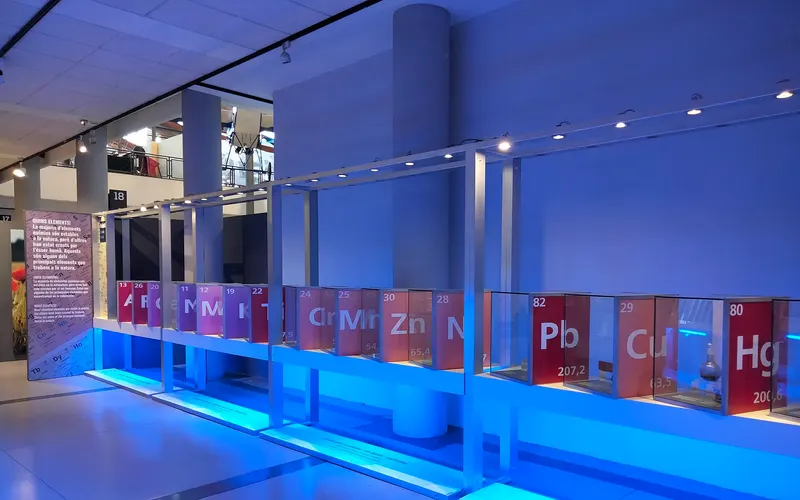
Basic Chemistry Quiz: Acids, Metals & Everyday Chemicals
Tip: use keys 1-4 to answer, Enter for next.
Answers to the starter quiz
Spoilers! These are the Starter quiz’s answers. Easy, Medium, Hard and Mixed rounds show their own answers when you finish.
The painful sting of an ant is mainly due to which acid?
- Formic acid
- Citric acid
- Lactic acid
- Acetic acid
Answer: Formic acid. Ant stings inject formic (methanoic) acid. Rubbing a mild base such as baking soda neutralises it.
What is the chemical name of baking soda?
- Sodium carbonate
- Sodium chloride
- Sodium hydrogencarbonate
- Calcium carbonate
Answer: Sodium hydrogencarbonate. Baking soda is NaHCO3, sodium hydrogencarbonate. Washing soda is sodium carbonate decahydrate (Na2CO3·10H2O).
Which of the following has the lowest pH?
- Pure water
- Milk of magnesia
- Lemon juice
- Baking soda solution
Answer: Lemon juice. Lower pH means more acidic. Lemon juice (citric acid) is around pH 2; pure water is 7; baking soda and milk of magnesia are basic (above 7).
Which metal is a liquid at room temperature?
- Mercury
- Bromine
- Gallium
- Sodium
Answer: Mercury. Mercury is the only metal liquid at room temperature. Bromine is also a liquid but it is a non-metal; gallium melts at about 30 °C.
Galvanisation protects iron and steel from rusting by coating them with:
- Tin
- Zinc
- Chromium
- Copper
Answer: Zinc. A zinc coating keeps out air and water, and zinc corrodes in preference to iron even if the coat is scratched.
What is the chemical formula of Plaster of Paris?
- CaSO4·2H2O
- CaCO3
- CaSO4·1/2H2O
- CaOCl2
Answer: CaSO4·1/2H2O. Plaster of Paris is calcium sulphate hemihydrate, made by heating gypsum (CaSO4·2H2O). With water it sets back into hard gypsum.
Cooking gas (LPG) used in Indian homes consists mainly of:
- Methane
- Butane
- Ethane
- Hydrogen
Answer: Butane. LPG is mainly butane with some propane. CNG and biogas are mainly methane. A strong-smelling compound is added to LPG to reveal leaks.
Which is the most abundant metal in the Earth's crust?
- Iron
- Calcium
- Sodium
- Aluminium
Answer: Aluminium. Oxygen is the most abundant element in the crust and silicon second; aluminium is the most abundant metal, followed by iron.
Brass is an alloy of:
- Copper and tin
- Copper and zinc
- Iron and nickel
- Lead and tin
Answer: Copper and zinc. Brass = copper + zinc. Bronze = copper + tin, and solder = lead + tin.
The substance sold as 'dry ice' is:
- Liquid nitrogen
- Frozen ammonia
- Solid water
- Solid carbon dioxide
Answer: Solid carbon dioxide. Dry ice is solid CO2. It sublimes straight into gas at about −78 °C without melting, so it leaves no liquid behind.
Play next
All science quizzes →
Physics in Everyday Life Quiz: General Science Practice
10 exam-style questions on SI units, motion, heat, sound, light, lenses and household electricity. With a clear explanation for every answer.
Cell & Plant Biology Quiz: Life Science up to Class 10
10 exam-style questions on cells and organelles, plant tissues, hormones, nitrogen fixation, reproduction and classification. Every answer explained.
Human Body Quiz: Organs, Blood & Glands
10 exam-style questions on human organs, bones, blood groups, hormones, the brain, kidneys and digestion. With an explanation for every answer.
Diseases & Nutrition Quiz: Vitamins, Pathogens & Vaccines
10 exam-style questions on vitamin and mineral deficiencies, disease-causing microbes, mosquito vectors, vaccines and medical milestones. All explained.