
Defence Technology Quiz: DRDO, Missiles & Platforms
10 exam-style questions on DRDO, the IGMDP missiles, BrahMos, Agni, Mission Shakti, India's carriers and submarines and nuclear doctrine. All explained.
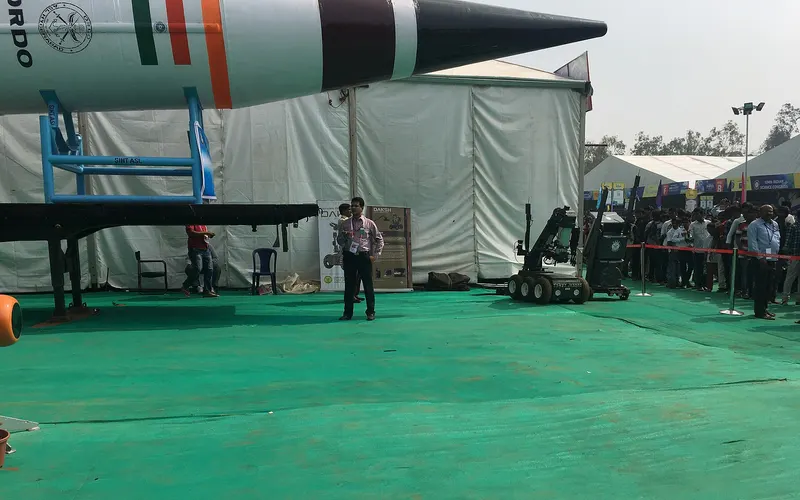
Defence Technology Quiz: DRDO, Missiles & Platforms
Tip: use keys 1-4 to answer, Enter for next.
Answers to the starter quiz
Spoilers! These are the Starter quiz’s answers. Easy, Medium, Hard and Mixed rounds show their own answers when you finish.
The Integrated Guided Missile Development Programme (IGMDP), launched in 1983, was led by:
- APJ Abdul Kalam
- Homi Sethna
- Satish Dhawan
- Raja Ramanna
Answer: APJ Abdul Kalam. Kalam led IGMDP, which developed Prithvi, Agni, Trishul, Akash and Nag — earning him the title Missile Man of India.
BrahMos supersonic cruise missile is a joint venture between India and:
- France
- Israel
- Russia
- USA
Answer: Russia. BrahMos is a DRDO–Russian joint venture; the name combines the Brahmaputra and Moskva rivers.
Which of these missiles developed under IGMDP is a surface-to-air missile?
- Akash
- Prithvi
- Agni
- Nag
Answer: Akash. Akash shoots down aircraft and drones. Prithvi and Agni are surface-to-surface ballistic missiles; Nag is an anti-tank guided missile.
India's Mission Shakti (March 2019) demonstrated:
- MIRV technology on a ballistic missile
- A hypersonic glide vehicle
- A submarine-launched ballistic missile
- An anti-satellite (ASAT) missile capability
Answer: An anti-satellite (ASAT) missile capability. A DRDO interceptor destroyed a live Indian satellite in low Earth orbit, making India the fourth country with ASAT capability after the USA, Russia and China.
Mission Divyastra (March 2024) was the first flight test of an Agni-5 missile fitted with:
- A single heavier warhead
- Multiple independently targetable re-entry vehicle (MIRV) technology
- An air-launch system
- An anti-ship seeker
Answer: Multiple independently targetable re-entry vehicle (MIRV) technology. MIRV lets one missile carry several warheads that can each be aimed at a different target. The test was conducted from Dr APJ Abdul Kalam Island, Odisha.
INS Arihant is:
- India's first indigenous aircraft carrier
- India's first indigenous nuclear-powered ballistic missile submarine
- A stealth frigate
- A coastal patrol vessel
Answer: India's first indigenous nuclear-powered ballistic missile submarine. Arihant is an SSBN; its first deterrence patrol in 2018 completed India's nuclear triad — the ability to launch from land, air and sea.
Which pair of Indian defence system and its type is correctly matched?
- Pinaka — main battle tank
- Arjun — multi-barrel rocket launcher
- Astra — beyond-visual-range air-to-air missile
- Tejas — attack helicopter
Answer: Astra — beyond-visual-range air-to-air missile. Astra is an air-to-air missile. Pinaka is a multi-barrel rocket launcher, Arjun a main battle tank and Tejas a light combat aircraft.
Which vessel, commissioned in 2022, is India's first indigenously designed and built aircraft carrier?
- INS Viraat
- INS Vikrant
- INS Vikramaditya
- INS Arihant
Answer: INS Vikrant. The new INS Vikrant was built by Cochin Shipyard. Viraat was ex-British and Vikramaditya ex-Soviet; Arihant is a submarine.
In which year was the Defence Research and Development Organisation (DRDO) set up?
- 1947
- 1969
- 1983
- 1958
Answer: 1958. DRDO was formed in 1958 by merging existing defence science and technical development bodies. 1969 is ISRO's year; 1983 is when IGMDP began.
India's official nuclear doctrine (2003) is built on:
- First use against any conventional attack
- Launch on warning of attack
- No first use with credible minimum deterrence
- Pre-emptive strikes on enemy missile sites
Answer: No first use with credible minimum deterrence. India pledges not to use nuclear weapons first and to keep a credible minimum deterrent; retaliation to a nuclear attack would be massive. Control rests with the Nuclear Command Authority.
Play next
All science quizzes →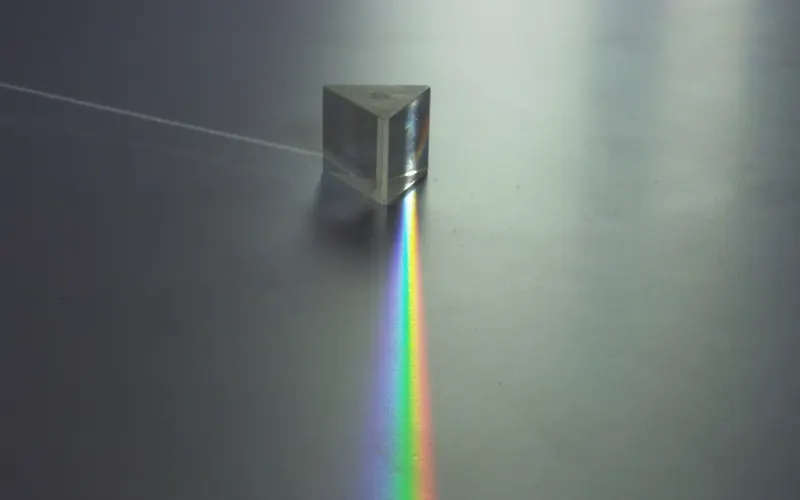
Physics in Everyday Life Quiz: General Science Practice
10 exam-style questions on SI units, motion, heat, sound, light, lenses and household electricity. With a clear explanation for every answer.
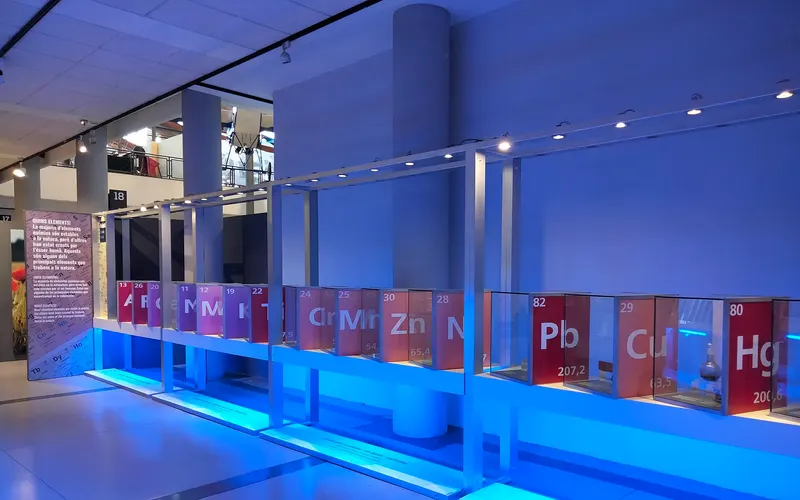
Basic Chemistry Quiz: Acids, Metals & Everyday Chemicals
10 exam-style questions on acids and bases, pH, common chemical names, metals, alloys, corrosion and household fuels. Each answer explained.
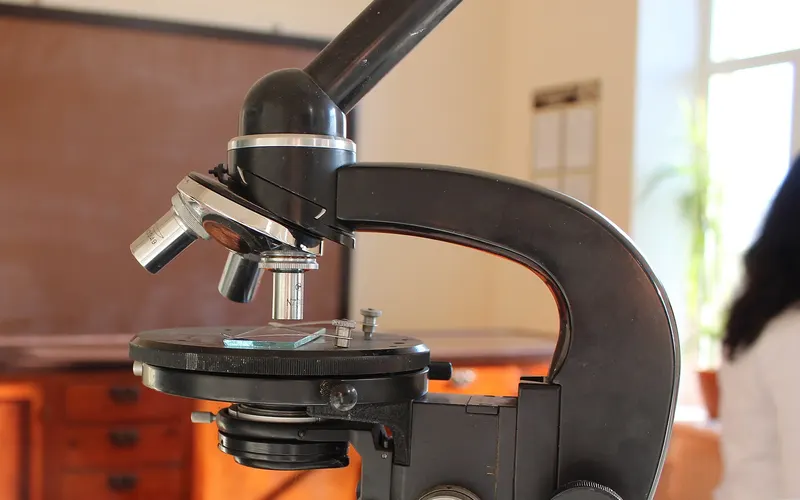
Cell & Plant Biology Quiz: Life Science up to Class 10
10 exam-style questions on cells and organelles, plant tissues, hormones, nitrogen fixation, reproduction and classification. Every answer explained.
Human Body Quiz: Organs, Blood & Glands
10 exam-style questions on human organs, bones, blood groups, hormones, the brain, kidneys and digestion. With an explanation for every answer.