
Inbox Zero: Office Life Trivia
This office trivia quiz digs into the everyday stuff of work: email, meetings, stationery and keyboards. 15 quick questions, each with the surprising story behind it.
15 questionsMedium~3 minNo timer
Updated:
If you liked this

Trending today
 Bollywood QuizBollywood
 India GK Question Answer Quiz (Indian GK)General Knowledge
 Cricket World Cup QuizSports
 सामान्य ज्ञान प्रश्न (GK in Hindi Questions)Hindi
 Guess the FlagGeography
 Current Affairs Quiz (October 2026)Current Affairs
 Friends TV Series QuizMovies & TV
 KBC क्विज़ (KBC Hindi Quiz)Hindi
 F1 Quiz (Formula 1)Sports
 Naruto QuizAnime & Games
About this Office Trivia quiz
This office trivia quiz is a light warm-up for team meetings, offsites and new-joiner sessions. Its 15 questions look at the ordinary things that fill a working day, from email fields and meeting agendas to keyboards, desk stationery and the icons on your screen, and each answer comes with the story of where it came from.
Many office habits are older than they look. Email borrowed its vocabulary from the paper memos that came before it, a lot of software still uses symbols from desks of the 1980s, and some everyday words started life somewhere far less pleasant than a meeting room. Knowing the backstory makes a good talking point and helps a new team find something to laugh about together.
Play it solo for a score, or put it on a shared screen and let small teams agree on each answer before revealing it. It takes about five minutes, needs no sign-up and works on a phone, which makes it an easy opener before the real agenda begins.
Office Trivia questions with answers
Show answers
Email's CC field is named after a thin inked sheet that typists slipped between pages to make a duplicate. What was it?
- Tracing paper
- Carbon paper
- Blotting paper
- Tissue paper
Answer: Carbon paper. CC means carbon copy. The inked sheet pressed a second copy onto the page underneath as the typist hit each key.
"No team should be bigger than two pizzas can feed." Which company founder made that a working rule?
- Mark Zuckerberg
- Bill Gates
- Jeff Bezos
- Steve Jobs
Answer: Jeff Bezos. Bezos used the two-pizza team at Amazon to keep groups small, so they talk less and ship faster.
Sending the first email between networked computers in 1971, Ray Tomlinson needed a symbol no username would contain. Which key did he pick?
- The # (hash) sign
- The @ (at) sign
- The & (ampersand)
- The % (percent) sign
Answer: The @ (at) sign. @ was rarely used and already read as "at", so user@machine made instant sense.
Junk email is called spam after a 1970 TV sketch in which a café's menu is drowned out by one word. Which comedy team made it?
- Monty Python
- The Goodies
- The Two Ronnies
- The Goons
Answer: Monty Python. In the Flying Circus sketch, Vikings keep chanting "Spam" until nobody can talk, the way junk mail drowns an inbox.
The last line on most meeting agendas is AOB, where the long chats tend to begin. What does it stand for?
- All on board
- Action on board
- Agenda over break
- Any other business
Answer: Any other business. Any other business is the slot for everything that wasn't on the agenda.
In a US Civil War prison camp, guards could shoot anyone who crossed a marked line. Offices now use its name for due dates. Which word?
- Deadline
- Borderline
- Bottom line
- Cut-off
Answer: Deadline. At Andersonville prison, the deadline was a boundary that prisoners were shot for crossing.
A 3M chemist made a glue too weak to be useful. A colleague later used it to stop bookmarks falling out of his hymn book. The result?
- Masking tape
- Paper clip
- Glue stick
- Post-it note
Answer: Post-it note. Spencer Silver's weak glue plus Art Fry's choir bookmarks became the Post-it note.
Only one of these 10-letter office words can be typed using just the top letter row of a QWERTY keyboard. Which?
- Stationery
- Whiteboard
- Typewriter
- Paperclips
Answer: Typewriter. T, Y, P, E, W, R and I all sit on the top row. The other three need keys from the middle or bottom rows.
During the Second World War, people wore paper clips on their lapels to show quiet defiance of the Nazi occupation. Which country?
- France
- Poland
- Netherlands
- Norway
Answer: Norway. Norwegians wore them as a sign of standing together; many also believed a Norwegian had invented the clip.
You were BCC'd on an email and you hit Reply All. Who receives your reply?
- Only the original sender
- Everyone in the To and CC fields
- Nobody, because BCC replies bounce
- Only the other BCC recipients
Answer: Everyone in the To and CC fields. Your reply goes to the sender and every To and CC address, which tells them you were quietly copied. Other BCC recipients stay hidden.
At Xerox PARC in the 1970s, Larry Tesler named two editing commands after the way editors once trimmed paper drafts and stuck pieces back with glue. Which pair?
- Cut and paste
- Undo and redo
- Drag and drop
- Save and print
Answer: Cut and paste. Tesler is credited with cut, copy and paste. Apple's Lisa and Macintosh made them standard in the early 1980s.
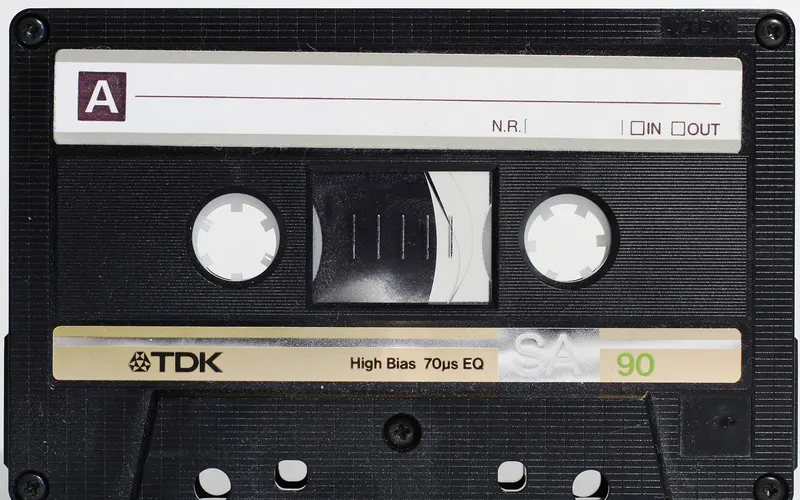
The Save button in most office apps still shows a picture of something few new joiners have ever used. What?
- A cassette tape
- A floppy disk
- A CD-ROM
- A memory card
Answer: A floppy disk. The icon is a 3.5-inch diskette, which wasn't even floppy. It stayed because everyone recognises it.
VisiCalc, the first spreadsheet for personal computers, was so useful in 1979 that businesses bought one machine just to run it. Which?
- IBM PC
- Commodore 64
- Apple II
- ZX Spectrum
Answer: Apple II. VisiCalc is often called the first killer app. The IBM PC only arrived in 1981.
The world's first webcam was set up in a Cambridge University computer lab so researchers could check on something without leaving their desks. What?
- A coffee pot
- The printer queue
- The car park
- A fish tank
Answer: A coffee pot. The Trojan Room coffee pot camera began in 1991 and went on the web in 1993, so nobody walked to an empty pot.
In 1982 a Carnegie Mellon professor suggested marking jokes on an online message board with three characters read sideways. What did he type?
- LOL
- <3 (a heart)
- ^_^ (happy eyes)
- :-) (a smiley)
Answer: :-) (a smiley). Scott Fahlman proposed :-) for jokes and :-( for serious posts, and the smiley spread across the early internet.
Frequently asked questions
What does inbox zero mean?
Inbox zero is an approach to email coined by productivity writer Merlin Mann in 2006. The aim is less about a literally empty inbox and more about spending as little attention on it as possible, by quickly deciding what each message needs: delete it, delegate it, answer it, defer it or act on it.
Who sent the first email?
American engineer Ray Tomlinson sent the first email between two computers on ARPANET, the forerunner of the internet, in 1971. He later said the test messages were so forgettable that he had forgotten them.
How can I use this office trivia quiz as an icebreaker?
Share your screen at the start of a meeting and let people answer in pairs or small teams, then read each explanation aloud. Fifteen questions take about five to ten minutes, and the quiz is free with no sign-up.