
Indian Art & Culture Quiz: Dances, Music, Painting & Literature
10 exam-style questions on Indian classical dances, music, folk painting, theatre, temple styles and classical literature, with explanations.
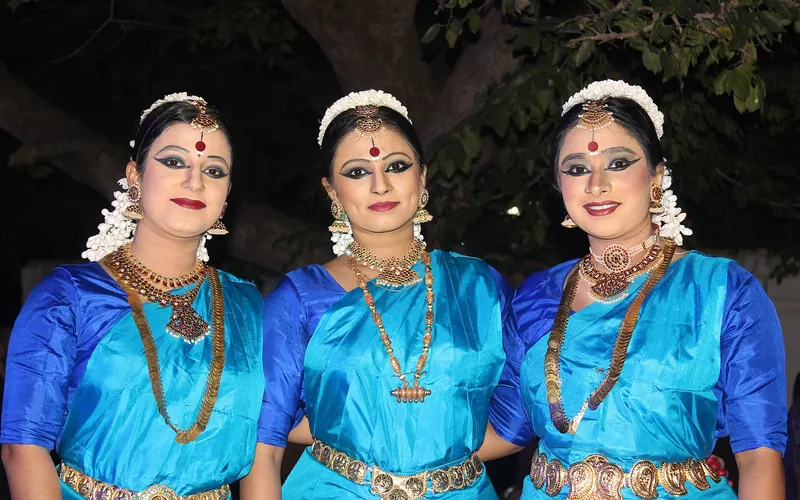
Indian Art & Culture Quiz: Dances, Music, Painting & Literature
Tip: use keys 1-4 to answer, Enter for next.
Answers to the starter quiz
Spoilers! These are the Starter quiz’s answers. Easy, Medium, Hard and Mixed rounds show their own answers when you finish.
Sattriya, recognised as a classical dance by the Sangeet Natak Akademi in 2000, originated in:
- Manipur
- Odisha
- Assam
- Kerala
Answer: Assam. Sattriya grew in the Vaishnava sattras (monasteries) of Assam founded in the tradition of Sankaradeva.
The Natya Shastra, the classical treatise on drama, dance and music, is ascribed to:
- Bharata Muni
- Panini
- Kalidasa
- Patanjali
Answer: Bharata Muni. Bharata's Natya Shastra sets out rasa (aesthetic emotion), gestures and stagecraft, and underlies all classical dance forms.
Kathakali and Mohiniyattam are classical dance forms of:
- Tamil Nadu
- Karnataka
- Andhra Pradesh
- Kerala
Answer: Kerala. Kerala has two of the eight: Kathakali, a male dance-drama with elaborate make-up, and Mohiniyattam, a graceful solo dance.
Warli painting, using white figures on a mud background, is a tribal art form of:
- Bihar
- Maharashtra
- Odisha
- Gujarat
Answer: Maharashtra. The Warli tribe of the Sahyadri region of Maharashtra paints scenes of daily life using circles, triangles and lines.
Which group makes up the "trinity" of Carnatic music?
- Tyagaraja, Purandara Dasa, Annamacharya
- Tyagaraja, Muthuswami Dikshitar, Syama Sastri
- Swathi Thirunal, Tyagaraja, Kshetrayya
- Purandara Dasa, Syama Sastri, Annamacharya
Answer: Tyagaraja, Muthuswami Dikshitar, Syama Sastri. The three 18th–19th century composers all lived around Thiruvarur and Thanjavur. Purandara Dasa, much earlier, is called the father of Carnatic music.
The Tamil epic Silappadikaram was written by:
- Tiruvalluvar
- Sattanar
- Ilango Adigal
- Kambar
Answer: Ilango Adigal. Ilango Adigal wrote the story of Kannagi and Kovalan. Sattanar wrote its sequel Manimekalai; Tiruvalluvar wrote the Tirukkural.
The Rajatarangini, a 12th-century chronicle of the kings of Kashmir, was written by:
- Bilhana
- Jonaraja
- Banabhatta
- Kalhana
Answer: Kalhana. Kalhana's Sanskrit chronicle is one of the earliest Indian works written as history. Jonaraja later continued it.
The Gita Govinda, celebrating the love of Radha and Krishna, was composed by:
- Jayadeva
- Vidyapati
- Chandidas
- Surdas
Answer: Jayadeva. Jayadeva wrote it in Sanskrit in the 12th century; its songs are still sung in Odissi performances and at the Jagannath temple.
In the Dravida style of temple architecture, the towering gateway in the enclosure wall is called the:
- shikhara
- amalaka
- gopuram
- mandapa
Answer: gopuram. Gopurams of later south Indian temples often rise higher than the vimana over the sanctum. Shikhara and amalaka belong to the Nagara style.
Yakshagana, a folk theatre form combining dance, music and dialogue, belongs to:
- Karnataka
- West Bengal
- Uttar Pradesh
- Gujarat
Answer: Karnataka. Yakshagana is performed in coastal Karnataka, usually on themes from the epics. Jatra is Bengali, Nautanki is from Uttar Pradesh, Bhavai is Gujarati.
Play next
All history & culture quizzes →
Prehistory & Indus Valley Quiz: Ancient Indian History Practice
10 exam-style questions on the Stone Ages and the Harappan civilisation. Key sites, finds, discoverers and features, with explanations.
Vedic Age Quiz: Ancient Indian History Practice
10 exam-style questions on the Vedas, Upanishads, Rigvedic and later Vedic society, assemblies, gods and rivers, with explanations.
Buddhism & Jainism Quiz: Ancient Indian History Practice
10 exam-style questions on the Buddha and Mahavira, their teachings, councils, sects, texts and sacred places, with explanations.
Mauryan & Post-Mauryan India Quiz: Ancient Indian History Practice
10 exam-style questions on the Mauryas, Ashoka's edicts, the Shungas, Satavahanas, Indo-Greeks, Shakas and Kushanas, with explanations.