
Union Executive & Parliament Quiz: Indian Polity Practice
10 exam-style questions on the President, Vice-President, Prime Minister, Council of Ministers and Parliament of India, with explanations.
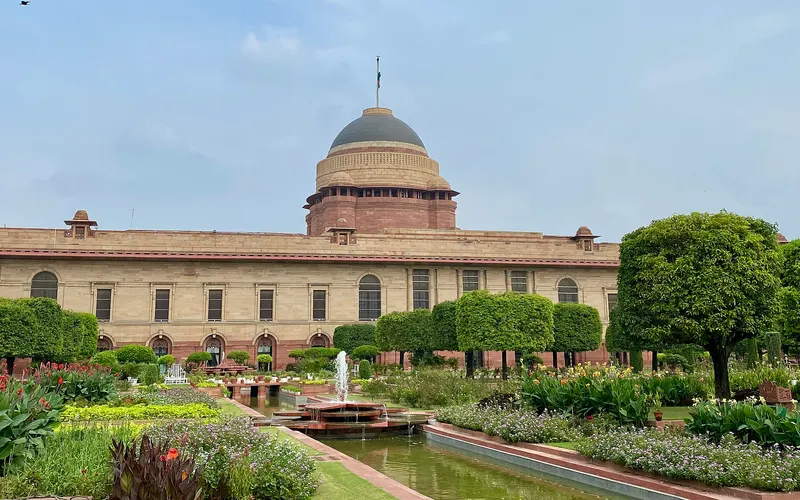
Union Executive & Parliament Quiz: Indian Polity Practice
Tip: use keys 1-4 to answer, Enter for next.
Answers to the starter quiz
Spoilers! These are the Starter quiz’s answers. Easy, Medium, Hard and Mixed rounds show their own answers when you finish.
Who among the following does NOT participate in the election of the President of India?
- Elected members of the Lok Sabha
- Nominated members of the Rajya Sabha
- Elected members of state Legislative Assemblies
- Elected members of the Delhi Legislative Assembly
Answer: Nominated members of the Rajya Sabha. Under Article 54 only elected members vote; Delhi and Puducherry were added by the 70th Amendment. Nominated MPs do, however, take part in impeaching the President.
The President of India can be impeached on the ground of:
- proved misbehaviour or incapacity
- treason, bribery or other high crimes
- losing the confidence of the Lok Sabha
- violation of the Constitution
Answer: violation of the Constitution. Article 61 names only violation of the Constitution. Proved misbehaviour or incapacity is the ground for removing judges, and treason or bribery is the American formula.
The President's power to grant pardons, reprieves and remissions is laid down in:
- Article 161
- Article 123
- Article 72
- Article 143
Answer: Article 72. Article 72 covers the President; Article 161 is the Governor's power. Only the President can pardon a death sentence or a court-martial sentence.
An ordinance issued by the President under Article 123 ceases to operate:
- six weeks after Parliament reassembles, unless disapproved earlier
- six months after the date it is issued
- at the end of the current financial year
- one year after it is issued
Answer: six weeks after Parliament reassembles, unless disapproved earlier. An ordinance must be laid before both Houses and lapses six weeks from their reassembly unless replaced by an Act or disapproved sooner.
The 91st Amendment Act, 2003 limits the size of the Union Council of Ministers, including the Prime Minister, to:
- 15% of the total strength of the Lok Sabha
- 10% of the total strength of the Lok Sabha
- 15% of the combined strength of both Houses
- 20% of the total strength of the Lok Sabha
Answer: 15% of the total strength of the Lok Sabha. Article 75(1A) fixes the cap at 15% of Lok Sabha strength. The same Amendment set a similar 15% cap for states, with a minimum of 12 ministers.
The Vice-President of India can be removed by:
- an impeachment process identical to that of the President
- the President on the advice of the Prime Minister
- a Rajya Sabha resolution passed by a majority of all its members and agreed to by the Lok Sabha
- a Lok Sabha resolution passed by a two-thirds majority of members present
Answer: a Rajya Sabha resolution passed by a majority of all its members and agreed to by the Lok Sabha. Article 67(b) needs a Rajya Sabha resolution with an effective majority, agreed to by the Lok Sabha, after 14 days' notice. No formal impeachment is involved.
The President nominates 12 members to the Rajya Sabha from persons having special knowledge or practical experience of:
- law, economics, sports and journalism
- industry, agriculture, defence and diplomacy
- education, medicine, cinema and religion
- literature, science, art and social service
Answer: literature, science, art and social service. Article 80(3) lists these four fields. Nomination of members to the upper House is a feature borrowed from Ireland.
A joint sitting of the two Houses of Parliament is presided over by:
- the President of India
- the Speaker of the Lok Sabha
- the Vice-President of India
- the Chief Justice of India
Answer: the Speaker of the Lok Sabha. Under Article 108 the Speaker presides; in his absence the Deputy Speaker. Joint sittings cannot be held on Money Bills or Constitution Amendment Bills.
Whose decision is final on whether a Bill is a Money Bill?
- President of India
- Chairman of the Rajya Sabha
- Speaker of the Lok Sabha
- Union Finance Minister
Answer: Speaker of the Lok Sabha. Article 110(3) makes the Speaker's decision final. The Rajya Sabha can hold a Money Bill for at most 14 days.
The quorum to constitute a sitting of either House of Parliament is:
- one-third of the total number of members of the House
- one-fourth of the members present and voting
- one-sixth of the total number of members of the House
- one-tenth of the total number of members of the House
Answer: one-tenth of the total number of members of the House. Article 100(3) fixes quorum at one-tenth of the total membership, including the presiding officer.
Play next
All polity quizzes →
Fundamental Rights Quiz: Indian Polity Practice
10 exam-style questions on Fundamental Rights (Articles 12–35): writs, amendments, emergency rules and who the rights protect. With an explanation for every answer.
Constitutional Development 1773–1947 Quiz: Indian Polity Practice
10 exam-style questions on British-era constitutional Acts, from the Regulating Act 1773 to the Indian Independence Act 1947, with explanations.
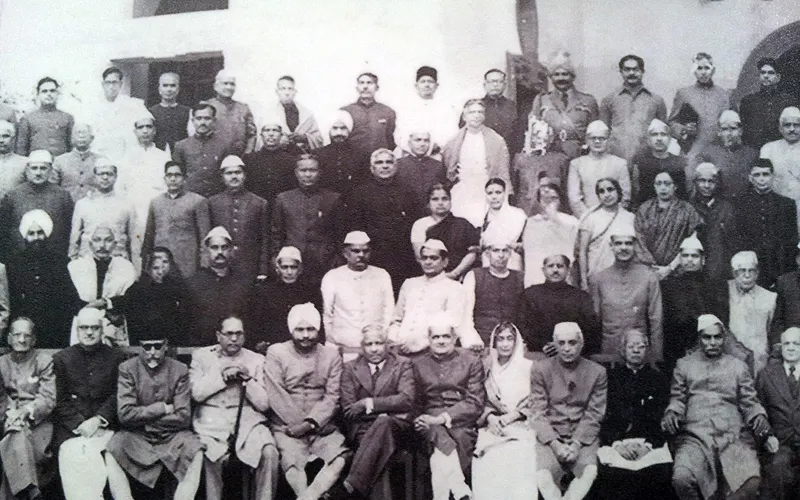
Making of the Constitution & Preamble Quiz: Indian Polity Practice
10 exam-style questions on the Constituent Assembly, the Preamble, borrowed features and Schedules of the Constitution of India, with explanations.
Directive Principles & Fundamental Duties Quiz: Indian Polity Practice
10 exam-style questions on Directive Principles (Articles 36–51) and Fundamental Duties (Article 51A): articles, amendments and key cases.