
Constitutional Development 1773–1947 Quiz: Indian Polity Practice
10 exam-style questions on British-era constitutional Acts, from the Regulating Act 1773 to the Indian Independence Act 1947, with explanations.
Constitutional Development 1773–1947 Quiz: Indian Polity Practice
Tip: use keys 1-4 to answer, Enter for next.
Answers to the starter quiz
Spoilers! These are the Starter quiz’s answers. Easy, Medium, Hard and Mixed rounds show their own answers when you finish.
Which Act designated the Governor of Bengal as the "Governor-General of Bengal" and provided for a Supreme Court at Calcutta?
- Pitt's India Act, 1784
- Charter Act, 1813
- Regulating Act, 1773
- Charter Act, 1833
Answer: Regulating Act, 1773. The Regulating Act, 1773 made Warren Hastings the first Governor-General of Bengal and provided for the Supreme Court at Calcutta, which was set up in 1774.
The system of "double government", in which a Board of Control handled political affairs while the Court of Directors ran commerce, was introduced by:
- Pitt's India Act, 1784
- Regulating Act, 1773
- Charter Act, 1793
- Government of India Act, 1858
Answer: Pitt's India Act, 1784. Pitt's India Act created the Board of Control alongside the Court of Directors. The 1858 Act abolished both bodies and ended double government.
Who was the first Governor-General of India, a post created by the Charter Act of 1833?
- Warren Hastings
- Lord Canning
- Lord Cornwallis
- Lord William Bentinck
Answer: Lord William Bentinck. The 1833 Act turned the Governor-General of Bengal into the Governor-General of India with all civil and military powers. Hastings was Governor-General of Bengal; Canning was the first Viceroy (1858).
Which Charter Act first separated the legislative and executive functions of the Governor-General's council and introduced open competition for the civil services?
- Charter Act, 1833
- Charter Act, 1853
- Charter Act, 1813
- Indian Councils Act, 1861
Answer: Charter Act, 1853. The 1853 Act added six legislative members, creating a mini central legislature, and opened the civil services to competition. It was the last of the Charter Acts.
Under the Government of India Act, 1858, the Secretary of State for India was assisted by a Council of India with how many members?
- 12
- 15
- 9
- 21
Answer: 15. The 1858 Act transferred power to the Crown and created the Secretary of State, a British cabinet member, advised by a 15-member Council of India.
Lord Minto is often called the "father of communal electorate" because the Indian Councils Act, 1909:
- introduced dyarchy in the provinces
- created a bicameral central legislature
- reserved seats for depressed classes
- introduced a separate electorate for Muslims
Answer: introduced a separate electorate for Muslims. Under the Morley–Minto Reforms, Muslim members were to be elected only by Muslim voters. Dyarchy and central bicameralism came in 1919.
Dyarchy in the provinces, with subjects divided into "transferred" and "reserved", was introduced by:
- Government of India Act, 1919
- Government of India Act, 1935
- Indian Councils Act, 1909
- Indian Independence Act, 1947
Answer: Government of India Act, 1919. The Montagu–Chelmsford reforms (1919) gave transferred subjects to ministers answerable to the legislature. The 1935 Act replaced provincial dyarchy with provincial autonomy.
Consider the following statements about the Government of India Act, 1935: 1. It provided for an All-India Federation, which never came into being. 2. It vested residuary powers in the Governor-General. 3. It introduced bicameral legislatures in all eleven provinces. Which of the statements given above are correct?
- 2 and 3 only
- 1 and 3 only
- 1 and 2 only
- 1, 2 and 3
Answer: 1 and 2 only. Bicameralism came in only six of the eleven provinces. The federation failed because the princely states did not join it.
Which body was set up in 1937 under the Government of India Act, 1935?
- Supreme Court at Calcutta
- Central Public Service Commission
- Council of India
- Federal Court
Answer: Federal Court. The Federal Court began functioning in 1937 and was replaced by the Supreme Court in 1950. The Central Public Service Commission was set up earlier, in 1926, under the 1919 Act.
Which of the following was a provision of the Indian Independence Act, 1947?
- The office of Viceroy was abolished and each dominion got a Governor-General
- British paramountcy over princely states was transferred to the Indian dominion
- The Constituent Assembly was dissolved and replaced by an elected Parliament
- The Secretary of State for India was given control over both dominions
Answer: The office of Viceroy was abolished and each dominion got a Governor-General. The Act abolished the Viceroy and the Secretary of State. Paramountcy lapsed rather than passing to India, and the Constituent Assembly also became the dominion legislature.
Play next
All polity quizzes →
Fundamental Rights Quiz: Indian Polity Practice
10 exam-style questions on Fundamental Rights (Articles 12–35): writs, amendments, emergency rules and who the rights protect. With an explanation for every answer.
Making of the Constitution & Preamble Quiz: Indian Polity Practice
10 exam-style questions on the Constituent Assembly, the Preamble, borrowed features and Schedules of the Constitution of India, with explanations.
Directive Principles & Fundamental Duties Quiz: Indian Polity Practice
10 exam-style questions on Directive Principles (Articles 36–51) and Fundamental Duties (Article 51A): articles, amendments and key cases.
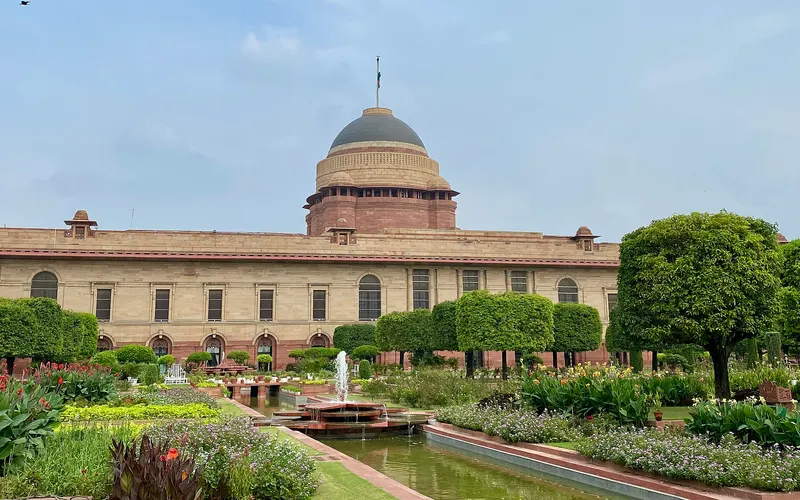
Union Executive & Parliament Quiz: Indian Polity Practice
10 exam-style questions on the President, Vice-President, Prime Minister, Council of Ministers and Parliament of India, with explanations.