
Making of the Constitution & Preamble Quiz: Indian Polity Practice
10 exam-style questions on the Constituent Assembly, the Preamble, borrowed features and Schedules of the Constitution of India, with explanations.
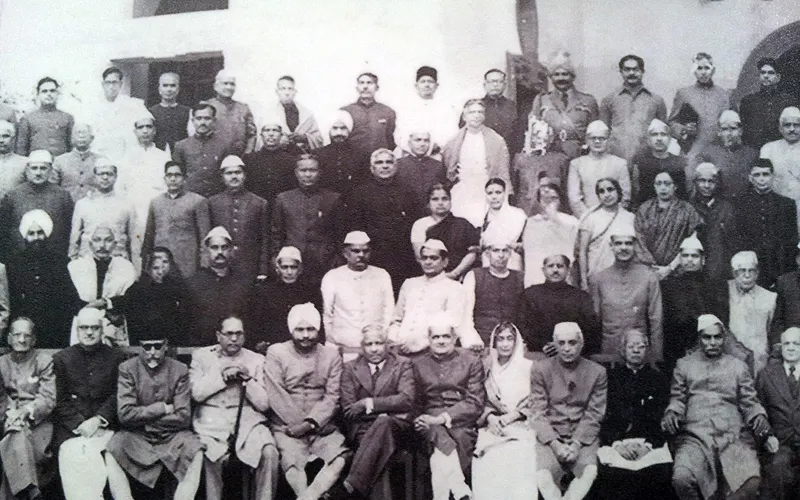
Making of the Constitution & Preamble Quiz: Indian Polity Practice
Tip: use keys 1-4 to answer, Enter for next.
Answers to the starter quiz
Spoilers! These are the Starter quiz’s answers. Easy, Medium, Hard and Mixed rounds show their own answers when you finish.
Under which plan was the Constituent Assembly of India constituted in 1946?
- Cripps Proposals
- Mountbatten Plan
- August Offer
- Cabinet Mission Plan
Answer: Cabinet Mission Plan. The Cabinet Mission Plan (1946) fixed the Assembly's strength at 389 and its method of indirect election. The August Offer only accepted the idea in principle.
Who presided over the first meeting of the Constituent Assembly on 9 December 1946 as its temporary President?
- Rajendra Prasad
- Sachchidananda Sinha
- B. R. Ambedkar
- H. C. Mukherjee
Answer: Sachchidananda Sinha. Sinha, the oldest member, was temporary President following French practice. Rajendra Prasad was elected permanent President two days later.
The Objectives Resolution, which later took shape as the Preamble, was moved in the Constituent Assembly by:
- Jawaharlal Nehru
- B. R. Ambedkar
- Sardar Patel
- Rajendra Prasad
Answer: Jawaharlal Nehru. Nehru moved it on 13 December 1946 and the Assembly adopted it on 22 January 1947. Its ideas were reshaped into the Preamble.
The Constitution of India was adopted by the Constituent Assembly on:
- 26 January 1950
- 15 August 1947
- 26 November 1949
- 24 January 1950
Answer: 26 November 1949. It was adopted on 26 November 1949 and came into force on 26 January 1950. A few provisions such as citizenship and elections took effect on the day of adoption.
Which words were added to the Preamble by the 42nd Amendment Act, 1976?
- Sovereign, Democratic and Republic
- Justice, Liberty and Equality
- Socialist, Secular and Integrity
- Secular, Fraternity and Unity
Answer: Socialist, Secular and Integrity. The 42nd Amendment inserted Socialist and Secular after Sovereign and changed "unity of the Nation" to "unity and integrity of the Nation". It is the only amendment to the Preamble.
In which case did the Supreme Court hold that the Preamble is a part of the Constitution?
- Kesavananda Bharati case, 1973
- Berubari Union case, 1960
- Golak Nath case, 1967
- Minerva Mills case, 1980
Answer: Kesavananda Bharati case, 1973. Berubari (1960) had said the Preamble is not part of the Constitution. Kesavananda Bharati overruled that view, and the LIC case (1995) reaffirmed it.
The ideals of liberty, equality and fraternity in the Preamble were inspired by:
- the Russian Revolution
- the French Revolution
- the American Revolution
- the Irish Constitution
Answer: the French Revolution. Liberty, equality and fraternity were the slogans of the French Revolution. The ideal of social, economic and political justice is traced to the Russian Revolution.
Which feature of the Indian Constitution was borrowed from the Irish Constitution?
- Fundamental Duties
- Concurrent List
- Procedure for amendment
- Directive Principles of State Policy
Answer: Directive Principles of State Policy. Ireland gave the Directive Principles, nomination to Rajya Sabha and the method of electing the President. Fundamental Duties came from the USSR, the Concurrent List from Australia and the amendment procedure from South Africa.
Which Schedule of the Constitution deals with the administration of tribal areas in Assam, Meghalaya, Tripura and Mizoram?
- Sixth Schedule
- Fifth Schedule
- Fourth Schedule
- Ninth Schedule
Answer: Sixth Schedule. The Sixth Schedule provides autonomous district councils for these four states. The Fifth Schedule covers Scheduled Areas in other states.
How many members did the Drafting Committee of the Constituent Assembly, chaired by B. R. Ambedkar, have?
- Five
- Seven
- Nine
- Eleven
Answer: Seven. The Drafting Committee set up on 29 August 1947 had seven members, including N. Gopalaswamy Ayyangar, Alladi Krishnaswamy Ayyar and K. M. Munshi.
Play next
All polity quizzes →
Fundamental Rights Quiz: Indian Polity Practice
10 exam-style questions on Fundamental Rights (Articles 12–35): writs, amendments, emergency rules and who the rights protect. With an explanation for every answer.
Constitutional Development 1773–1947 Quiz: Indian Polity Practice
10 exam-style questions on British-era constitutional Acts, from the Regulating Act 1773 to the Indian Independence Act 1947, with explanations.
Directive Principles & Fundamental Duties Quiz: Indian Polity Practice
10 exam-style questions on Directive Principles (Articles 36–51) and Fundamental Duties (Article 51A): articles, amendments and key cases.
Union Executive & Parliament Quiz: Indian Polity Practice
10 exam-style questions on the President, Vice-President, Prime Minister, Council of Ministers and Parliament of India, with explanations.