
Elections & Representation Quiz: Indian Polity Practice
10 exam-style questions on the Election Commission, adult franchise, RPA 1950 and 1951, delimitation, reserved seats and the anti-defection law.
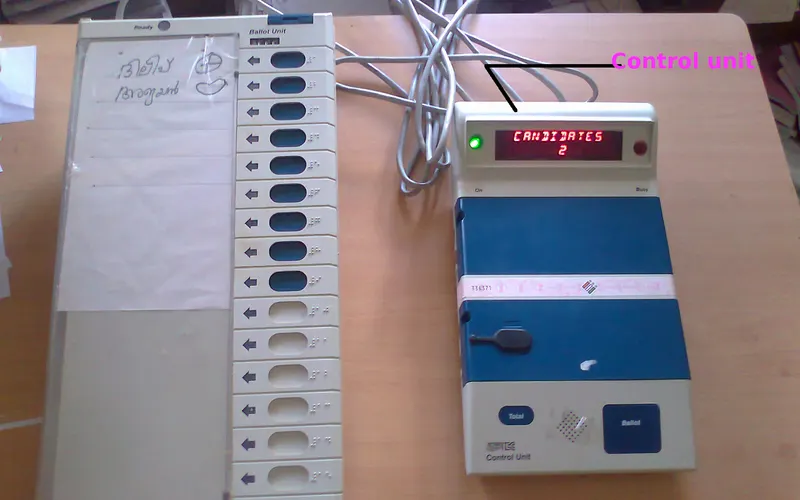
Elections & Representation Quiz: Indian Polity Practice
Tip: use keys 1-4 to answer, Enter for next.
Answers to the starter quiz
Spoilers! These are the Starter quiz’s answers. Easy, Medium, Hard and Mixed rounds show their own answers when you finish.
Which Article vests the superintendence, direction and control of elections in the Election Commission?
- Article 324
- Article 326
- Article 329
- Article 243K
Answer: Article 324. Article 324 creates the Election Commission. Article 326 provides adult suffrage, Article 329 bars courts in electoral matters and Article 243K covers State Election Commissions.
Elections to which of the following are NOT conducted by the Election Commission of India?
- Office of the President
- Office of the Vice-President
- Municipal corporations
- State Legislative Councils
Answer: Municipal corporations. Municipal and panchayat elections are conducted by State Election Commissions under Articles 243ZA and 243K.
The voting age in India was lowered from 21 to 18 years by the:
- 42nd Amendment Act, 1976
- 61st Amendment Act, 1988
- 52nd Amendment Act, 1985
- 73rd Amendment Act, 1992
Answer: 61st Amendment Act, 1988. The 61st Amendment changed Article 326. It first applied in the 1989 general elections.
The Chief Election Commissioner can be removed from office:
- by the President on the advice of the Prime Minister
- by a resolution of the Lok Sabha alone
- by the President on the recommendation of the CJI
- in the same manner and on the same grounds as a Supreme Court judge
Answer: in the same manner and on the same grounds as a Supreme Court judge. Article 324(5) protects the CEC like a Supreme Court judge. The other Election Commissioners can be removed only on the CEC's recommendation.
Under the Chief Election Commissioner and Other Election Commissioners Act, 2023, the selection committee consists of the:
- Prime Minister, Chief Justice of India and Leader of Opposition in Lok Sabha
- President, Prime Minister and Chief Justice of India
- Prime Minister, Speaker of Lok Sabha and Leader of Opposition
- Prime Minister, Leader of Opposition in Lok Sabha and a Cabinet Minister nominated by the PM
Answer: Prime Minister, Leader of Opposition in Lok Sabha and a Cabinet Minister nominated by the PM. The Act replaced the Supreme Court's interim committee, which had the CJI, with a Union Cabinet Minister nominated by the PM.
Which law deals with the preparation of electoral rolls and the qualifications of voters?
- Representation of the People Act, 1951
- Representation of the People Act, 1950
- Delimitation Act, 2002
- Tenth Schedule of the Constitution
Answer: Representation of the People Act, 1950. RPA 1950 covers seats, constituencies and electoral rolls. RPA 1951 covers conduct of elections, disqualifications, corrupt practices and disputes.
The allocation of Lok Sabha seats among states, based on the 1971 Census, has been frozen until:
- the 2011 Census
- the year 2000
- the first census taken after 2026
- the 2001 Census
Answer: the first census taken after 2026. The 42nd Amendment froze it until 2000 and the 84th Amendment extended the freeze until the first census after 2026, to avoid penalising states that controlled population.
The anti-defection law was added to the Constitution by the:
- 52nd Amendment Act, 1985
- 61st Amendment Act, 1988
- 91st Amendment Act, 2003
- 42nd Amendment Act, 1976
Answer: 52nd Amendment Act, 1985. The 52nd Amendment added the Tenth Schedule. The 91st Amendment later removed the split exception.
Under the Tenth Schedule, a nominated member of a House is disqualified if he or she joins a political party:
- within six months of taking the seat
- after six months from taking the seat
- after one year of taking the seat
- at any time after nomination
Answer: after six months from taking the seat. A nominated member may join a party within the first six months; joining after that attracts disqualification.
Under the Tenth Schedule, questions of disqualification on grounds of defection are decided by:
- the President on the opinion of the Election Commission
- the Election Commission of India
- the presiding officer of the House, subject to judicial review
- the Supreme Court in its original jurisdiction
Answer: the presiding officer of the House, subject to judicial review. The Speaker or Chairman decides, and Kihoto Hollohan (1992) made the decision reviewable by courts. The Article 103 route applies to other disqualifications.
Play next
All polity quizzes →
Fundamental Rights Quiz: Indian Polity Practice
10 exam-style questions on Fundamental Rights (Articles 12–35): writs, amendments, emergency rules and who the rights protect. With an explanation for every answer.
Constitutional Development 1773–1947 Quiz: Indian Polity Practice
10 exam-style questions on British-era constitutional Acts, from the Regulating Act 1773 to the Indian Independence Act 1947, with explanations.
Making of the Constitution & Preamble Quiz: Indian Polity Practice
10 exam-style questions on the Constituent Assembly, the Preamble, borrowed features and Schedules of the Constitution of India, with explanations.
Directive Principles & Fundamental Duties Quiz: Indian Polity Practice
10 exam-style questions on Directive Principles (Articles 36–51) and Fundamental Duties (Article 51A): articles, amendments and key cases.