
Industry & Infrastructure Quiz: Indian Economy Practice
10 exam-style questions on industrial policies (1956, 1991), MSME definitions, IIP and core industries, PPP models, Gati Shakti, Sagarmala and more.
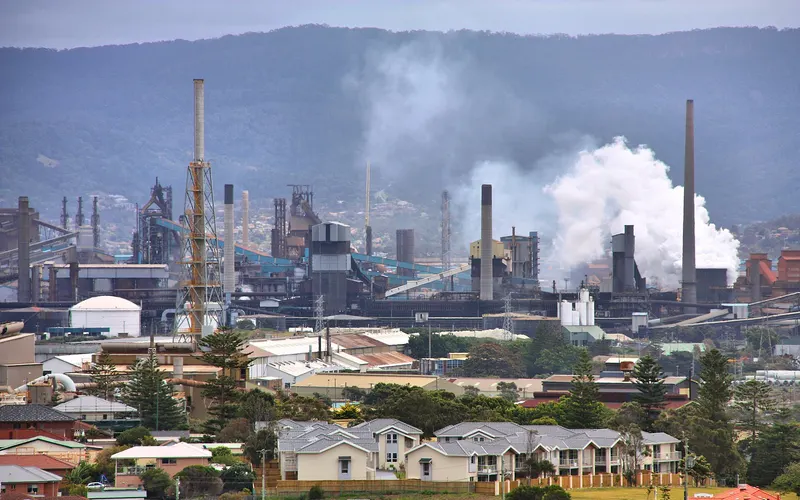
Industry & Infrastructure Quiz: Indian Economy Practice
Tip: use keys 1-4 to answer, Enter for next.
Answers to the starter quiz
Spoilers! These are the Starter quiz’s answers. Easy, Medium, Hard and Mixed rounds show their own answers when you finish.
The Industrial Policy Resolution of 1956 divided industries into how many schedules?
- Two
- Three
- Four
- Five
Answer: Three. IPR 1956 had Schedule A (17 industries reserved for the state), Schedule B (state to take the lead, private sector to supplement) and the rest for the private sector. It made the public sector the 'commanding heights' of the economy.
Which two areas remain reserved exclusively for the public sector today?
- Atomic energy and railway operations
- Defence production and civil aviation
- Coal mining and lignite
- Arms and ammunition and atomic energy
Answer: Atomic energy and railway operations. Reservation shrank from 17 industries (1956) to 8 (1991) and now only atomic energy and railway operations remain. Defence production, including arms and ammunition, was opened to private firms in 2001.
Under the MSME definition in force from 1 April 2025, a micro enterprise has investment and turnover of at most:
- Rs 1 crore and Rs 5 crore
- Rs 25 lakh and Rs 1 crore
- Rs 2.5 crore and Rs 10 crore
- Rs 10 crore and Rs 50 crore
Answer: Rs 2.5 crore and Rs 10 crore. The 2025 revision raised micro limits to Rs 2.5 crore investment and Rs 10 crore turnover (from Rs 1 crore and Rs 5 crore set in 2020). Small is up to Rs 25 crore and Rs 100 crore; medium up to Rs 125 crore and Rs 500 crore.
The Index of Industrial Production (IIP) is released by:
- Office of the Economic Adviser, DPIIT
- Reserve Bank of India
- Ministry of Heavy Industries
- National Statistics Office, MoSPI
Answer: National Statistics Office, MoSPI. The NSO under MoSPI releases the monthly IIP. The Office of the Economic Adviser, DPIIT releases the separate Index of Core Industries and the WPI.
In the revised Index of Core Industries (base 2022-23) released in July 2026, which industry was added as the ninth core industry?
- Aluminium
- Iron ore
- Petrochemicals
- Copper
Answer: Iron ore. The old series had eight core industries: coal, crude oil, natural gas, refinery products, fertilisers, steel, cement and electricity. The 2022-23 series adds iron ore, and electricity now carries the highest weight.
Under the Hybrid Annuity Model (HAM) for highways, what share of project cost does the government pay during construction?
- 40%
- 60%
- 100%
- 25%
Answer: 40%. In HAM the government funds 40% during construction and the developer arranges 60%, recovered through annuity payments over the operation period. It mixes EPC (fully government-paid) with BOT (fully private).
PM Gati Shakti, launched in 2021, is best described as:
- a scheme to build high-speed rail corridors
- a credit-guarantee fund for small industries
- a GIS-based national master plan for integrated multimodal infrastructure
- a subsidy scheme for electric vehicles
Answer: a GIS-based national master plan for integrated multimodal infrastructure. Gati Shakti brings ministries such as railways, roads, ports and gas pipelines onto one digital platform so projects are planned together. This avoids problems like a new road being dug up again for a pipeline.
The Golden Quadrilateral highway network links which four cities?
- Delhi, Mumbai, Bengaluru, Kolkata
- Srinagar, Kanyakumari, Silchar, Porbandar
- Delhi, Ahmedabad, Chennai, Kolkata
- Delhi, Mumbai, Chennai, Kolkata
Answer: Delhi, Mumbai, Chennai, Kolkata. The Golden Quadrilateral, under the National Highways Development Project, joins the four metros. Srinagar-Kanyakumari and Silchar-Porbandar are the North-South and East-West corridors.
The Sagarmala programme is concerned with:
- building highway corridors along border areas
- port-led development and coastal logistics
- linking Himalayan and peninsular rivers
- setting up offshore wind farms
Answer: port-led development and coastal logistics. Sagarmala (approved 2015) modernises ports, improves port connectivity and promotes coastal industry and shipping. Border and economic-corridor roads come under Bharatmala.
Consider the following statements: 1. The New Industrial Policy of 1991 abolished compulsory industrial licensing for most industries. 2. The MRTP Act, 1969 was replaced by the Competition Act, 2002. Which is/are correct?
- 1 only
- 2 only
- Both 1 and 2
- Neither 1 nor 2
Answer: Both 1 and 2. The 1991 policy ended the 'licence raj' for all but a short list of strategic or hazardous industries. The Competition Act, 2002 replaced the MRTP Act and set up the Competition Commission of India.
Play next
All economy quizzes →
National Income Quiz: Indian Economy Practice
10 exam-style questions on GDP, GNP, NNP, GVA, the three methods of measurement, the GDP deflator and India's national accounts. With explanations.
Money, Banking & RBI Quiz: Indian Economy Practice
10 exam-style questions on the RBI, monetary policy tools (repo, CRR, SLR, SDF), the MPC, money supply measures and banking basics. With explanations.
Inflation Quiz: Indian Economy Practice
10 exam-style questions on types of inflation, CPI vs WPI, core inflation, the Phillips curve, who gains and loses from inflation, and India's targeting regime.
Budget & Fiscal Policy Quiz: Indian Economy Practice
10 exam-style questions on the Union Budget, receipts, deficits, FRBM, Finance Commission and GST basics. Articles and concepts, with explanations.