
Inflation Quiz: Indian Economy Practice
10 exam-style questions on types of inflation, CPI vs WPI, core inflation, the Phillips curve, who gains and loses from inflation, and India's targeting regime.
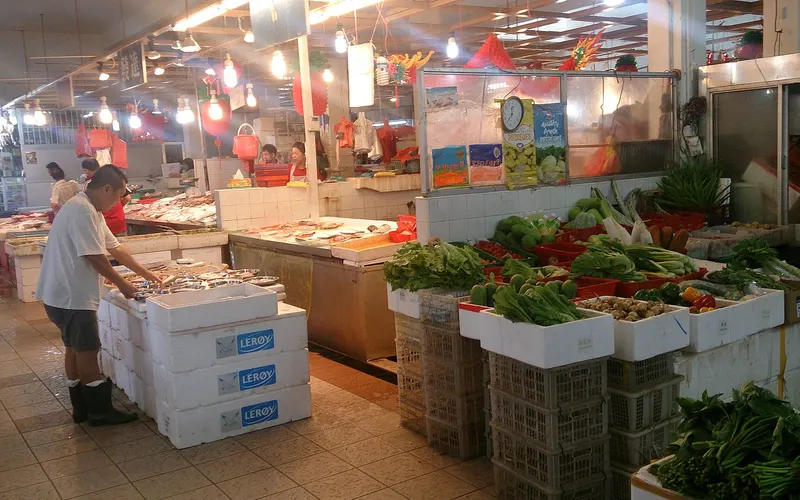
Inflation Quiz: Indian Economy Practice
Tip: use keys 1-4 to answer, Enter for next.
Answers to the starter quiz
Spoilers! These are the Starter quiz’s answers. Easy, Medium, Hard and Mixed rounds show their own answers when you finish.
Demand-pull inflation is caused mainly by:
- a rise in wages and raw-material costs
- aggregate demand running ahead of the economy's capacity to supply
- a fall in the money supply
- a rise in labour productivity
Answer: aggregate demand running ahead of the economy's capacity to supply. When total spending outruns what the economy can produce, sellers raise prices: 'too much money chasing too few goods'. Rising input costs cause cost-push inflation instead.
Stagflation describes an economy with:
- falling prices and rising output
- rapid growth and very low inflation
- a falling rate of inflation
- high inflation together with stagnant output and high unemployment
Answer: high inflation together with stagnant output and high unemployment. Stagflation joins stagnation and inflation. It is hard to treat because tightening policy to fight inflation can deepen the slowdown. The oil shocks of the 1970s are the classic example.
Disinflation means:
- a slowdown in the rate of inflation while prices still rise
- a sustained fall in the general price level
- a deliberate policy to raise prices after a slump
- prices rising at an extremely rapid, runaway pace
Answer: a slowdown in the rate of inflation while prices still rise. If inflation falls from 6% to 4%, prices still rise but more slowly: that is disinflation. A fall in the price level itself is deflation, deliberate price-raising is reflation, and runaway inflation is hyperinflation.
India's inflation target under flexible inflation targeting is defined in terms of:
- Wholesale Price Index
- GDP deflator
- Consumer Price Index (Combined)
- CPI for Industrial Workers
Answer: Consumer Price Index (Combined). Following the Urjit Patel Committee (2014), headline CPI (Combined) became the nominal anchor. The target is 4% with a tolerance band of 2% to 6%, retained by the Centre for April 2026 to March 2031.
The Wholesale Price Index (WPI) in India is compiled by:
- National Statistics Office, MoSPI
- Office of the Economic Adviser, DPIIT
- Labour Bureau
- Reserve Bank of India
Answer: Office of the Economic Adviser, DPIIT. WPI is compiled by the Office of the Economic Adviser under DPIIT (Ministry of Commerce and Industry). CPI (Rural/Urban/Combined) comes from the NSO, while the Labour Bureau compiles CPI-IW.
Who is most likely to gain from an unexpected rise in inflation?
- Pensioners receiving a fixed monthly pension
- Savers holding large cash balances
- Lenders who lent at a fixed interest rate
- Borrowers repaying fixed-rate loans
Answer: Borrowers repaying fixed-rate loans. Inflation erodes the real value of money. A borrower repays the same rupee amount, now worth less, so wealth shifts from lenders and fixed-income earners to debtors.
The Phillips curve shows a relationship between:
- inflation and unemployment
- tax rates and tax revenue
- per capita income and inequality
- price and quantity demanded
Answer: inflation and unemployment. A. W. Phillips found an inverse short-run link between inflation and unemployment. Tax rates vs revenue is the Laffer curve, and income vs inequality is the Kuznets curve.
'Core inflation' usually excludes which items from the price index?
- Services and housing
- Manufactured goods
- Food and fuel
- Imported goods
Answer: Food and fuel. Food and fuel prices swing with weather and global oil markets. Removing them shows the underlying, more persistent trend of inflation that monetary policy can influence.
Consider the following statements: 1. The Wholesale Price Index covers the prices of services. 2. The Consumer Price Index basket includes services such as education and health. Which is/are correct?
- 1 only
- 2 only
- Both 1 and 2
- Neither 1 nor 2
Answer: 2 only. WPI tracks goods traded in bulk (primary articles, fuel and power, manufactured products) and does not cover services. CPI reflects what households buy, so it includes services.
The new Consumer Price Index series released by MoSPI in February 2026 uses which base year?
- 2012
- 2016
- 2022-23
- 2024
Answer: 2024. The revised CPI (base 2024 = 100) replaced the 2012 series from January 2026 data, with weights from the Household Consumption Expenditure Survey 2023-24. GDP, IIP and WPI moved to a 2022-23 base.
Play next
All economy quizzes →
National Income Quiz: Indian Economy Practice
10 exam-style questions on GDP, GNP, NNP, GVA, the three methods of measurement, the GDP deflator and India's national accounts. With explanations.
Money, Banking & RBI Quiz: Indian Economy Practice
10 exam-style questions on the RBI, monetary policy tools (repo, CRR, SLR, SDF), the MPC, money supply measures and banking basics. With explanations.
Budget & Fiscal Policy Quiz: Indian Economy Practice
10 exam-style questions on the Union Budget, receipts, deficits, FRBM, Finance Commission and GST basics. Articles and concepts, with explanations.
External Sector & Trade Quiz: Indian Economy Practice
10 exam-style questions on balance of payments, forex reserves, rupee convertibility, FDI vs FPI, FEMA, exchange rates and trade policy. With explanations.