
Mixture & Alligation Quiz: Quantitative Aptitude Practice
10 timed mixture and alligation questions for SSC and bank exams. Mixing prices, milk and water, repeated replacement, alloys and mixed averages.
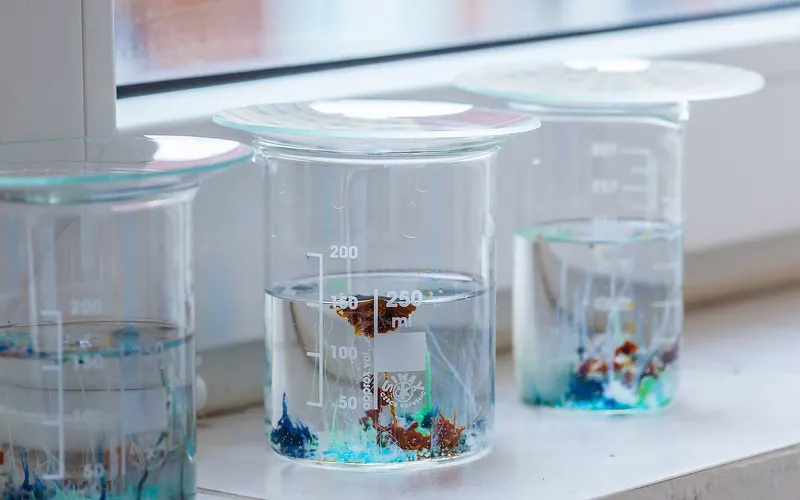
Mixture & Alligation Quiz: Quantitative Aptitude Practice
Tip: use keys 1-4 to answer, Enter for next.
Answers to the starter quiz
Spoilers! These are the Starter quiz’s answers. Easy, Medium, Hard and Mixed rounds show their own answers when you finish.
In what ratio must rice at Rs 40/kg be mixed with rice at Rs 55/kg to get a mixture worth Rs 45/kg?
- 1:2
- 3:2
- 2:1
- 2:3
Answer: 2:1. cheaper : dearer = (55 - 45):(45 - 40) = 10:5 = 2:1.
60 litres of a mixture contains milk and water in the ratio 2:1. How much water must be added to make the ratio 1:1?
- 20 litres
- 15 litres
- 10 litres
- 30 litres
Answer: 20 litres. Milk = 40 L and water = 20 L. For 1:1 water must equal 40 L, so add 20 L.
A vessel contains 40 litres of milk. 8 litres are taken out and replaced with water, and the process is repeated once more. How much milk is now left?
- 24 litres
- 28.8 litres
- 26.4 litres
- 25.6 litres
Answer: 25.6 litres. Milk left = 40 × (1 - 8/40)² = 40 × 0.64 = 25.6 litres.
Tea at Rs 120/kg and Rs 180/kg is mixed in the ratio 3:2, and the mixture is sold at Rs 168/kg. What is the profit percentage?
- 12%
- 16 2/3%
- 20%
- 14 2/7%
Answer: 16 2/3%. Cost of mixture = (3 × 120 + 2 × 180)/5 = Rs 144/kg. Profit = 24/144 × 100 = 16 2/3 %.
Alloy P has gold and copper in the ratio 7:2, and alloy Q has them in the ratio 7:11. Equal weights of P and Q are melted together. What is the ratio of gold to copper in the new alloy?
- 5:7
- 7:5
- 14:13
- 3:2
Answer: 7:5. Gold = 7/9 + 7/18 = 21/18 and copper = 2/9 + 11/18 = 15/18. So gold : copper = 21:15 = 7:5.
How many kg of sugar costing Rs 36/kg must be mixed with 30 kg of sugar costing Rs 48/kg so that the mixture is worth Rs 44/kg?
- 20 kg
- 12 kg
- 18 kg
- 15 kg
Answer: 15 kg. cheaper : dearer = (48 - 44):(44 - 36) = 4:8 = 1:2. With 30 kg of the dearer sugar, the cheaper is 15 kg.
A man covers 60 km in 9 hours, partly cycling at 10 km/h and partly walking at 4 km/h. How far did he walk?
- 20 km
- 24 km
- 30 km
- 16 km
Answer: 20 km. If he walked for w hours, 4w + 10(9 - w) = 60, so w = 5. Distance walked = 5 × 4 = 20 km.
40 litres of a mixture contains 10% water. How much water must be added so that water becomes 20% of the new mixture?
- 4 litres
- 6 litres
- 5 litres
- 8 litres
Answer: 5 litres. The other liquid is 36 L and must now be 80% of the total, so total = 45 L. Water to add = 45 - 40 = 5 L.
Rs 16,000 is lent in two parts, one at 6% and the other at 10% simple interest per annum. The overall annual interest works out to 7.5%. How much was lent at 6%?
- Rs 6,000
- Rs 8,000
- Rs 9,600
- Rs 10,000
Answer: Rs 10,000. Alligation: (10 - 7.5):(7.5 - 6) = 2.5:1.5 = 5:3. So 5/8 of 16,000 = Rs 10,000 at 6%.
A milkman mixes water with milk and sells the mixture at the cost price of pure milk, making a profit of 25%. What is the ratio of water to milk in the mixture?
- 1:4
- 1:5
- 1:3
- 4:1
Answer: 1:4. Water costs nothing. A 25% gain means 25 parts of water for every 100 parts of milk, so 1:4.
Play next
All quantitative aptitude quizzes →
Percentage Quiz: Quantitative Aptitude Practice
10 timed percentage questions for SSC, banking and railway exams. Successive change, population growth, elections, discounts and profit, with worked solutions.
Number System Quiz: Quantitative Aptitude Practice
10 timed number system questions for SSC and railway exams. Divisibility rules, unit digits, factors, remainders, primes and trailing zeros.
Simplification & Approximation Quiz: Quantitative Aptitude Practice
10 timed simplification and approximation questions for IBPS PO and SBI PO prelims. BODMAS, fractions, percentages, squares and quick estimation.
Decimals & Fractions Quiz: Quantitative Aptitude Practice
10 timed decimals and fractions questions for RRB NTPC and SSC. Comparing fractions, recurring decimals, terminating decimals and word problems.